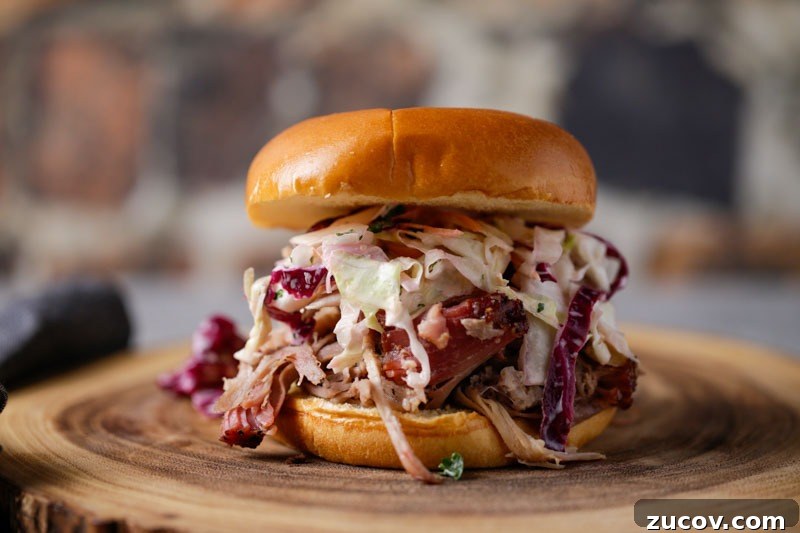
This past weekend I hosted an afternoon of games, cigars, and barbecue with my son, daughter, and their partners. I wanted to serve pulled pork but didn’t have the 12+ hours a traditional low-and-slow cook requires.
Instead of ordering in, I tried a popular technique known as Hot and Fast Pulled Pork—often called “Turbo” in Big Green Egg circles.
BBQ purists argue that higher heat compromises quality, but when you’re short on time and have a house full of people, Turbo cooking is a practical solution. By running the Egg hotter you move through the stall faster and still get great results. After this cook, the empty plates said it all.
Relax with a cold beer and follow this guide to master Big Green Egg Hot and Fast Pulled Pork.
Step 1: The Injection (Moisture Insurance)
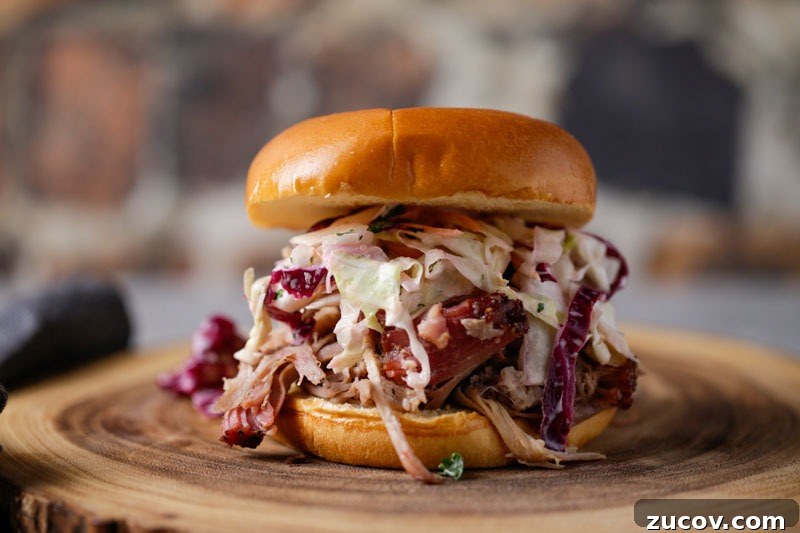
Because Turbo uses higher heat over a shorter time, injecting the Boston butt helps ensure juiciness. An injection adds moisture and flavor inside the muscle while the exterior bark develops.
For this cook I used a balanced injection:
- Apple juice: natural sweetness and acidity.
- Water: carries flavors deeper into the meat.
- Sugar & salt: act like a quick brine to lock in juices.
- Worcestershire sauce: adds savory umami depth.
Whisk until the sugar and salt dissolve, then inject the liquid into the thickest parts of the butt in a grid pattern. The meat will plump as it absorbs the solution.
Step 2: Trimming and the Crosshatch Cut
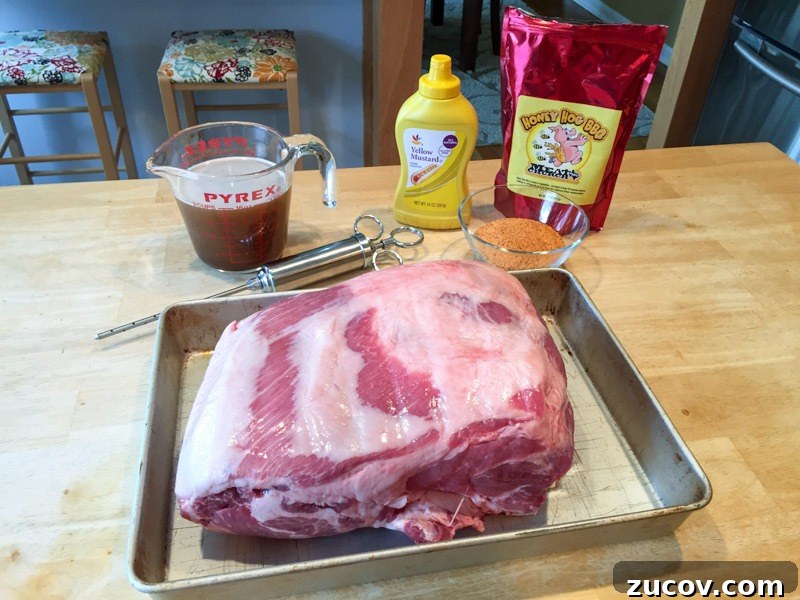
Prep the surface before applying the rub. Trim away heavy, loose fat and any silver skin from the bottom and sides so smoke and heat penetrate evenly.
Score the remaining fat cap in a crosshatch pattern, about one inch apart, cutting just to the meat but not through it.
The crosshatch delivers two benefits:
Bark surface: It creates more texture for the rub to cling to, producing seasoned, crispy cubes of bark rather than a flat strip of fat.
Fat rendering: At 350°F those squares render more efficiently, basting the meat as it cooks.
Step 3: The Binder and the Rub
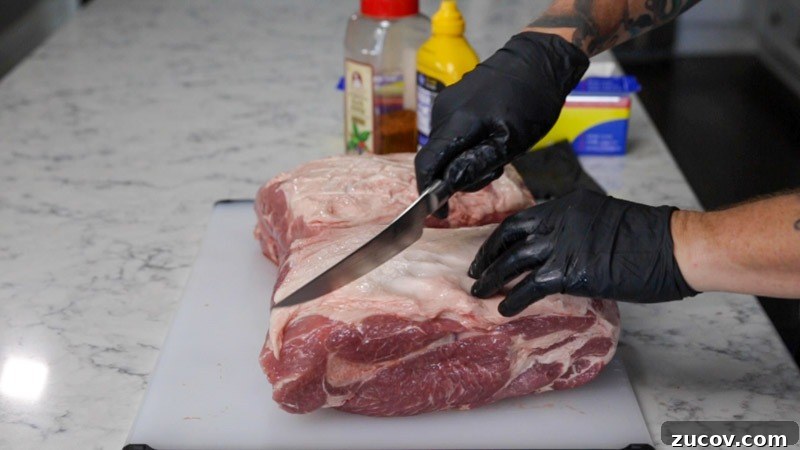
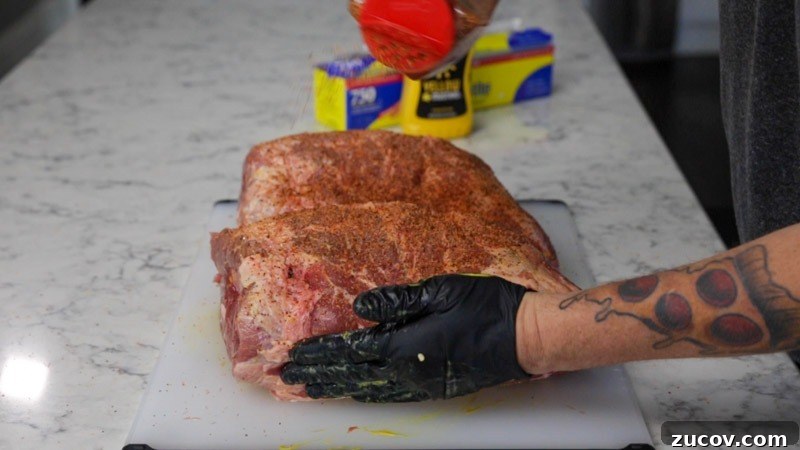
With the butt trimmed and scored, apply a light binder—yellow mustard works well. It’s just a glue for the rub and largely disappears during cooking, leaving a great crust.
I used a honey-sugar based rub that caramelizes nicely at higher temps. If you don’t have that exact rub, choose one that tolerates heat or mix your own using a simple ratio:
- 6 parts brown sugar
- 3 parts kosher salt
- 2 parts paprika
- 1 part black pepper (optional: garlic powder and cayenne)
Apply the rub generously, working it into the crosshatch scores so each bite includes well-seasoned bark.
Step 4: The Big Green Egg Setup
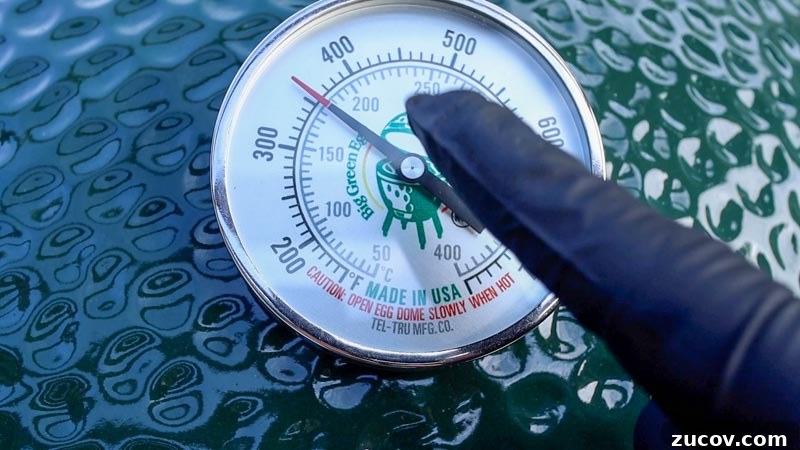
Set up the Egg for higher-heat indirect cooking. Instead of 225°F, we’ll target 350°F to speed the cook while still allowing fat to render and bark to form.
Wood: Use hickory or pecan chunks for a stronger smoke flavor since the meat is on the grill for less time.
Configuration: Set the ConvEGGtor (plate setter) with the legs up for indirect heat.
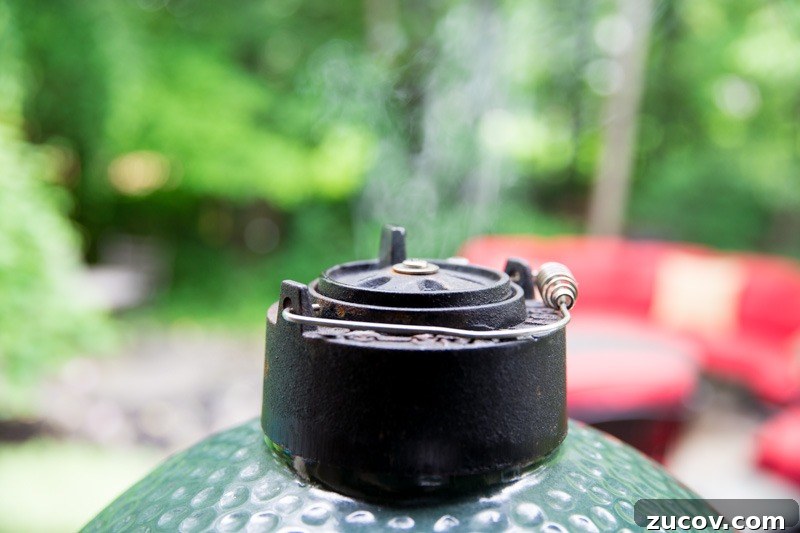
Temperature: Stabilize at a steady 350°F. When you see a clean blue smoke from the daisy wheel, the Egg is ready and it’s time to add the butt.
Step 5: The Cook (Setting the Bark)
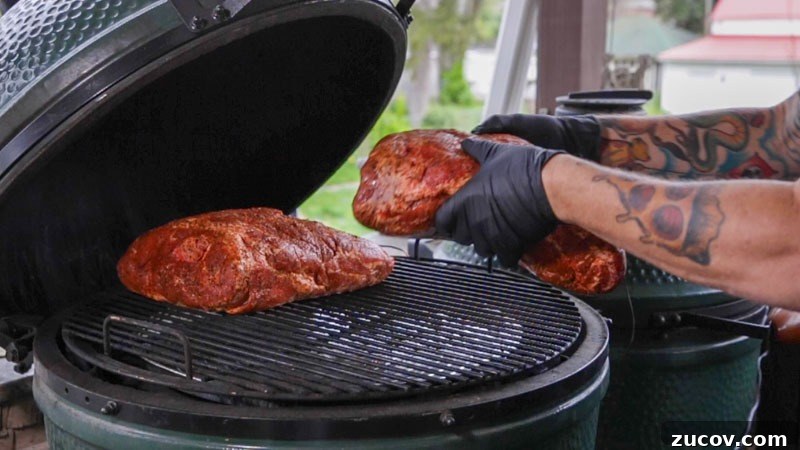
Place the Boston butt on the grate fat side down. At 350°F the fat cap acts as a heat shield, protecting the meat from direct radiant heat and preventing the bottom from becoming tough or scorched.
Those crosshatch cuts still allow the fat to render and baste the meat effectively even when facing the heat source.
Close the dome and avoid peeking; keeping the Egg closed preserves the convection environment needed to build bark quickly at this higher temperature.
Step 6: The First Three Hours (Bark and Moisture)
Let the pork cook for about 3 hours, or until the internal temperature reaches 165°F. During this phase the Turbo heat sets a deep, dark bark and renders outer fat.
To prevent the exterior from drying, use a misting schedule:
- Spritz: 50/50 apple juice and apple cider vinegar. The juice adds sugars for better bark, while the vinegar cuts through fat.
- Cadence: Mist every hour to keep the surface moist and help smoke adhere, improving color and flavor.
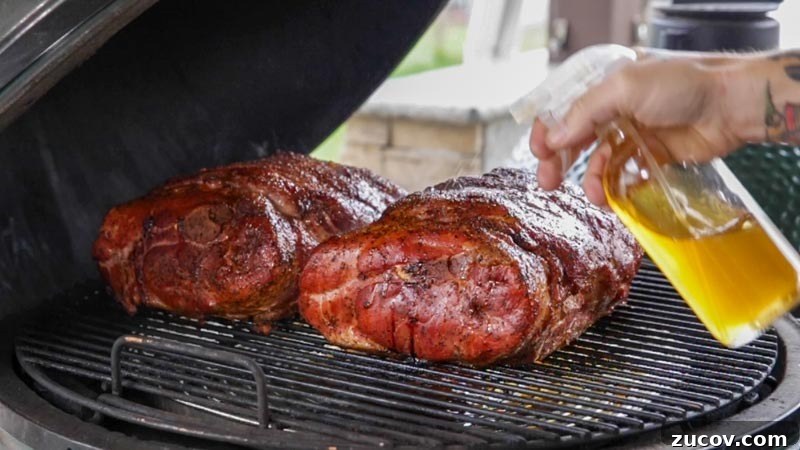
When the probe reads 165°F the bark should be set and the meat ready for the next step: wrapping.
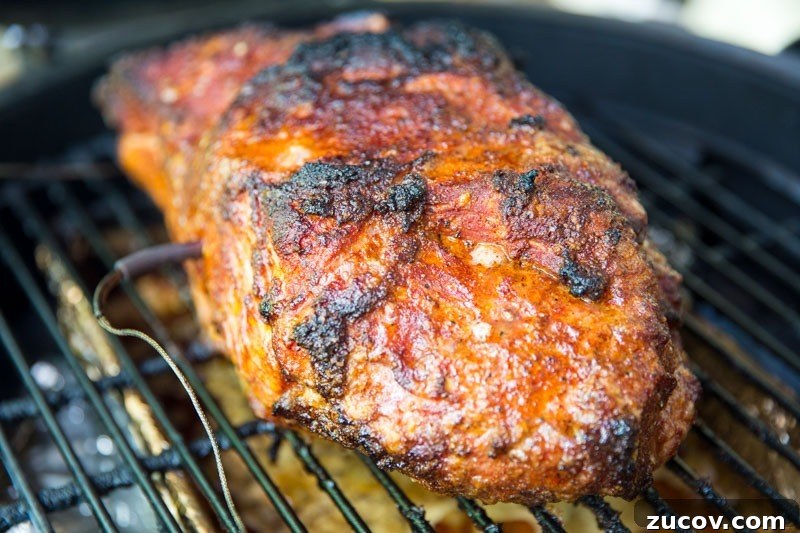
Step 7: The Wrap (Powering Through the Stall)
At 165°F the bark will be dark and firm. Remove the butt and place it on a double layer of heavy-duty foil. Add about 1/4 to 1/2 cup apple juice to create a moist braising environment, then wrap tightly to trap steam.
Return the wrapped pork to the Egg, fat side down, and continue cooking for about 2 hours. This wrapped phase speeds through the stall; aim for an internal temperature around 195°F before testing for tenderness.
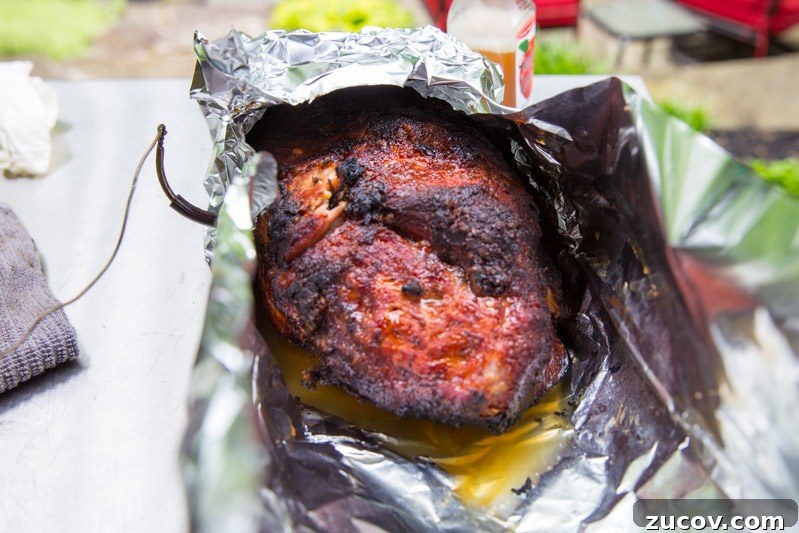
Step 8: The “Butter” Test and the Finish
When the thermometer hits around 195°F, check for probe tenderness. The probe should slide into the meat with zero resistance—like softened butter. If it still feels tight, give it another 10–15 minutes.
Most butts reach true pull-apart tenderness between 195°F and 203°F. When it reaches that buttery feel, remove it from the Egg.
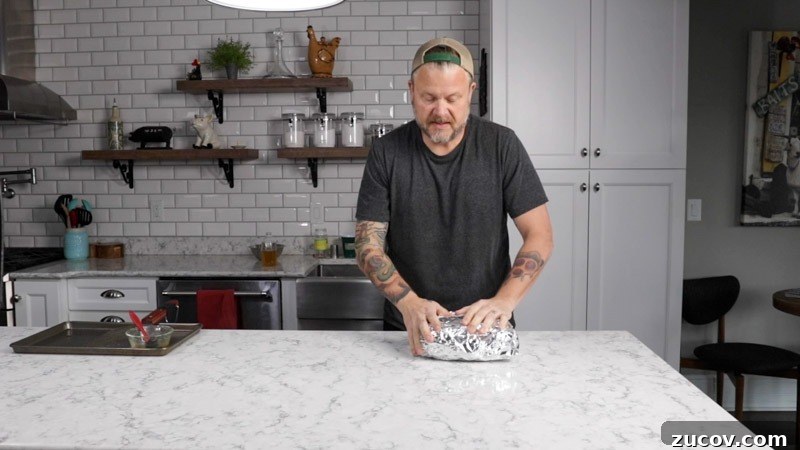
Step 9: The Rest and the “Bone Pull”
Do not skip resting. Keep the pork wrapped and let it rest for at least one hour so the juices redistribute. Resting in foil (or in a cooler wrapped with towels) can hold it for several hours if needed.
After the rest, the shoulder bone should slide out clean with little effort—the classic sign of a perfectly cooked pork butt.
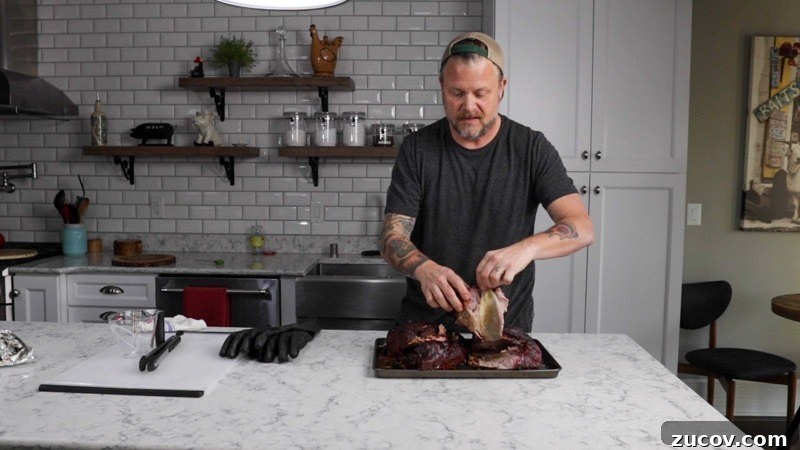
Step 10: Chopping and Serving
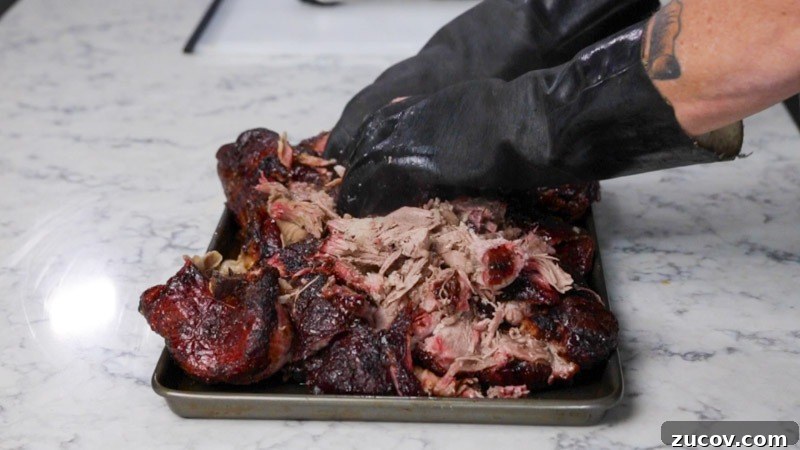
Remove the bone and pull the pork into a consistent pile, mixing in the crunchy, seasoned bark pieces. Contrary to some beliefs, Turbo cooks can still produce a vibrant smoke ring and deep smoke flavor when using quality hardwood chunks.
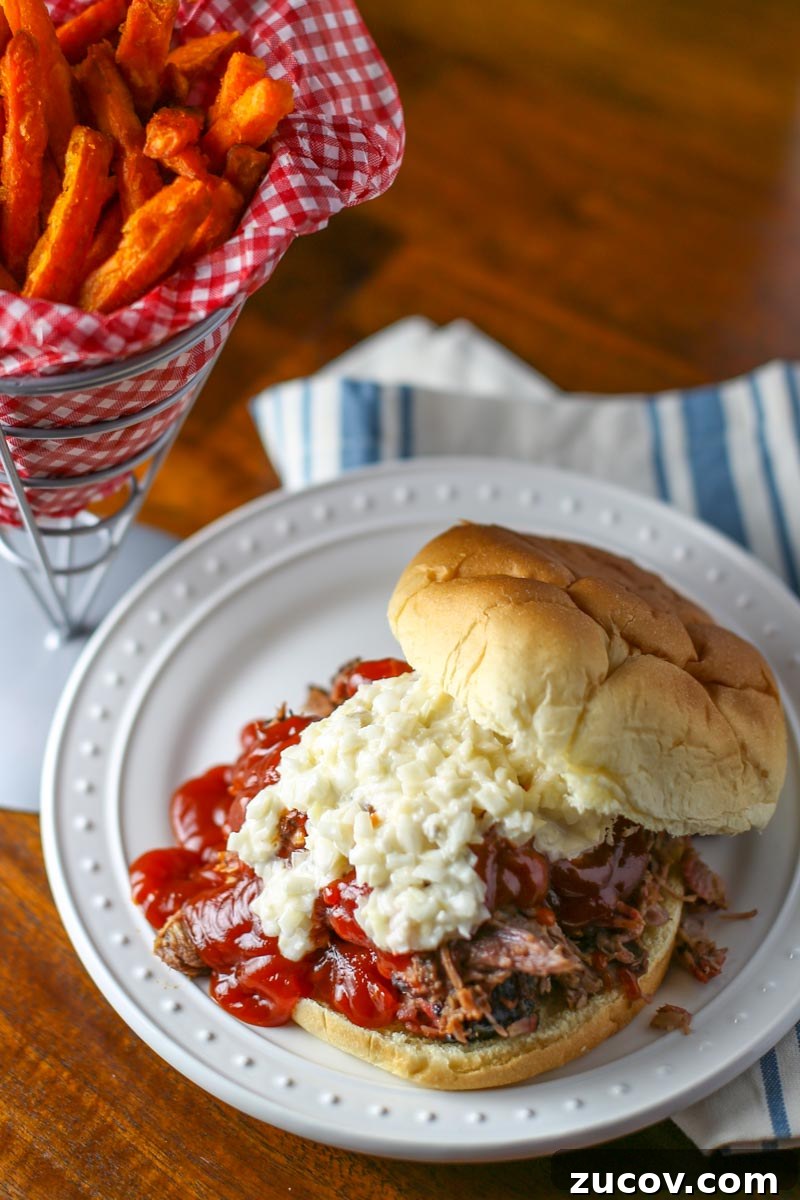
Serve the pulled pork piled high on toasted buns with extra barbecue sauce and a cold beer. It’s an ideal meal for an afternoon with friends and family.
The Final Verdict: Why Turbo Wins
If you’ve hesitated to try Hot and Fast, give it a shot. With a good injection, a reliable binder, and the fat-side-down heat-shield technique, you can deliver competition-quality pulled pork in roughly six hours instead of an all-night cook.
Next time you’re pressed for time but want great barbecue, fire up the Egg, hold steady at 350°F, and enjoy being the backyard hero.
Hot and Fast Pulled Pork: Big Green Egg Recipe
Equipment
-
1 meat injector
Ingredients
Meat Ingredients:
- 8-10 pound Bone-in Boston Butt, (pork shoulder)
- 2-3 tbsp Yellow mustard
- 3/4 cup BBQ rub, e.g., honey-sugar based
Injection Ingredients:
- 1 cup Apple juice
- 1/2 cup Water
- 2 tbsp Sugar
- 2 tbsp Kosher salt
- 1 tbsp Worcestershire sauce
Spritz Ingredients:
- 1/2 cup Apple juice
- 1/2 cup Apple cider vinegar
Instructions
-
Trim and score: Remove loose fat and silver skin. Score the fat cap in a 1-inch crosshatch, cutting just to the meat.
-
Inject: Whisk injection ingredients until dissolved. Inject the Boston butt evenly in a grid pattern.
-
Binder and rub: Coat with a light layer of yellow mustard and apply the rub, working it into the scores.
-
Set up the Egg: Configure the ConvEGGtor (legs up) for indirect cooking, add hickory or pecan chunks, and stabilize at 350°F.
-
Wait for clean smoke: When white smoke clears to thin blue, the Egg is ready.
-
Phase 1: Place pork fat side down on the grate and close the dome to develop the bark.
-
Spritz: Every hour mist with the apple juice/vinegar mix to maintain moisture and improve bark color.
-
Wrap: At about 165°F (≈3 hours), remove pork, place on double foil, add 1/4–1/2 cup apple juice, and wrap tightly.
-
Phase 2: Return wrapped pork to the Egg, fat side down, and cook about 2 more hours until internal temperature reaches 195°F–203°F.
-
Butter test: The probe should slide in with no resistance like softened butter—if not, return to heat for a short time.
-
Rest: Remove the pork and rest wrapped for at least 1 hour (or longer in a cooler wrapped in towels).
-
Pull and serve: Remove the bone, shred or chop the meat, mix in the crispy bark, and serve on toasted buns.
Nutrition information is approximate.
Additional Info