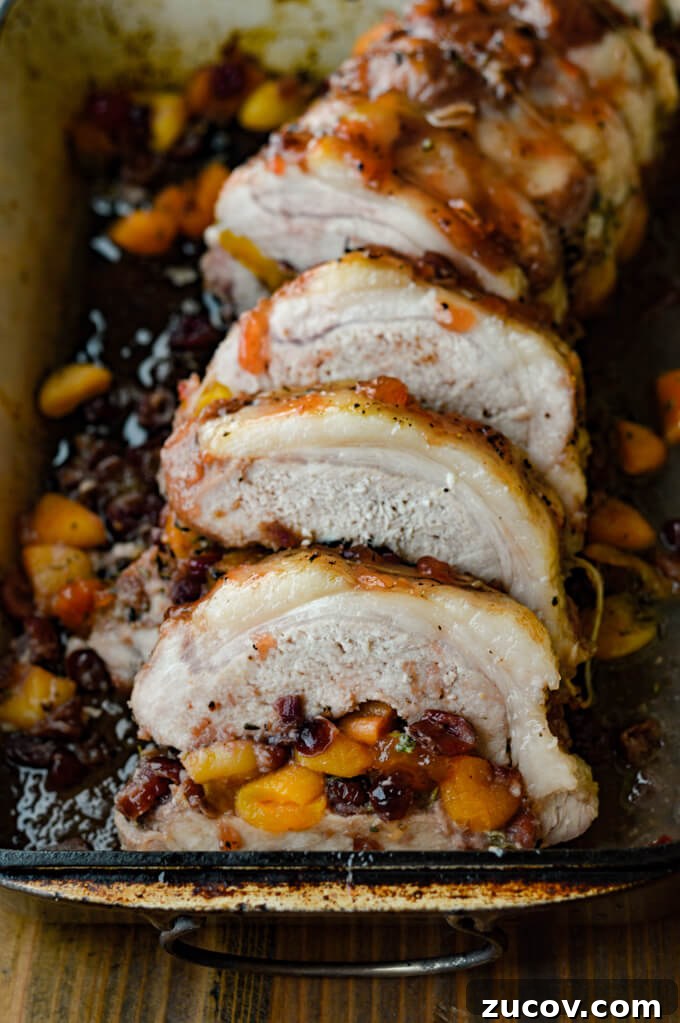
This tender, juicy fruit-stuffed pork loin is filled with garlic, fresh herbs, dried apricots and craisins for a sweet-savory contrast that pairs beautifully with pork. A simple peach preserve glaze finishes the roast with glossy sweetness. It makes an elegant centerpiece for holiday dinners or a special occasion; the prep takes a bit of effort, but the result is well worth it.
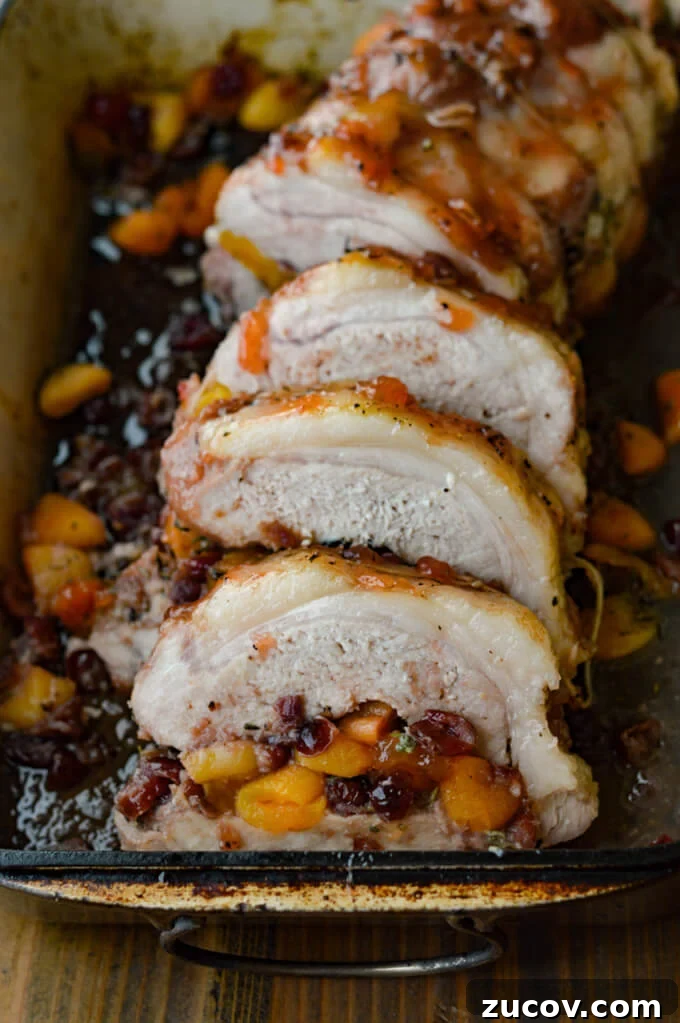
There are many great ways to stuff pork; variations like wild rice and mushroom stuffing, roasted red peppers with feta and spinach, or a herbed crown roast are all delicious options if you want alternatives. This version uses dried fruit and applesauce combined with garlic and fresh herbs to create bright, layered flavors and an attractive cross-section when you slice the roast.
Fruit Stuffed Pork Loin Recipe
Ingredients you’ll need
- Dried apricots and craisins (you can substitute dried cherries, figs, golden raisins, pitted prunes, or chopped apples)
- Ground cinnamon (added to the soaking water or applesauce for warmth)
- Pork loin roast — choose a 4–5 pound center-cut, butterflied
- Salt and freshly ground black pepper
- Unsweetened applesauce (acts as a savory-sweet base; unsweetened is preferred)
- Garlic cloves, minced
- Fresh rosemary, thyme and sage (use fresh for best flavor; if using dried, use about 1 teaspoon of each)
- Olive oil
- Peach preserves (apricot or cherry preserves work well too)
Difference between Pork Loin Roast and Pork Tenderloin
A pork tenderloin is a long, narrow, very lean muscle that typically weighs around one pound. A pork loin roast is wider, thicker and often has a fat cap that helps keep the roast moist; boneless pork loins are commonly several pounds and are the proper cut for this stuffed roast. A tenderloin is too small to substitute for this recipe.
How to Butterfly Pork Loin for Stuffing
- Place the pork loin fat-side up on a large cutting board.
- Use a long, sharp boning knife and cut horizontally lengthwise, stopping about ½–1 inch from the opposite edge so it opens like a book.
- Open the roast and, with the fat side down, cover with plastic wrap and pound with a meat mallet or rolling pin to even the thickness.
- If you prefer, ask your butcher to butterfly the roast for you—many will do it at no charge.
How to Stuff Pork Loin with Fruit
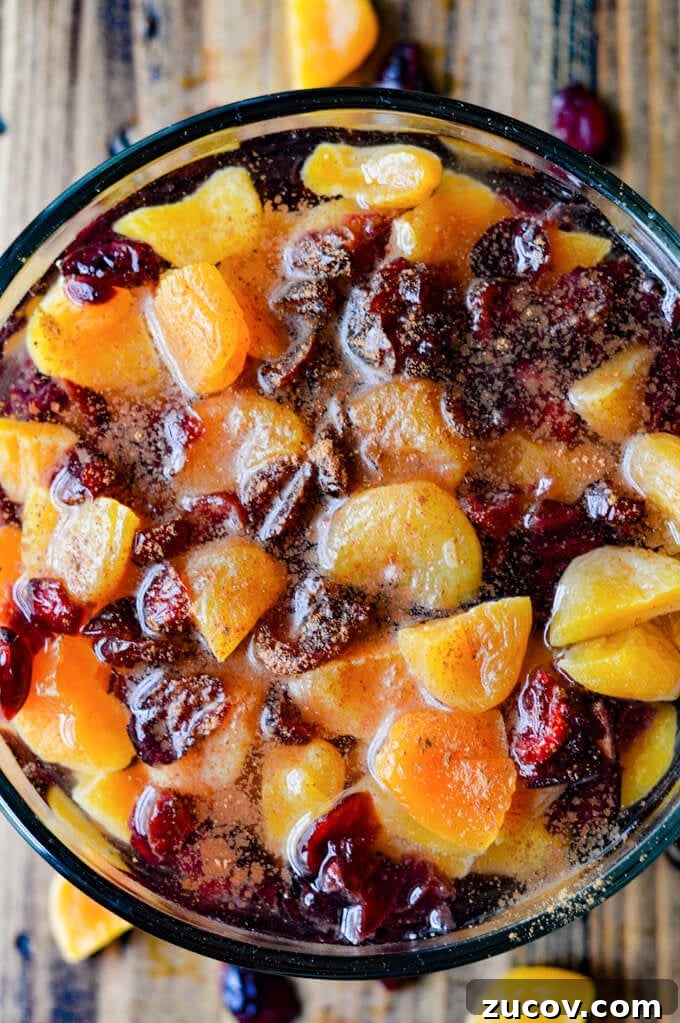
- Pour boiling water over the dried apricots and craisins, stir in a little ground cinnamon, and soak for about 10 minutes. Drain well so the fruit holds some texture after roasting.
- Season the butterflied pork generously with salt and pepper on the cut side.
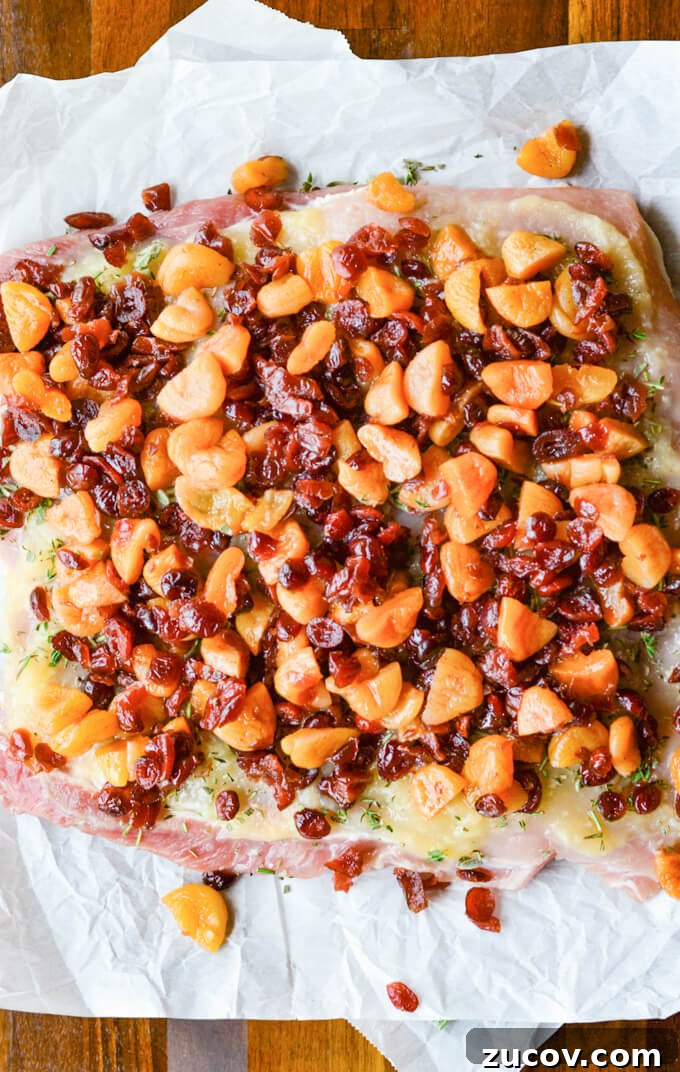
- Spread a mixture of unsweetened applesauce and minced garlic across the pork, then sprinkle with half of the chopped fresh herbs.
- Evenly distribute the drained fruit over the applesauce, leaving about a 1-inch border so the filling doesn’t spill out when rolled.
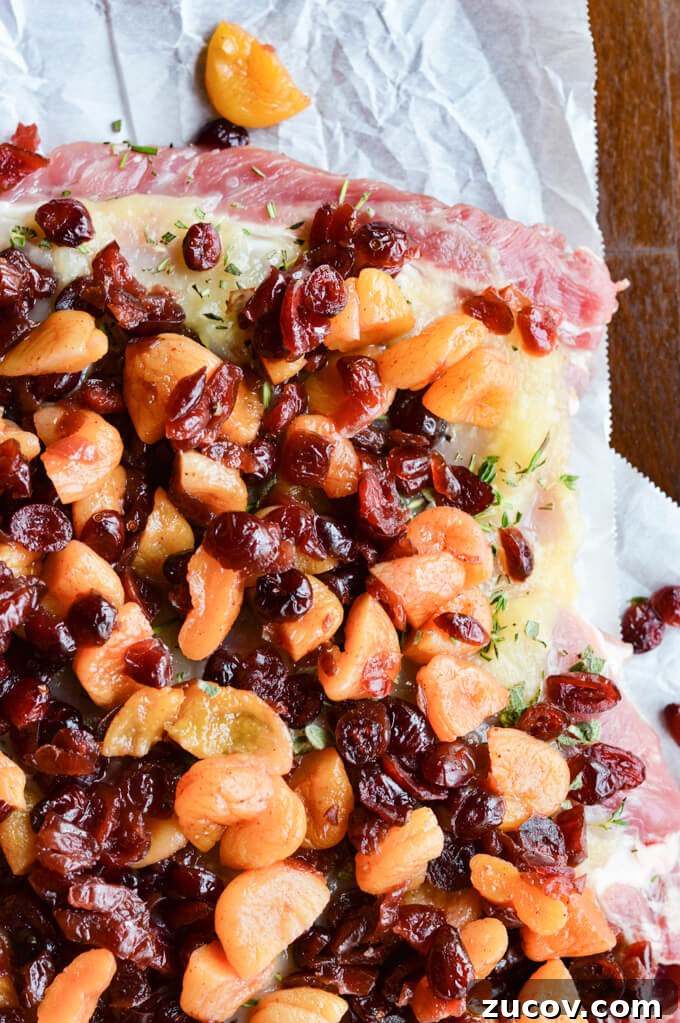
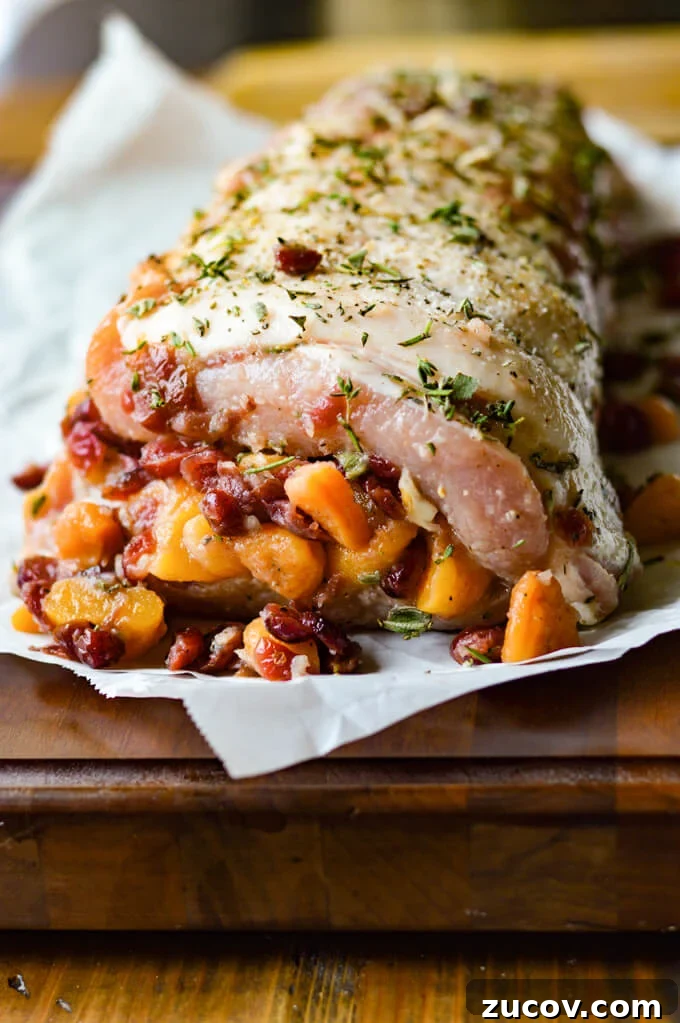
- Roll the roast away from you, starting with the side without the fat cap. Turn the roll so the fat side faces up.
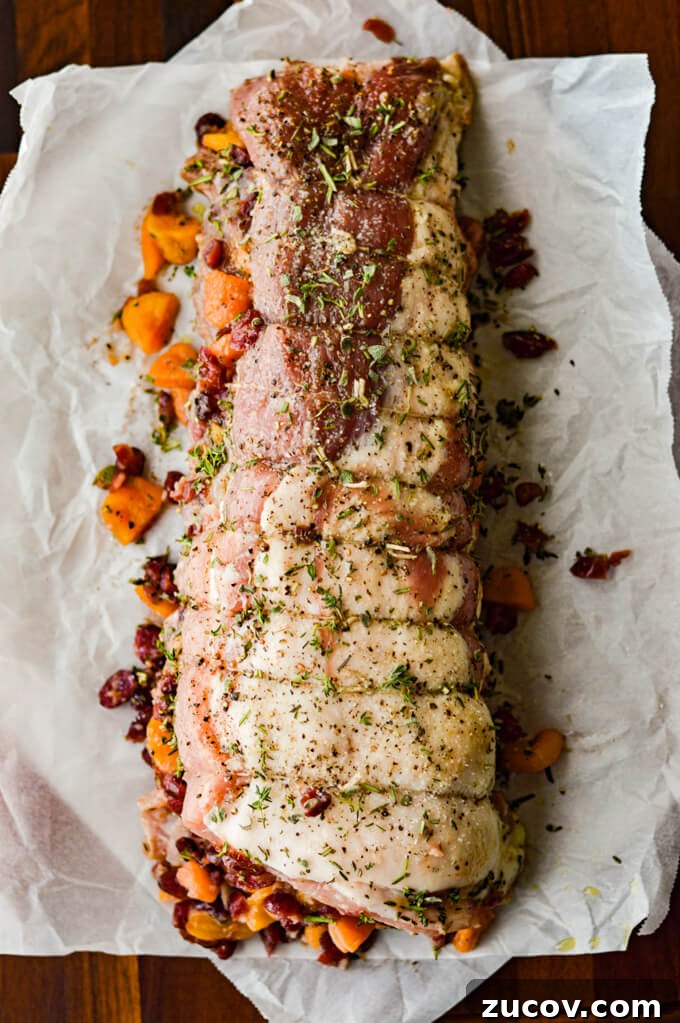
- Tie the roast with kitchen twine to hold its shape and keep the stuffing inside—place ties every 1½–2 inches. Tuck any escaped fruit back into the seam before tying.
How to Cook a Pork Loin Roast
- Place the tied roast in a roasting pan with the fat side up and add 1 cup of dry white wine to the bottom of the pan.
- Roast uncovered at 450°F for 10 minutes to brown and seal the exterior.
- Reduce oven temperature to 325°F, tent the roast loosely with foil, and continue cooking about 45 minutes.
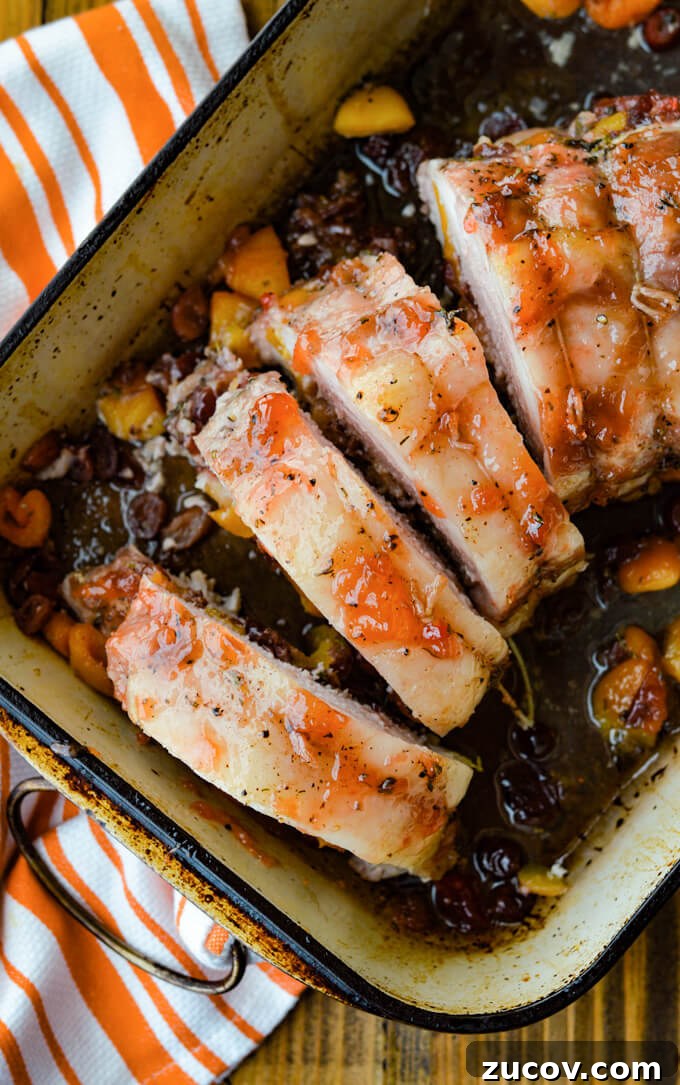
- Remove from the oven, brush the roast with peach preserves over the top and sides, then return to the oven uncovered and roast about 20 more minutes.
- Remove the roast to a cutting board, tent with foil, and let rest 10–15 minutes before slicing so the juices redistribute.
Tips for Success
- Bring the roast to room temperature for about 45 minutes before cooking for even doneness, but never leave it out more than two hours.
- Tying the roast keeps the filling inside and preserves a neat shape for slicing.
- Roast fat-side up so the fat bastes the meat while it cooks.
- Use an instant-read thermometer to avoid overcooking: remove the roast when the thickest part reaches 135–140°F; carryover cooking will bring it to about 145°F, the recommended finished temperature.
- Let the roast rest 10–15 minutes before slicing to retain juices.
Make Ahead and Freezing
You can stuff and tie the roast a day ahead, keep it refrigerated, bring it to room temperature before roasting, and cook as directed. Cooked slices freeze well for up to three months—wrap individual portions airtight, thaw overnight in the refrigerator, and reheat covered at 325°F until warmed through.
Servings
A five-pound stuffed pork loin yields about 10–12 servings, assuming roughly 8 ounces per person. Portions will vary by appetite.
Suggested Side Dishes
This roast pairs well with a range of sides; try roasted vegetables, sautéed mushrooms in a wine sauce, asparagus wrapped in prosciutto, orange-candied carrots, or roasted green beans with sundried tomatoes and olives for a complete holiday plate.
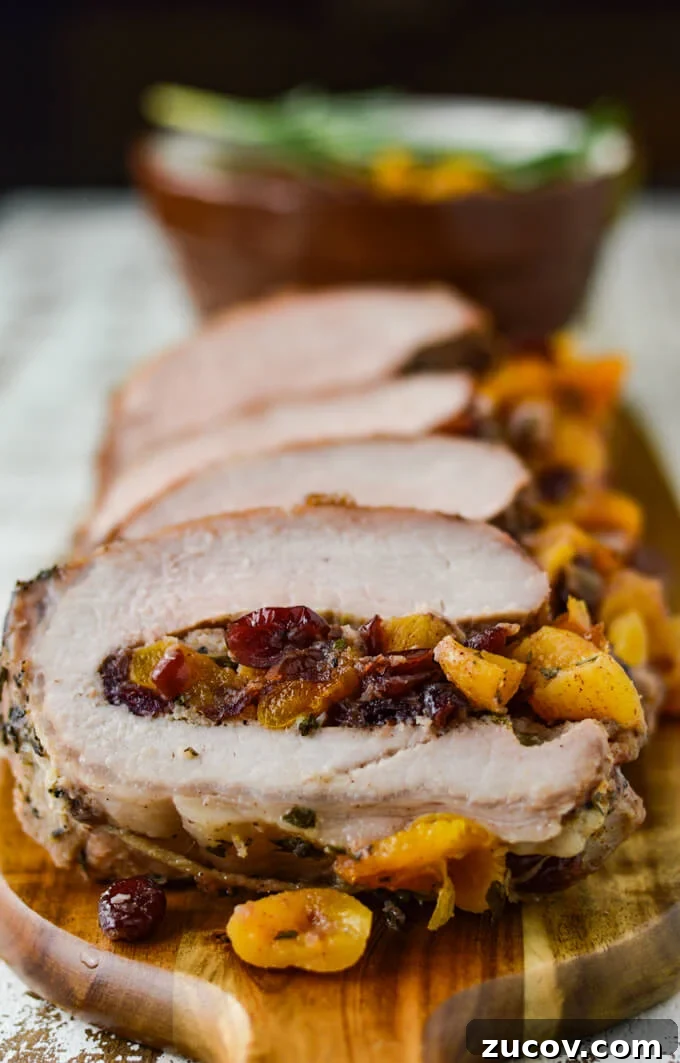
This fruit-stuffed pork loin with peach glaze is an impressive, flavorful centerpiece that’s perfect for holiday meals, dinner parties, or any time you want to serve an elegant roast.
Recipe Summary
Ingredients (summary)
- 2 (6 oz) packages dried apricots, halved
- 1½ cups craisins
- 2 cups boiling water
- 1 teaspoon ground cinnamon
- 5 lb butterflied pork loin roast
- 2 teaspoons kosher salt, divided
- 1 teaspoon freshly ground black pepper, divided
- ¾ cup unsweetened applesauce
- 6 large garlic cloves, minced
- Fresh rosemary, thyme, and sage (about 1 tablespoon each, divided)
- 1 tablespoon olive oil
- 1 cup dry white wine
- 8 oz peach preserves
Basic Instructions (summary)
- Soak fruit in boiling water with cinnamon 10 minutes, then drain.
- Butterfly and pound roast; season cut side with salt and pepper.
- Spread applesauce and garlic, sprinkle half the herbs, then layer drained fruit.
- Roll and tie roast, brush with oil, season and add remaining herbs.
- Roast at 450°F for 10 minutes, reduce to 325°F covered for 45 minutes.
- Brush with preserves, roast uncovered about 20 minutes until internal temp reaches 135–140°F, then rest 10–15 minutes.