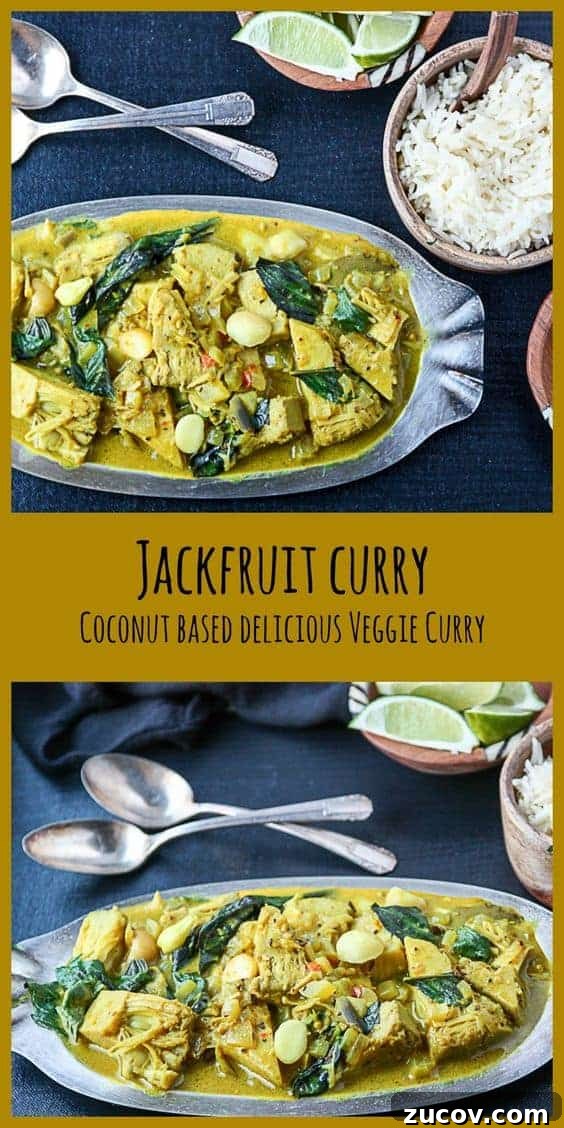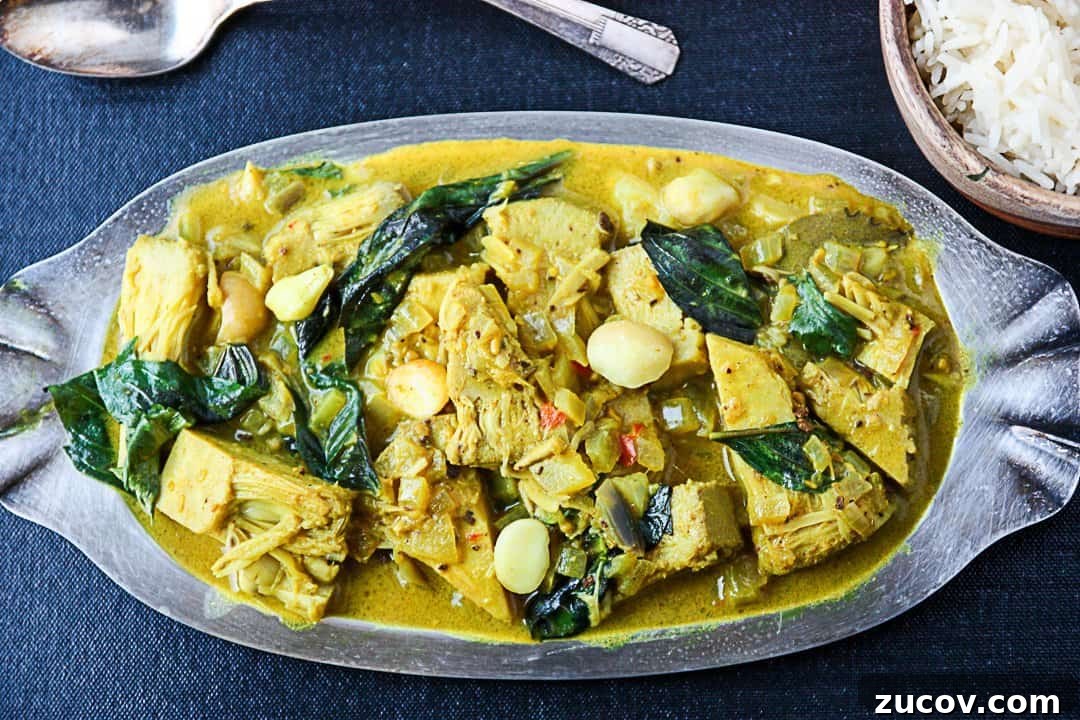
Jackfruit curry was a delightful discovery for me on a trip to Maui, Hawaii. While exploring a favorite farmers’ market, I met a friendly family who introduced me to many tropical fruits. They explained how to select and prepare items, offered samples, and even provided cooking tips. Alongside ripe jackfruit, I sampled cherimoya, breadfruit, eggfruit, strawberry guava, pineapple, papaya, mango, and tiny sweet bananas—each memorable in its own way.
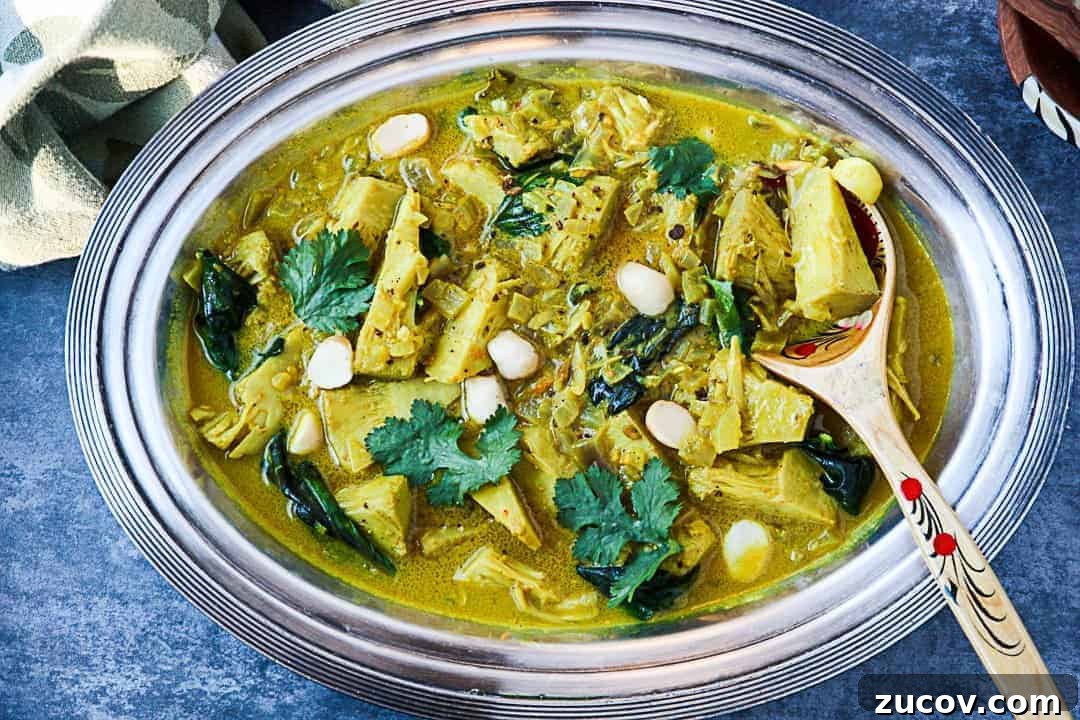
Jackfruit itself is impressive. These melon-shaped fruits, sometimes weighing up to 100 pounds and covered in a bumpy rind, are the largest tree fruit in the world. Ripe jackfruit is sweet and creamy with banana and pineapple notes, perfect eaten fresh or used in desserts like ice cream. Young, unripe jackfruit—often called green jackfruit—is commonly used in savory dishes for its meat-like texture and neutral flavor that soaks up seasonings.

Why Jackfruit Works as a Meat Substitute
I first tasted jackfruit curry at an Indonesian restaurant and immediately wanted to recreate it at home. Unripe jackfruit is popular as a plant-based substitute because its fibrous texture resembles pulled meat or poultry. It has a mild taste that readily absorbs spices, herbs, and sauces, which makes it ideal for curries, stews, and braises.
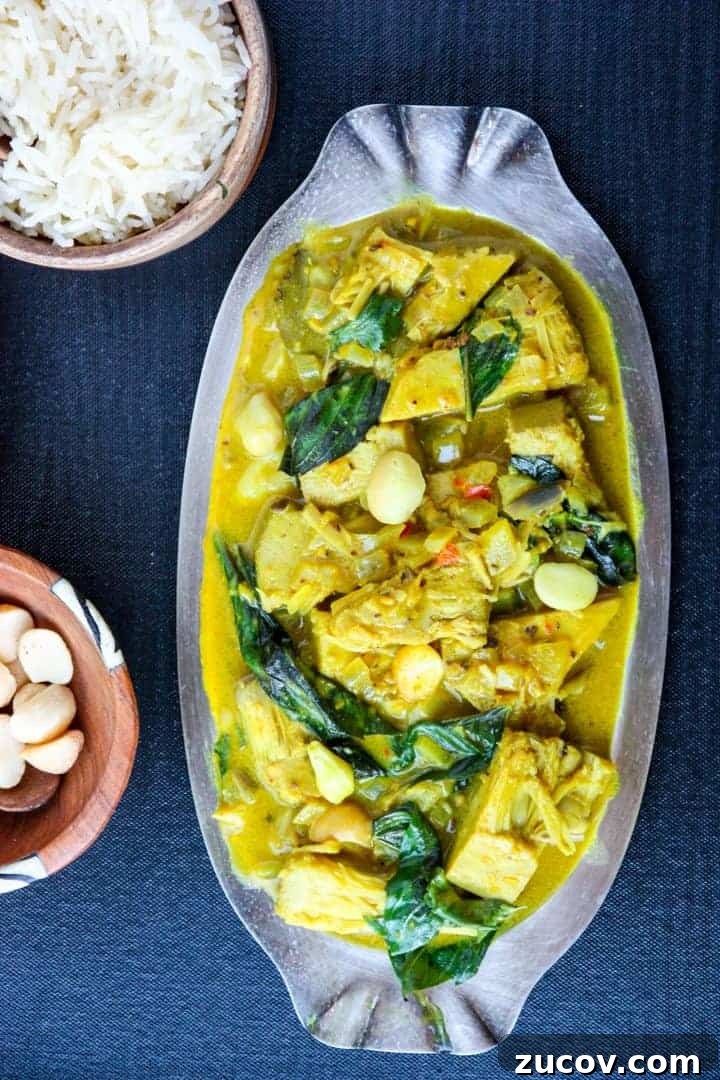
Fresh Jackfruit vs. Canned Jackfruit
For home cooking, canned young jackfruit in brine is a convenient option. You can find it in Asian groceries and many supermarkets’ international aisles. Using a fresh, whole unripe jackfruit is possible but labor-intensive: the fruit is massive, messy, and time-consuming to prepare. For most cooks, canned jackfruit that’s drained and rinsed is the sensible choice.

Regional Variations
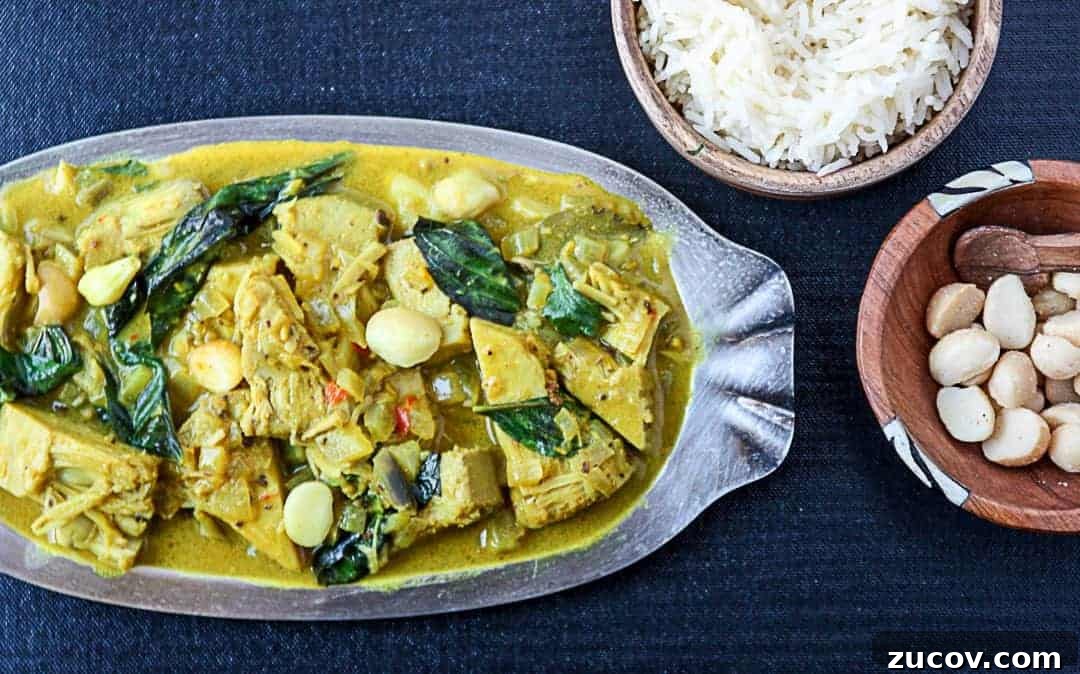
Jackfruit is native to Southeast Asia and features in many regional cuisines. You’ll find jackfruit curries throughout India, Indonesia, Thailand, Malaysia, Singapore, and beyond. This recipe is my own version, not tied to a single regional tradition. I used macadamia nuts to echo Hawaiian flavors, but cashews or peanuts are excellent alternatives. If you have nut allergies, simply omit them; the dish will still be satisfying and flavorful.
Recipe
Jackfruit Curry
Ingredients
- 1 tablespoon coconut oil
- 1 onion diced
- 2 inches fresh ginger peeled
- 2 garlic cloves
- 1 bird’s eye or Thai chile seeded (or substitute ½ tsp dried red chili flakes)
- 2 tablespoon dried turmeric
- 1 teaspoon mustard seed
- 1 teaspoon fenugreek seed
- 1 teaspoon fennel seed
- 1 teaspoon dried lemongrass
- 1 can light coconut milk 398 ml
- ½ cup vegetable stock
- 1 can green jackfruit in brine drained (550 ml) and rinsed well
- 2 bay leaves
- ¼ teaspoon fish sauce omit for vegan
- 1 cup Thai basil leaves
- ¼ cup chopped cilantro or flat-leaf parsley
- juice of one lime
- ½ cup roasted macadamia nuts or substitute cashews or peanuts
Instructions
- In a grinder or food processor, combine ginger, garlic, chile, turmeric, mustard seed, fenugreek, fennel, lemongrass, and salt.
- Process until a smooth paste forms.
- Heat coconut oil in a large saucepan over medium-high heat.
- Add the diced onion and cook until softened, about 3 minutes.
- Add the spice paste and cook, stirring, until fragrant, about 2 minutes.
- Stir in coconut milk, vegetable stock, drained jackfruit, bay leaves, and fish sauce (if using), then bring to a boil.
- Reduce heat and simmer, stirring occasionally, for about 30 minutes so the flavors meld and the sauce thickens.
- Stir in lime juice, basil leaves, and cilantro or parsley. Taste and adjust seasoning—add more salt if needed.
- Remove from heat and fold in the roasted macadamia nuts (or your preferred nut).
- Serve hot with basmati or jasmine rice.
Notes
* Thai chilies are very hot. Use gloves when handling if needed. One seeded chili gives a mild heat; adjust to your preference.
* If you can’t find Thai basil, any fresh basil works well.
* Substitute cashews or peanuts for macadamia nuts, or omit nuts for allergies.
* The curry will reduce and thicken while simmering. Add extra vegetable stock if you prefer a saucier curry.
* Fish sauce varies in saltiness; start with ¼ teaspoon and add more to taste, or omit for a vegan version.
Nutrition
|
Calories: 189kcal
|
Carbohydrates: 10 g
|
Protein: 2 g
|
Fat: 16 g