Frozen burger patties are convenient, but store-bought options often use lower-quality meat or include additives. The fix is simple: buy beef from a trusted butcher or grind it at home, then make and freeze your own patties. You can also stock up when beef is on sale to save money and eat better.
I appreciate the convenience of frozen patties, but commercially made frozen burgers often disappoint in texture and flavor. A big part of that is the meat quality and how aggressively the meat is handled during processing. Homemade or butcher-ground beef lets you control both.
Think about the difference between mass-produced frozen meatballs and ones you shape by hand. The texture of hand-formed meatballs is consistently better because the meat is treated gently. The same principle applies to burgers: a light touch and consistent shaping make a superior patty. I often make extra and freeze them for later—it’s an easy time-saver.
Making your own frozen patties for grilling is straightforward. If you’re already prepping burgers, make a double batch and freeze half for quick meals later. Buying beef on sale—whether ground beef or larger cuts you can grind yourself—lets you save money while improving quality.
If you’re after more ways to use ground beef, try recipes like Ground Beef Fried Rice (a.k.a. Cheeseburger Fried Rice), 15-Minute Korean-Style Beef, or a quick Sesame Beef for family-friendly meals.
Tips for Making Perfect Patties for Grilling Hamburgers:
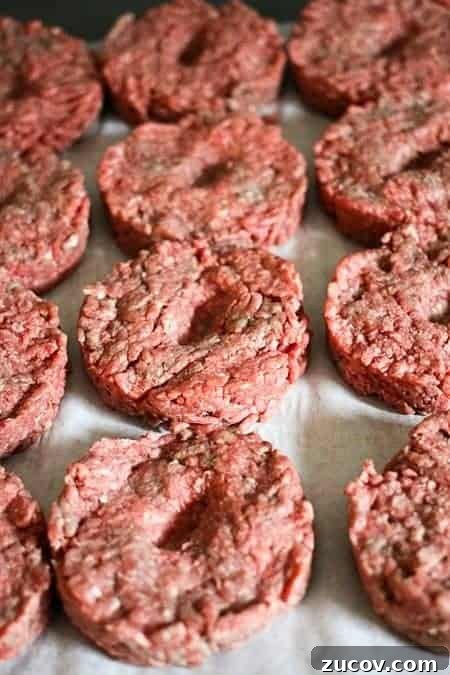
Make patties uniform in size and shape so they cook evenly.
To keep the shape consistent, use an open-topped round cookie or biscuit cutter. It creates tidy, even edges without overworking the meat.
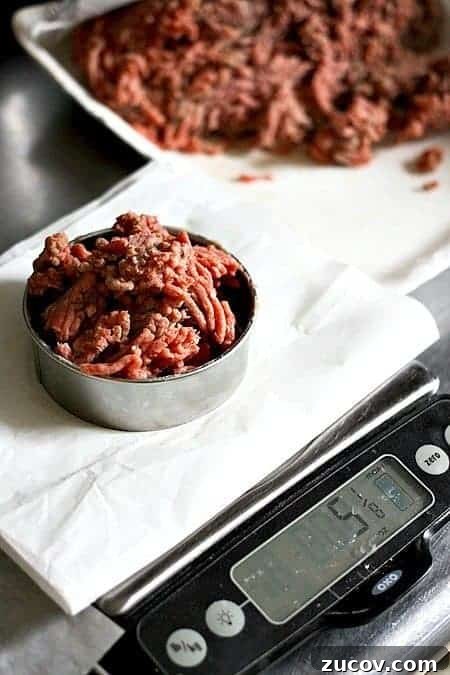
To keep the weight consistent, weigh each portion on a kitchen scale or aim to fill the cutter to the same level each time. A scale gives the most consistent results.
Avoid over-handling the meat. Pressing too hard or working the meat for too long produces a dense, tough patty. Cold hands and quick shaping preserve tenderness.
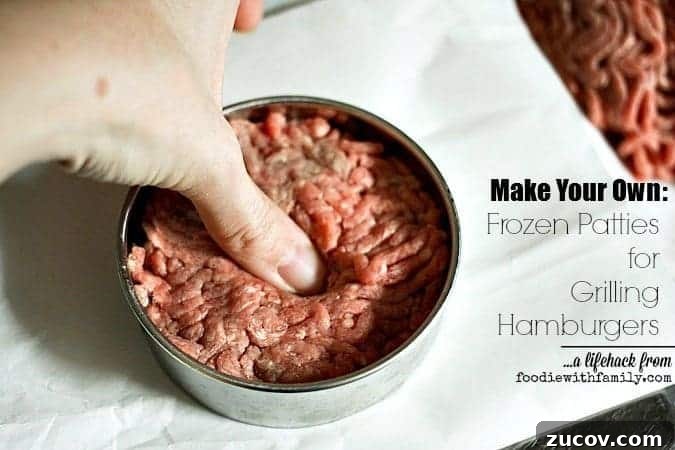
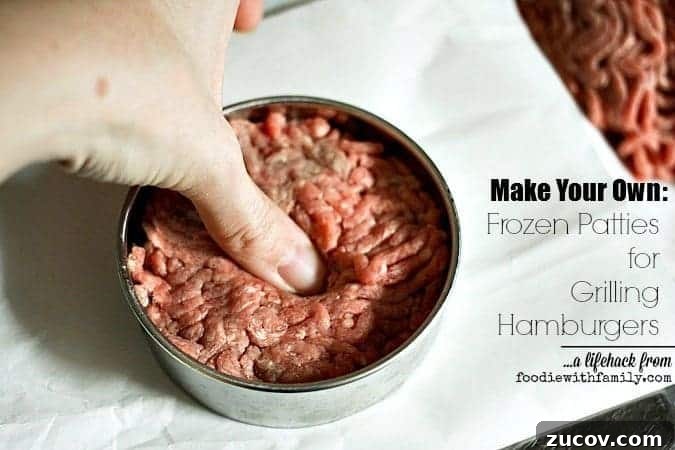
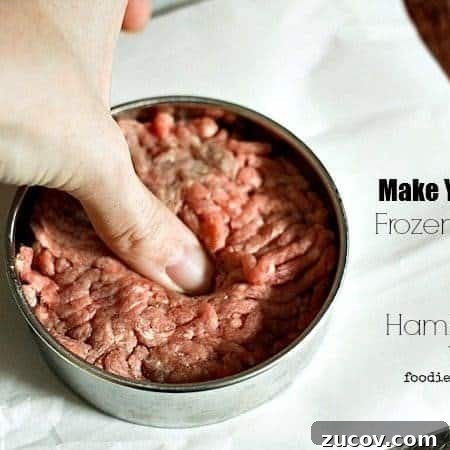
Use your thumb to press a shallow indentation about one-third of the way into each patty before freezing or cooking. That small dimple prevents the patty from doming as it cooks and helps it cook more evenly from edge to center.
Freeze patties solid before transferring them to bags. Placing parchment between each patty prevents sticking and helps them retain their shape. Stack patties with parchment squares and seal in resealable gallon freezer bags, pressing out as much air as possible to reduce freezer burn.
For extra protection against freezer burn, place the filled freezer bags inside a sturdy paper bag or wrap them in freezer paper before storing.
Make your Own Frozen Patties for Grilling Hamburgers
Rebecca Lindamood
Ingredients
- 5 pounds of 80/20 or 85/15 ground beef, or home-ground beef with about 15% fat
- parchment paper
- resealable gallon-size freezer bags
- 4- inch open-topped round biscuit cutter
- kitchen scale that measures in ounces
Instructions
-
Cover your kitchen scale with plastic wrap to keep it clean. Place a sheet of parchment on a baking sheet and set the round cutter on the scale. Turn the scale on and tare it.
-
Measure 5 ounces of ground beef into the cutter. Press gently to distribute the meat evenly in the mold. Use your thumb to press an indentation about one-third of the way into the patty; this prevents doming while cooking. Lift the cutter and transfer the patty onto the parchment-lined baking sheet. Repeat until all the meat is shaped, layering additional parchment as needed.
-
You should have about 16 patties from 5 pounds of meat.
-
Freeze the tray overnight or until the patties are solid. Cut the parchment into squares so each patty has its own piece, stack patties with parchment between them, and place stacks into gallon freezer bags. Label the bags with the beef type and date. Use within three months for best quality.
-
To grill or pan-fry from frozen:
-
Season frozen patties with salt and pepper on both sides. Preheat the grill or pan to medium-high and cook over direct heat. Avoid pressing or moving the patties. After about 6 minutes you’ll see juices pooling on top—flip gently and cook another 3 minutes for a medium burger. Use an instant-read thermometer to check doneness for accuracy.
Burger Doneness Temperatures:
-
Rare: 120° to 125°F
-
Medium Rare: 130° to 135°F
-
Medium: 140° to 145°F
-
Medium Well: 150° to 155°F
-
Well: 160° to 165°F
Nutrition
Nutritional information is an estimate. Calculate nutrition based on the actual ingredients you use if you need precise values.
did you make this recipe?
Tag @foodiewithfam on Instagram and use the hashtag #foodiewithfamily so the author can see your photos.
These are the tools the author uses regularly: a round cutter and a kitchen scale. Keep them handy when you make patties to ensure consistent results.