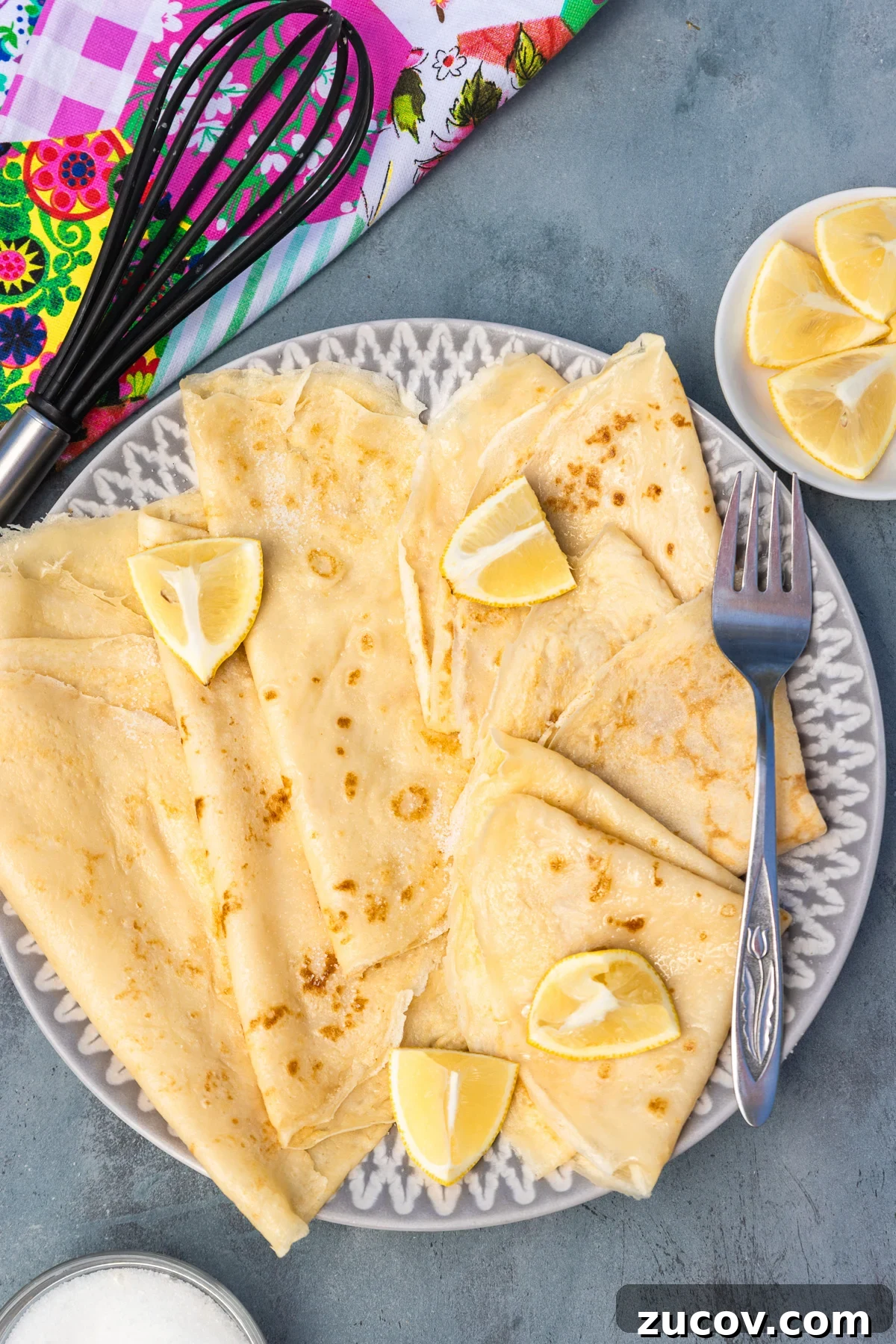
English pancakes are not the thick, fluffy style many associate with American breakfasts. These thinner pancakes are light, golden and simple to make with just a few pantry staples. Serve them with lemon and sugar for Shrove Tuesday (Pancake Day) or enjoy them any day.
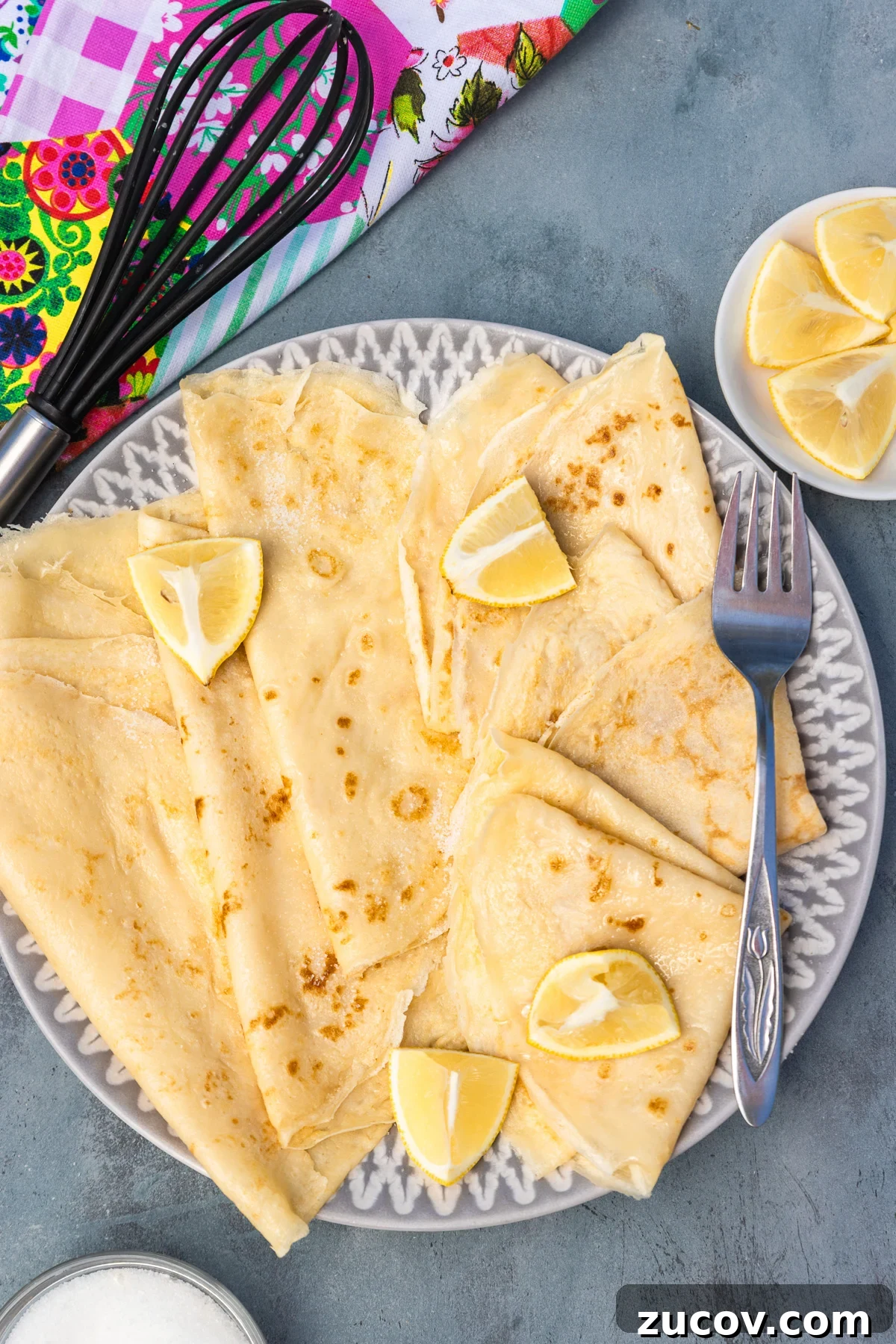
In Britain, Pancake Day is a longtime tradition. Historically people used up eggs and milk before Lent; today it’s simply a reason to enjoy delicious pancakes. For many families, it’s a highlight of the year — a time for simple pleasures like sprinkling sugar and squeezing lemon over a hot pancake, and for the occasional pan toss that may or may not land back in the pan.
How are English pancakes different?
English pancakes are flat and thin rather than fluffy and thick. They turn lightly golden and can have slightly crisp edges. The batter uses the same basic ingredients — flour, eggs and milk — but no baking powder or other leavening, which keeps them thin.
They are very similar to French crêpes but are typically a bit smaller and not quite as paper-thin. Unlike stacked American pancakes, British pancakes are usually eaten one at a time, straight from the pan, with simple toppings like sugar and lemon, Nutella and banana, or savoury fillings. Fold them into quarters, roll them up, or eat them flat — any way works.
Why you’ll love them
- Only a few ingredients: This recipe relies on three main ingredients, so the batter comes together in minutes.
- No sugar in the batter: Because the batter is unsweetened, you can add as much sugar or other sweet toppings as you like, or choose savoury options.
- Flexible meal times: These pancakes work for breakfast, brunch, lunch, dinner or ‘brinner’. They’re kid-friendly and easily adapted with toppings your family loves.
Simple, versatile and delicious — they quickly become a favourite.
About the ingredients
See the recipe card below for exact quantities. Here’s a quick overview of what you need.
Essentially this is a three-ingredient batter (with a couple of optional additions):
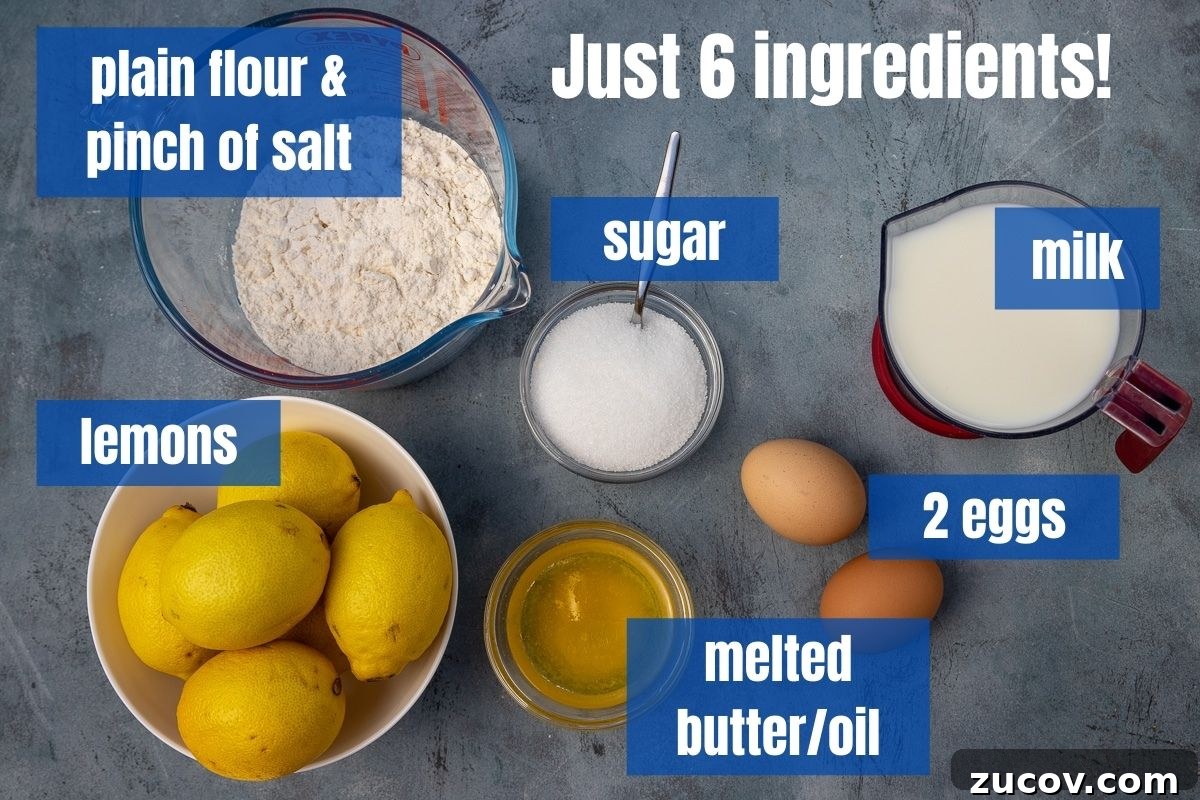
Plain flour: All-purpose/plain flour is fine. Gluten-free flour can work too.
Eggs: Use large eggs (the recipe uses two).
Milk: Whole or semi-skimmed milk both work.
A pinch of salt (optional)
Melted butter or oil: A little added to the batter helps prevent sticking; use more for frying. A mix of melted butter and vegetable or sunflower oil gives good flavour and non-stick performance.
To serve (optional): Lemon quarters and caster sugar are classic, but choose whichever sweet or savoury toppings you prefer.
How to make thin pancakes
Step 1: Make the batter. Combine the flour and salt in a medium bowl or jug. Crack the eggs into the center and add a little milk. Whisk to a thick paste.
Step 2: Gradually whisk in the remaining milk until the batter is smooth and fairly runny — a consistency similar to single cream.
Step 3: Stir in about a tablespoon of melted butter or oil to help prevent sticking (optional).
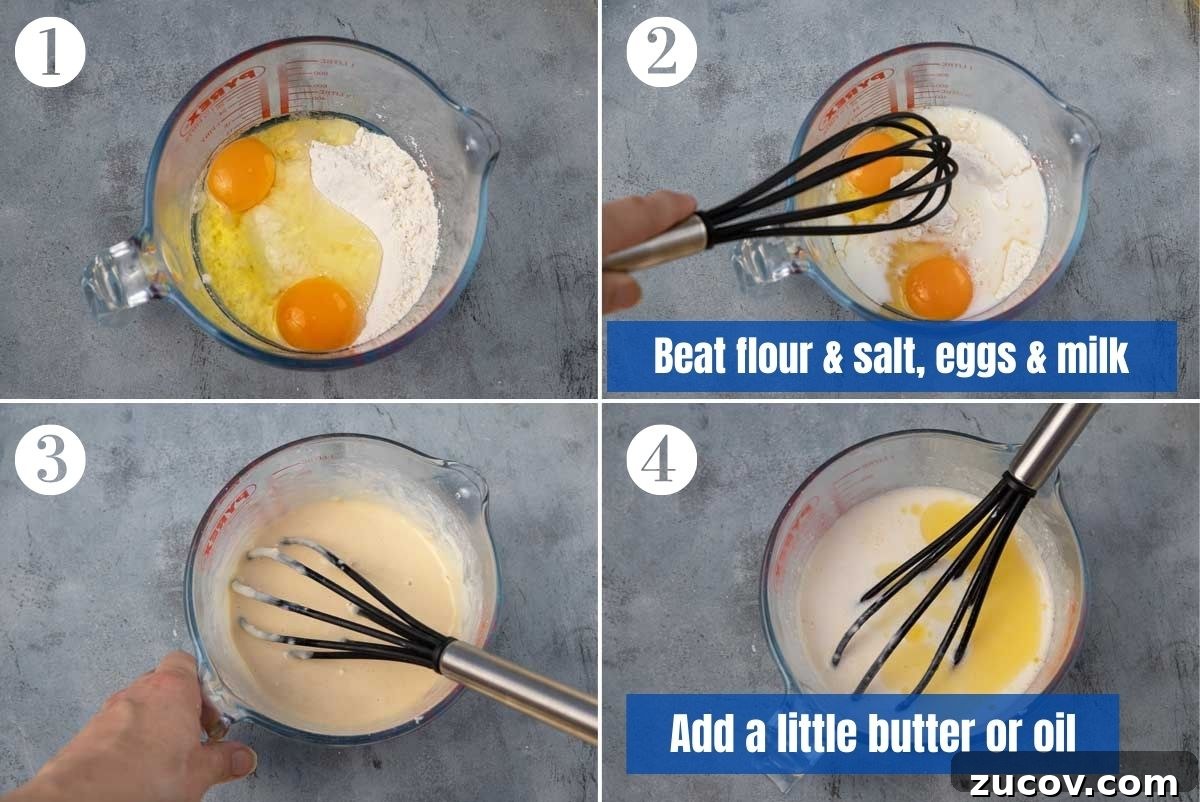
Step 4: If you can, let the batter rest for at least 10 minutes to relax the gluten and improve texture.
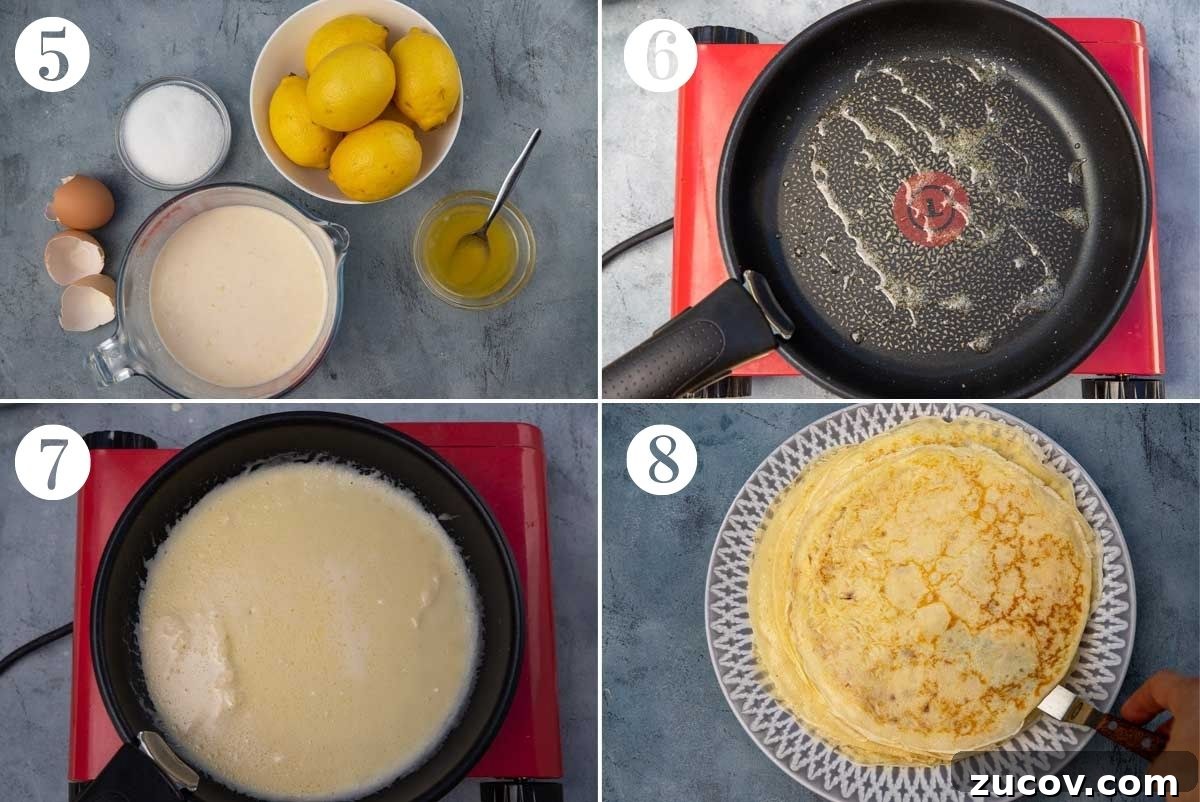
Step 5: Heat a medium non-stick frying pan over medium heat and add a little melted butter or oil. When it sizzles, you’re ready.
Step 6: Use a ladle to pour batter into the pan — about two-thirds of a ladle for a medium pan is a good starting point. Quickly tilt or swirl the pan so the batter spreads thinly and evenly.
Cook the pancake for about 2 to 2½ minutes until the underside is lightly golden, then flip with a spatula and cook for about 30 seconds on the other side. Remove to a plate and keep warm while you cook the rest. Add more butter or oil between pancakes if needed.
Top tips for foolproof English pancakes
- When whisking, be sure to fully incorporate any flour at the bottom of the bowl — a fork helps get stubborn bits mixed in.
- Let the batter rest if possible; it gives a more even texture.
- Cook on medium heat. If the pan is too hot the pancakes will burn; too cool and they won’t brown. The batter should sizzle but still allow you a moment to swirl it around. Increase to medium-high for crispier edges.
- Make a small test pancake first to check pan temperature and batter thickness.
- If the batter won’t spread easily, whisk in a little water until it reaches the right consistency.
- Keep cooked pancakes warm in a low oven set to “keep warm” (around 50°C / 120°F) or serve them straight from the pan.
Quick cheat: If you’re short on time, mix flour, 1–2 eggs and enough milk to reach single-cream consistency — it won’t harm the flavour and the pancakes will still be delicious.
What to put on your pancakes
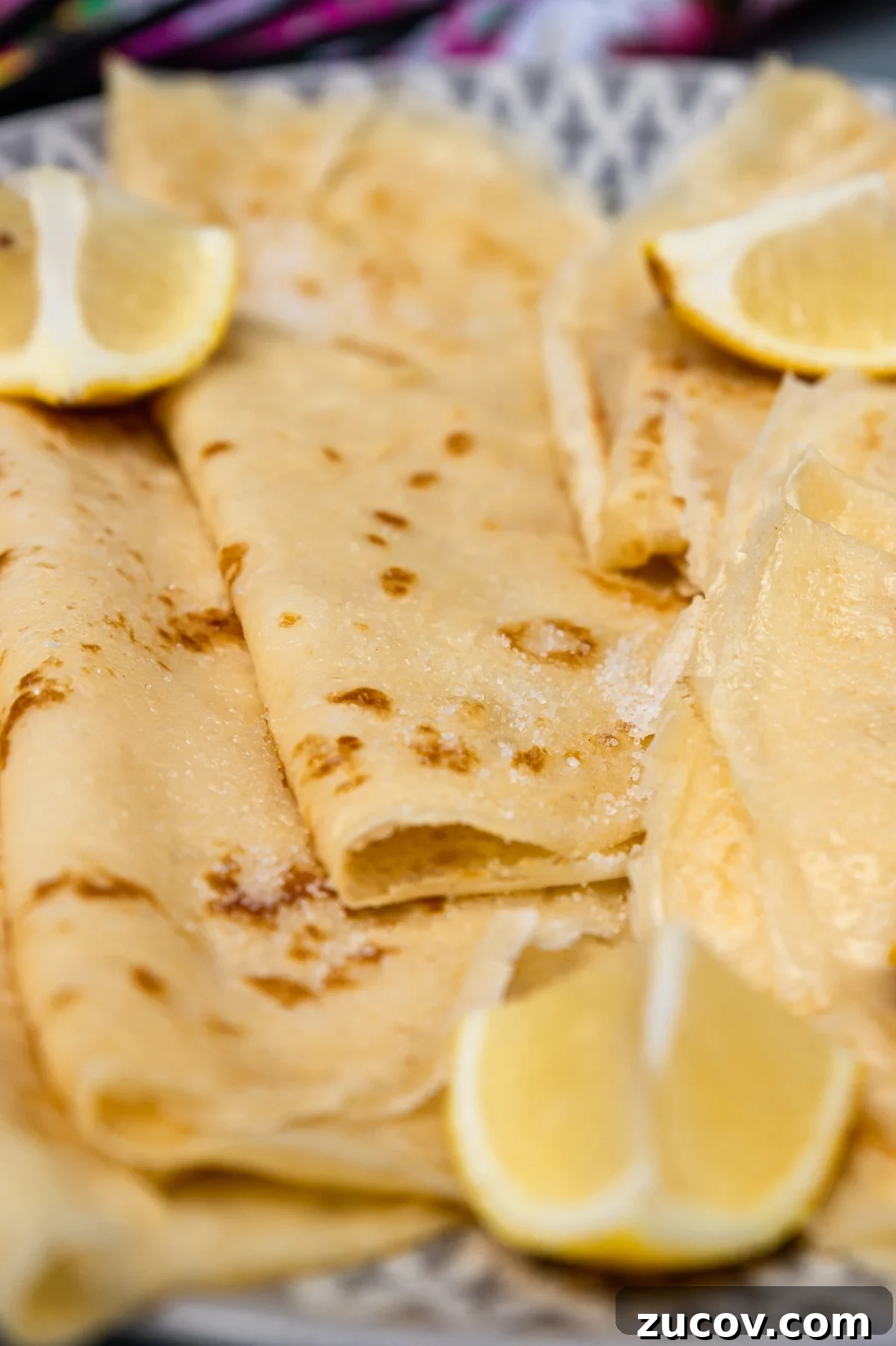
Classic sugar and lemon is my favourite, but these pancakes are highly adaptable. Here are ideas for sweet and savoury toppings to try.
Sweet topping ideas:
- Nutella and sliced banana
- Mixed berries with Greek yogurt, nuts and honey
- Maple syrup and blueberries
- Cherry pie filling with ice cream
- Caramelised bananas with a drizzle of caramel sauce
- Salted caramel and peanuts
- Chocolate fudge sauce and strawberries
- Fresh strawberry or raspberry puree
Savoury topping ideas:
- Bacon and maple syrup
- Fried egg, ham and sautéed mushrooms
- Cheese and pineapple
- Brie with crispy bacon
- Roasted cherry tomatoes, mushrooms and halloumi
- Wilted spinach and mushrooms with a soft cheese
- Smoked salmon with cream cheese
More things to know (recipe FAQ)
Yes. Covered and refrigerated, the batter will keep for up to four days, depending on the milk’s expiry date.
Yes. Well covered, they keep 2–3 days in the fridge. Reheat briefly in a hot pan or microwave (start with 20–30 seconds at 50% power and adjust).
Absolutely. Cool them completely, separate with baking or wax paper and freeze in an airtight container for up to two months.
The full recipe makes about eight pancakes, enough for 2–4 people. To halve, use half the amounts (for example, ½ cup flour and 1 egg).
Yes. The recipe is forgiving and should work with gluten-free flour and dairy-free milks, though texture and flavour may vary slightly.
Lumps usually come from adding milk too quickly. Add milk gradually and whisk constantly. Large lumps can be broken up with a fork; small lumps won’t affect taste much.
More easy breakfast (or brinner!) recipes to try
- Caramelised banana pancakes for a richer, American-style treat.
- Healthy banana oat waffles for a fibre-packed alternative.
- Easy 1-hour cinnamon scrolls for a special breakfast bake.
- Puff pastry asparagus tartlets with bacon for a brunch-worthy savoury option.
- Homemade granola — try dark chocolate granola or a lower-sugar classic version.
For more ideas, explore breakfast recipes in your collection.

Thin English Pancakes Recipe (With Lemon And Sugar)
Equipment
- medium non-stick frying pan
- measuring jug or bowl
- whisk and ladle
- spatula or palette knife
Ingredients
- 150 grams plain flour
- 1 pinch salt (optional)
- 2 large eggs
- 300 ml milk
- 3 tablespoons butter, melted (or vegetable/sunflower oil)
To serve (optional)
- sugar and lemon quarters
Instructions
- Preheat the oven to 50°C / 120°F to keep finished pancakes warm.
- Mix the flour and salt in a jug or bowl, then crack the eggs into the centre.
- Whisk in a little milk to form a thick paste, then slowly whisk in the rest of the milk until smooth. Stir in about 1 tablespoon melted butter or oil if you like.
- Heat a frying pan over medium heat, add a little melted butter or oil and wait until it sizzles.
- Ladle about two-thirds of a ladleful of batter into the pan and swirl to cover the base. Cook 2–2½ minutes until the underside is lightly golden, flip and cook about 30 seconds more. Transfer to a plate and keep warm.
- Repeat with remaining batter. Serve plain, folded or rolled with sugar and lemon, or your favourite toppings.
Notes
Batter consistency: Add milk slowly and whisk constantly for a lump-free batter. It should be like single cream. If it won’t spread, add a little water.
Make ahead: Batter can rest for 10 minutes or be stored covered in the fridge up to four days.
Storage: Cooked pancakes keep covered in the fridge for 2–3 days or frozen between layers of paper for up to two months.
Reheating: Warm briefly in a hot pan or microwave for short bursts until heated through.