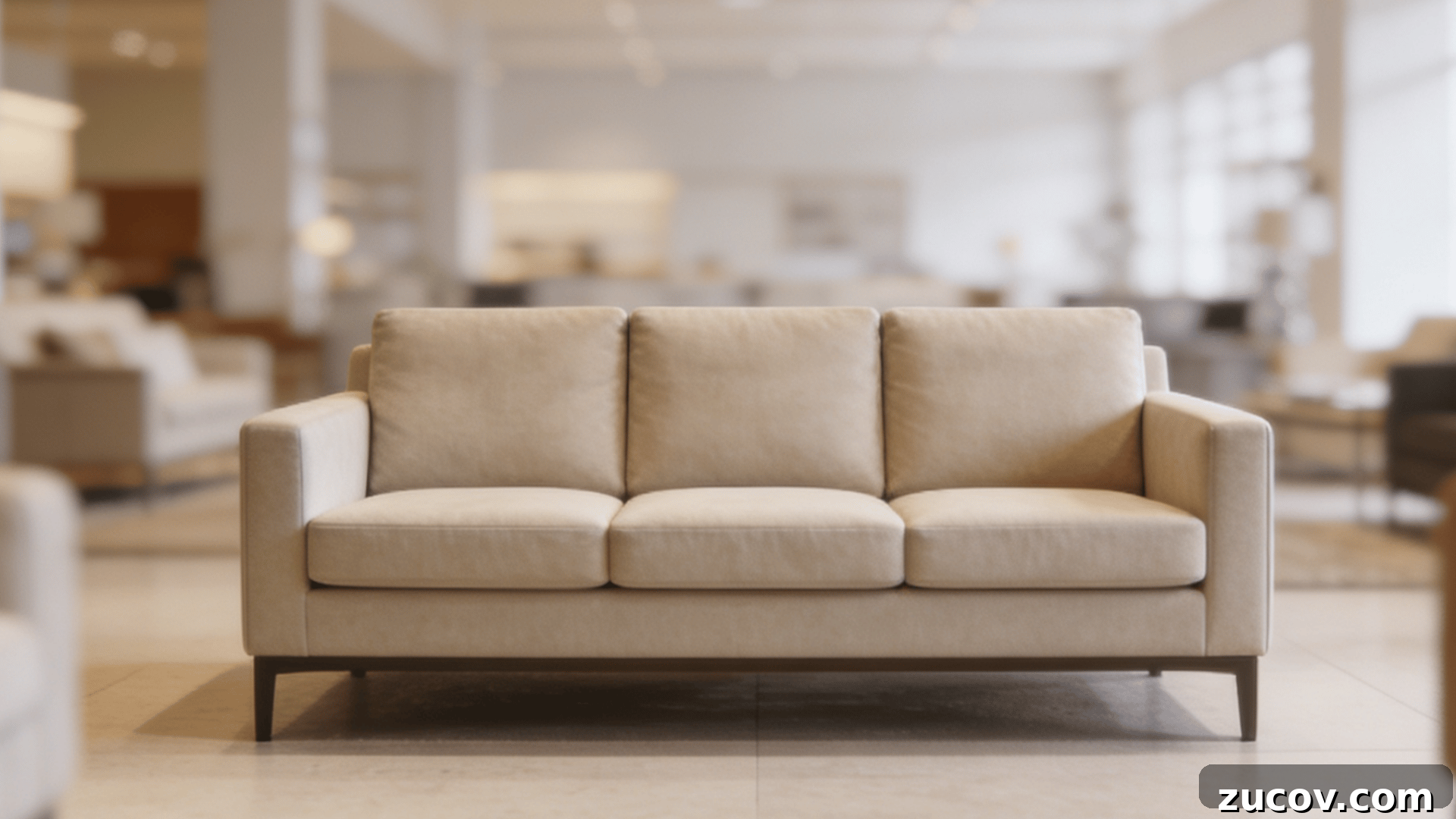
Choosing the right couch size can be confusing when you compare widths, depths, and seating options. Many sofas look perfect online but later feel too large, too small, or uncomfortable in a real living space. Picking the correct size improves comfort, maintains room flow, and keeps the layout from feeling crowded. Proper proportions also help furniture look balanced within the room.
This guide explains common couch sizes, seating dimensions, space-planning tips, and how to select the best sofa for your room.
What Does “Couch Size” Actually Mean?
Couch size refers to three main measurements: width, depth, and height. Each influences comfort, seating capacity, and how the sofa sits visually in a room. Width determines how many people can sit comfortably, depth affects whether the seat feels upright or lounge-like, and height impacts how easy it is to sit and stand as well as how large the piece appears in the space.
Many shoppers focus only on width, but a sofa can still feel bulky if the depth is excessive for the room or if the seating proportions don’t match how you use the sofa. Manufacturers commonly list two depth numbers: overall depth (from the front edge to the back of the frame) and seat depth (the usable distance between the front cushion edge and back cushion). Knowing both helps you choose a sofa that feels comfortable and fits the room.
Different Couch Sizes by Type and Dimensions
“Standard” describes a general size range rather than a single number. Below are typical dimensions by sofa type to help you compare options based on seating capacity and proportions.
1. Loveseat Dimensions
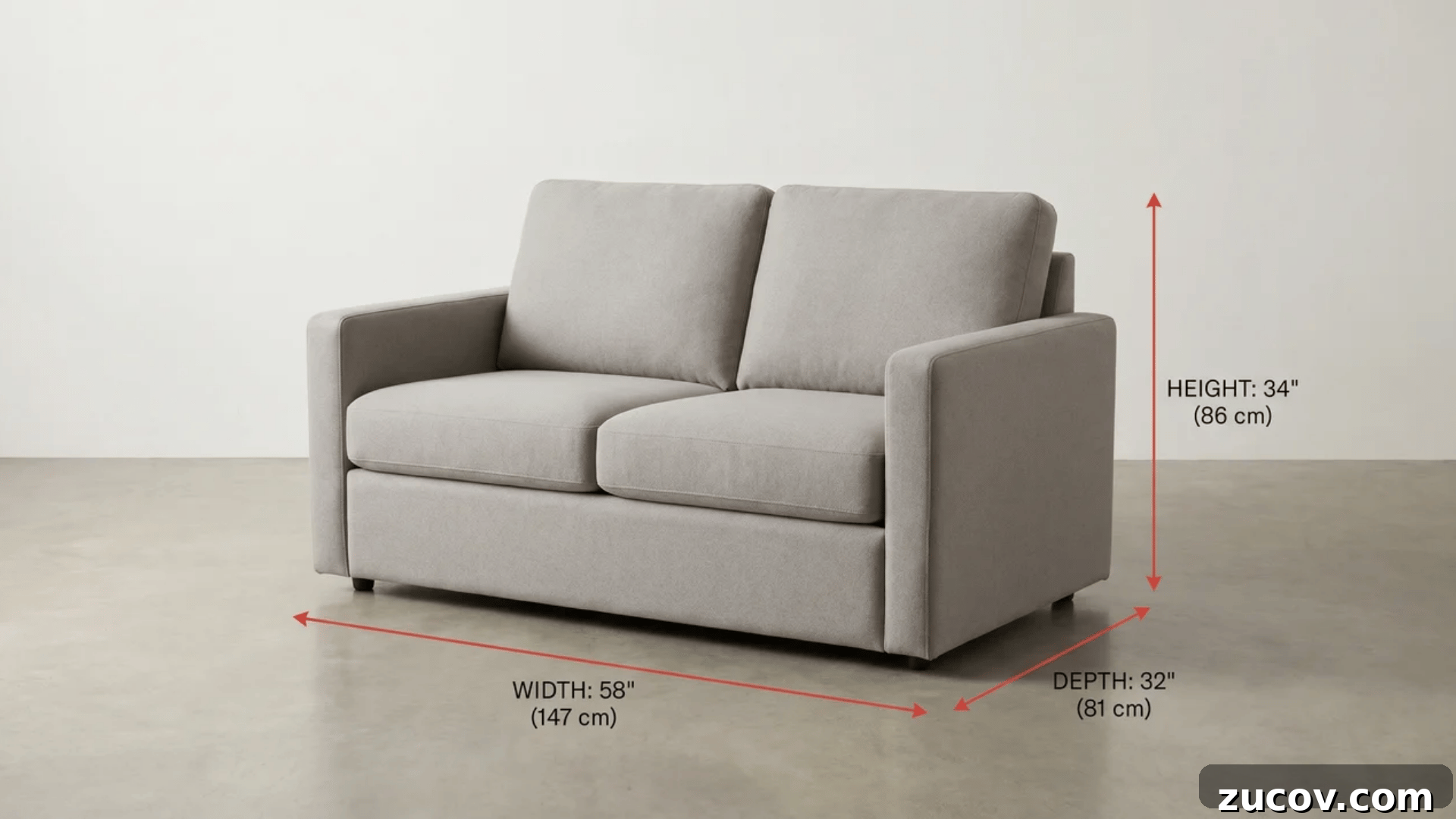
Loveseats are designed for two people and work well where a full sofa won’t fit. They have a narrower width and shallower depth; they’re not simply a scaled-down three-seater but a different proportion intended for smaller spaces.
| Dimension | Inches | Centimeters |
|---|---|---|
| Width | 52–72 | 132–183 |
| Overall Depth | 28–38 | 71–96 |
| Seat Depth | 18–22 | 46–56 |
| Height | 28–36 | 71–91 |
A loveseat suits rooms under about 10 feet wide, apartments, offices, and compact seating areas where space is limited but comfortable two-person seating is needed.
2. Standard 3-Seater / Full Sofa Dimensions
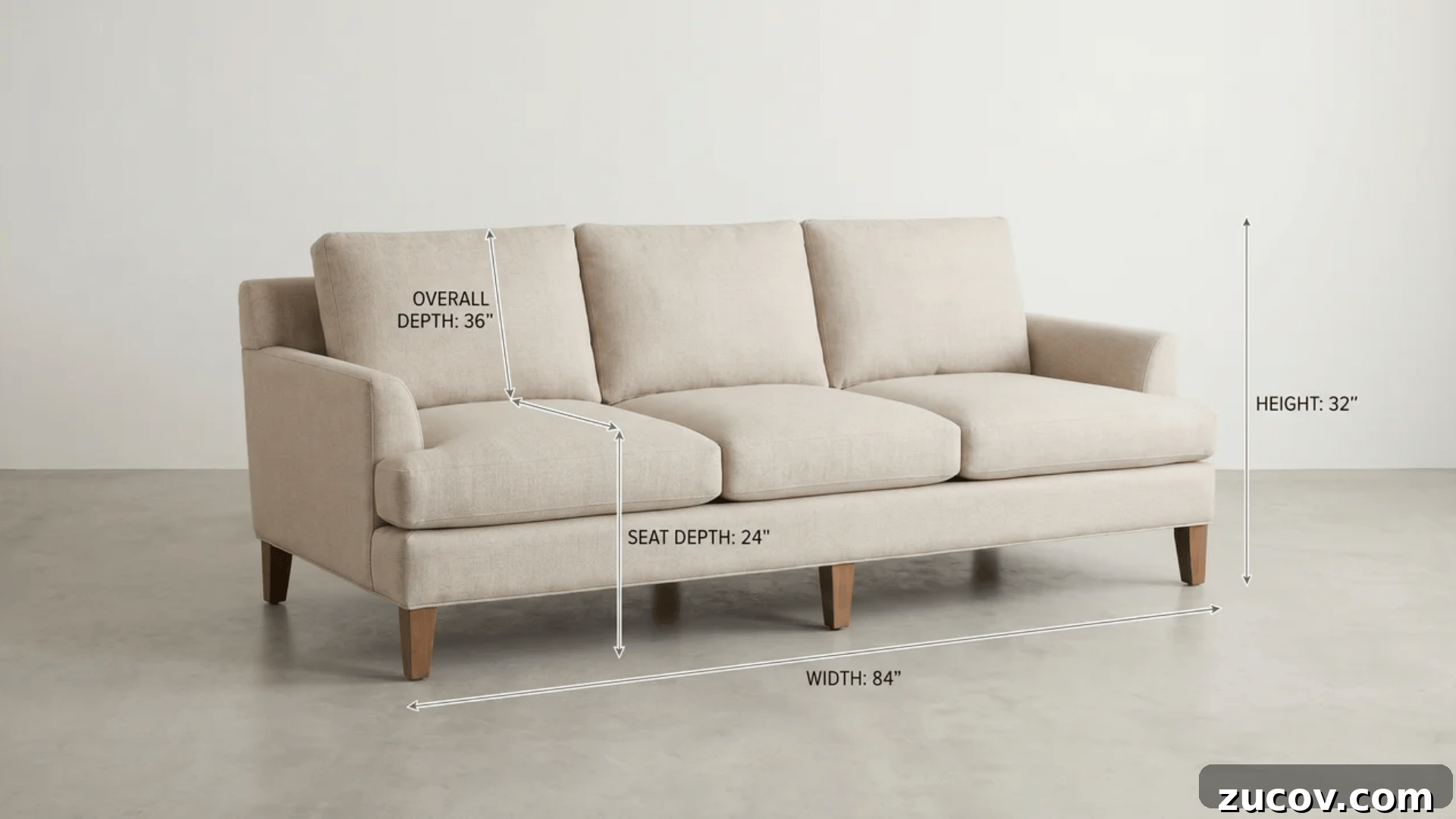
The standard 3-seater is the most commonly bought sofa type. The 84-inch width is common, but any sofa in this range typically seats three adults comfortably.
| Dimension | Inches | Centimeters |
|---|---|---|
| Width | 72–96 | 183–244 |
| Overall Depth | 32–40 | 81–102 |
| Seat Depth | 20–25 | 51–64 |
| Height | 30–36 | 76–91 |
Seat depth is the usable sitting area; overall depth includes the frame and cushions. Seat depths under 20 inches tend to feel more upright, while depths over 23 inches deliver a deeper, loungier feel.
3. 4-Seater / XL Sofa Dimensions
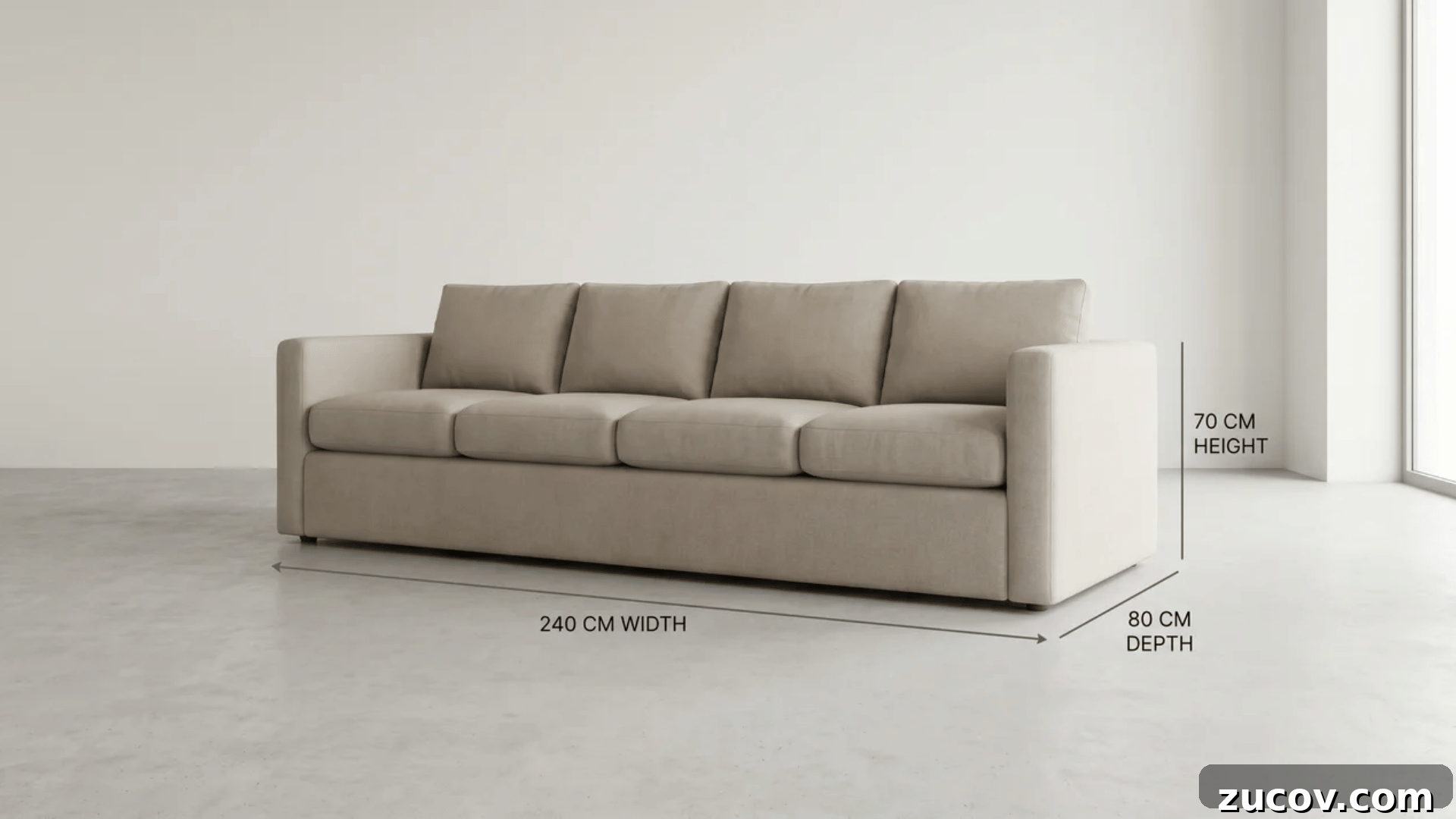
XL sofas give more seating without moving to a sectional. Depth and height remain similar to the 3-seater; the primary change is extra width.
| Dimension | Inches | Centimeters |
|---|---|---|
| Width | 96–110+ | 244–279+ |
| Overall Depth | 32–40 | 81–102 |
| Seat Depth | 20–25 | 51–64 |
| Height | 30–36 | 76–91 |
Because 4-seater labels vary, always verify exact dimensions. Sofas over 96 inches suit large living rooms with room for clear walkways and open seating areas.
4. Sectional Sofa Dimensions
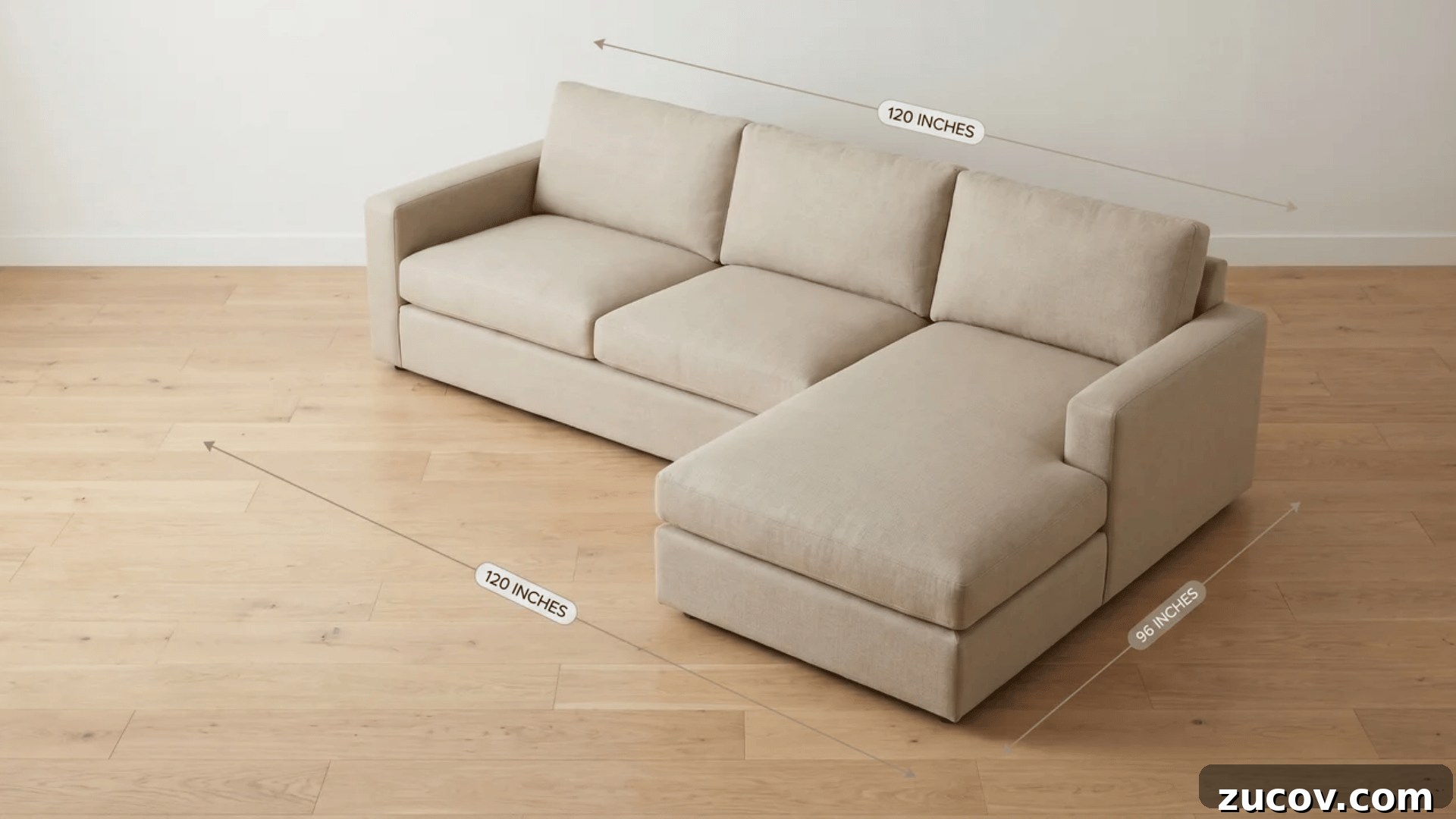
Sectionals require two primary measurements: the main run and the chaise or return arm. A typical L-shape might be described as 110” × 85”, where each figure represents a separate section length.
| Section | Typical Width | Centimeters |
|---|---|---|
| Main Sofa Run | 90–120 | 229–305 |
| Chaise / Return Arm | 55–68 | 140–173 |
| Dimension (per section) | Inches | Centimeters |
|---|---|---|
| Overall Depth | 32–40 | 81–102 |
| Seat Depth | 20–25 | 51–64 |
| Height | 30–36 | 76–91 |
Section depths match standard sofas, but the chaise adds substantial floor space—often an extra five feet in one direction that’s easy to overlook on a floor plan. Measure the full L-shape footprint before buying; the combined floor area, not the individual sections alone, determines whether a sectional will fit comfortably.
How to Choose the Right Sofa for Your Room Size?
Choosing a sofa requires more than matching wall width. Room layout, circulation paths, and sofa proportions all affect how balanced and comfortable the space feels. Use these guidelines:
- Match the Sofa to the Room: Avoid oversized sofas in small rooms and undersized pieces in large open areas.
- Follow the Two-Thirds Rule: Aim for a sofa that covers about two-thirds of the wall length for balanced proportions.
- Leave Walking Space: Keep 30–36 inches of clearance around seating for comfortable movement.
- Consider Seat Depth: Deep sofas are best for lounging and large rooms; shallower seats suit compact spaces and upright seating needs.
- Check Rug and Furniture Proportions: Align rugs, coffee tables, and nearby pieces with sofa size to maintain visual balance.
- Measure Doorways and Hallways: Confirm the sofa can pass through entryways and tight corridors during delivery.
Testing dimensions with tape on the floor helps visualize spacing and avoid common mistakes before purchase.
Sofa Clearance and Space Planning Rules
Good sofa placement considers clearance, circulation, and access. The table below summarizes common spacing recommendations and why they matter.
| Rule or Area | Recommended Clearance | Why It Matters |
|---|---|---|
| Sofa to Coffee Table | 18–24 inches | Keeps items within easy reach while seated |
| Sofa to Walkway | 30–36 inches | Maintains comfortable walking space |
| Sofa to Opposite Seating or TV Unit | Minimum 36 inches | Prevents the room from feeling cramped |
| Sofa Arm to Doorway | Minimum 36 inches | Keeps entry points open and accessible |
| Rug Placement | Extend beyond sofa arms | Helps anchor the seating area visually |
| Doorway Width Check | 32–36 inches | Confirms the sofa can fit through entryways |
| Hallway Diagonal Clearance | Larger than sofa depth | Allows deep sofas to angle through tight spaces |
Before buying, tape the sofa footprint on the floor to test room flow and walking paths. This simple step prevents layout and delivery headaches.
Common Couch Sizing Mistakes to Avoid
Small measuring errors can make a sofa feel wrong or create placement problems. Avoid these common mistakes:
- Relying on category labels instead of checking exact dimensions.
- Measuring the room but not doorways or hallways, causing delivery issues.
- Choosing seat depth without testing comfort for everyday use.
- Assuming showroom environments represent typical home proportions.
- Underestimating the extra floor space a sectional chaise or extension requires.
Careful measuring and planning ensure the sofa fits the room and supports how you use the space.
Quick Couch Size Recap
This quick comparison helps determine which sofa type fits your layout and seating needs.
| Couch Type | Typical Size | Seating Capacity | Best For |
|---|---|---|---|
| Loveseat | 52–72 | 1–2 People | Apartments, bedrooms, small spaces |
| Standard 3-Seater | 72–96 | 3 People | Most living rooms and family spaces |
| 4-Seater / XL Sofa | 96–110+ | 4 People | Large living rooms and open layouts |
| Sectional Sofa | 90–120+ | 4–6+ People | Large families and open-concept rooms |
Choosing the right couch size helps a room feel balanced, comfortable, and functional.
Conclusion
Choosing the proper couch size makes a big difference in comfort, function, and overall balance. The right sofa improves seating, supports better room flow, and keeps the space from feeling cramped. Understanding width, depth, and clearance prevents common sizing mistakes; a few simple measuring steps can save time and frustration.
Measure your space carefully before buying. The best couch fits both your room and your daily lifestyle comfortably.
Have you recently measured or replaced a sofa in your home? Share your experience or favorite couch-size tips in the comments below.
Frequently Asked Questions
Does Cushion Thickness Affect Couch Comfort?
Yes. Cushion thickness influences how firm or soft a sofa feels. Thicker cushions generally feel softer and deeper, while thinner cushions create a firmer sitting experience.
Are Low-Back Sofas Better for Small Rooms?
Often, yes. Low-back sofas keep a room feeling more open and less visually heavy, and they can make ceilings appear a bit taller.
What Is an Apartment-Sized Sofa and Who Should Buy One?
Apartment-sized sofas are typically 68–80 inches wide with shallower depths. They’re designed to navigate narrow doorways and tight hallways, making them a strong choice for older buildings and compact homes.