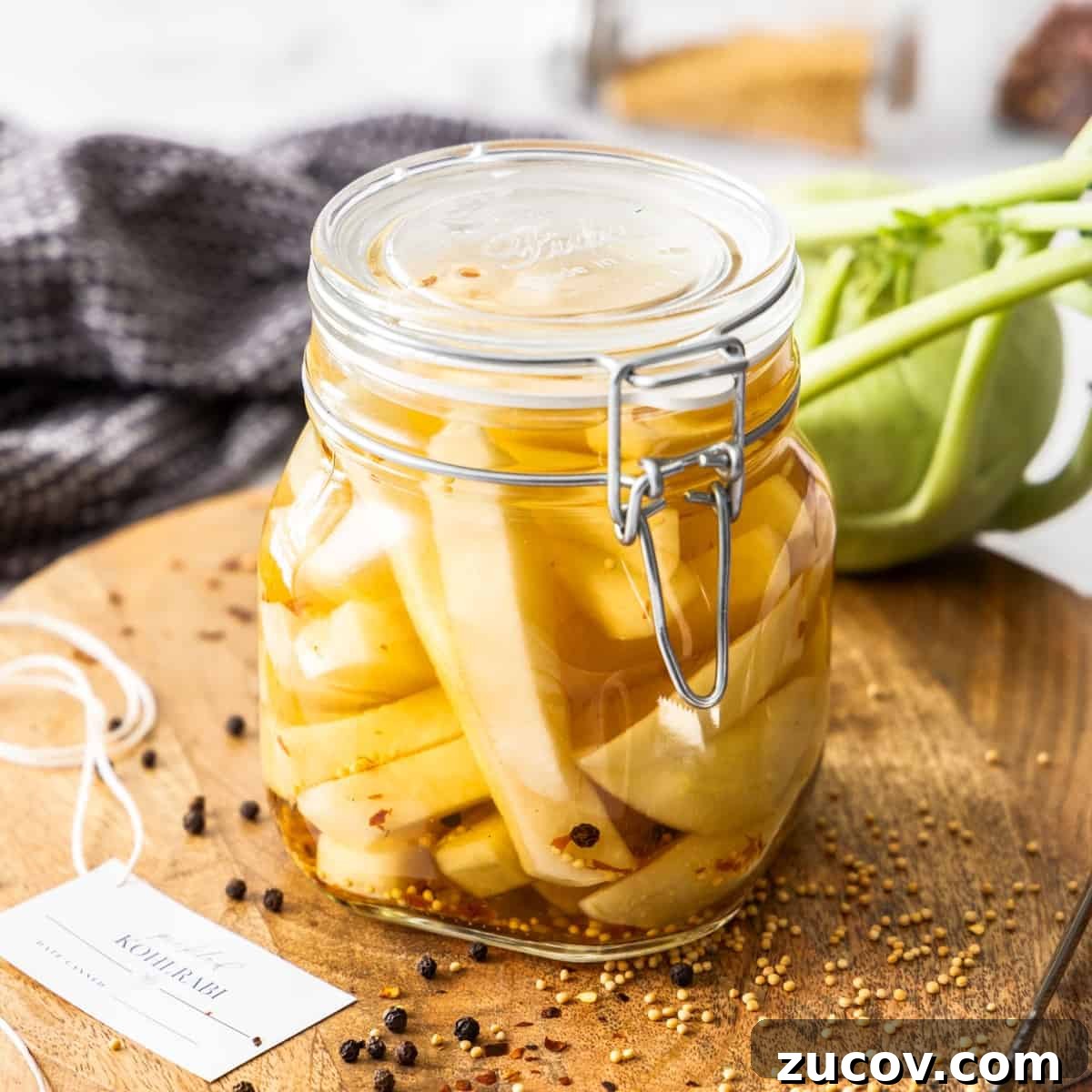
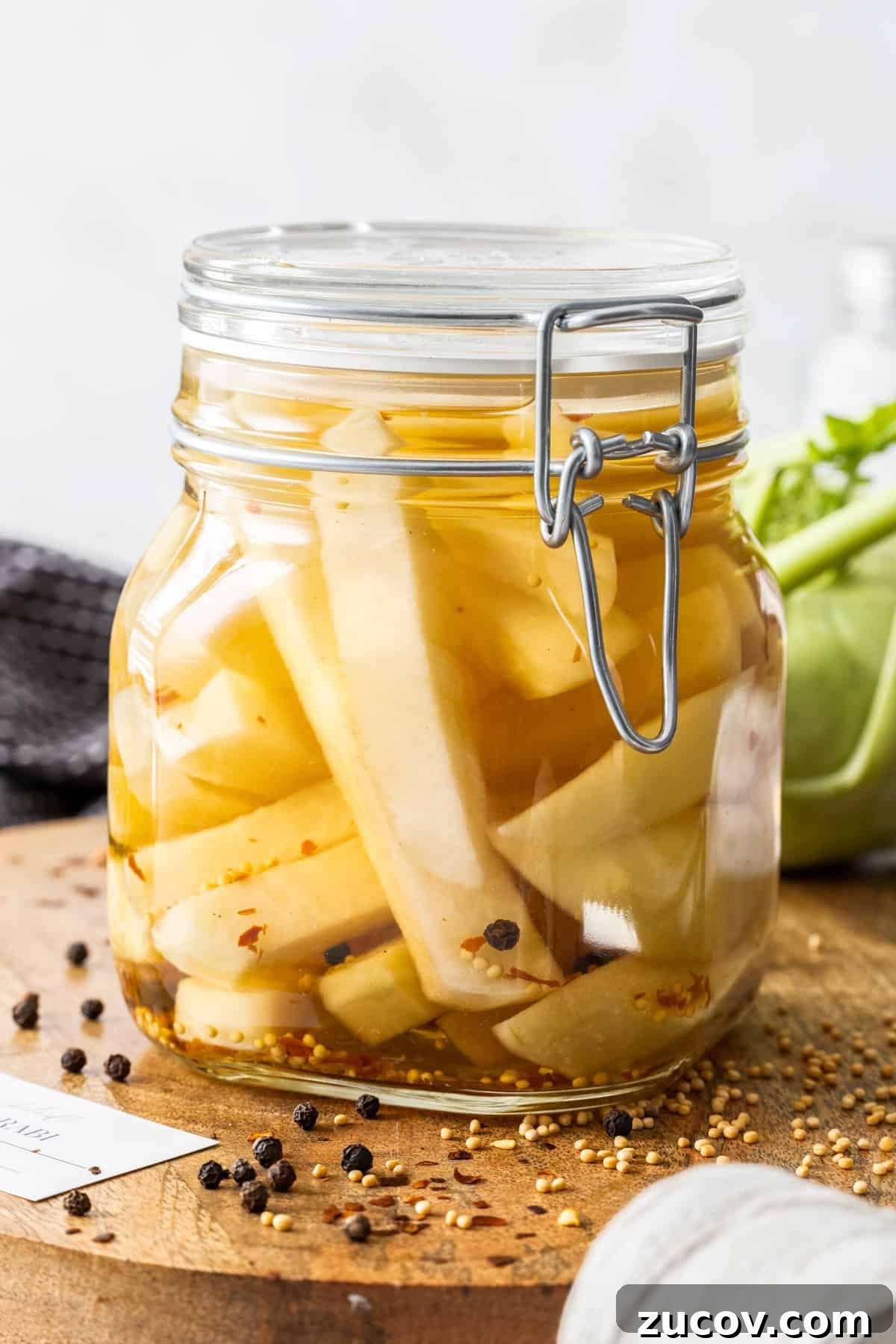
If you enjoy the crunchy texture and bright flavour of a quick pickled vegetable, this Pickled Kohlrabi recipe is for you. Tangy and crisp, it’s a fast, simple pickle to add to your repertoire. Small batons of kohlrabi are immersed in a spiced vinegar brine and, after a short rest, are ready to enjoy. It doesn’t get much easier than this.
[feast_advanced_jump_to]
Why you’ll love this recipe:
A quick pickle elevates both flavour and texture. Kohlrabi’s mild flavour and firm, crunchy flesh make it ideal for this method. These pickled batons add a bright, tangy lift to many dishes.
You will love this Pickled Kohlrabi because:
- Homemade pickles are quick to prepare and vibrant in flavour.
- Making your own lets you control the ingredients and adjust flavours to taste.
- Quick pickles are accessible to both novice and experienced cooks.
- They’re versatile — see the serving ideas below.
What is kohlrabi?
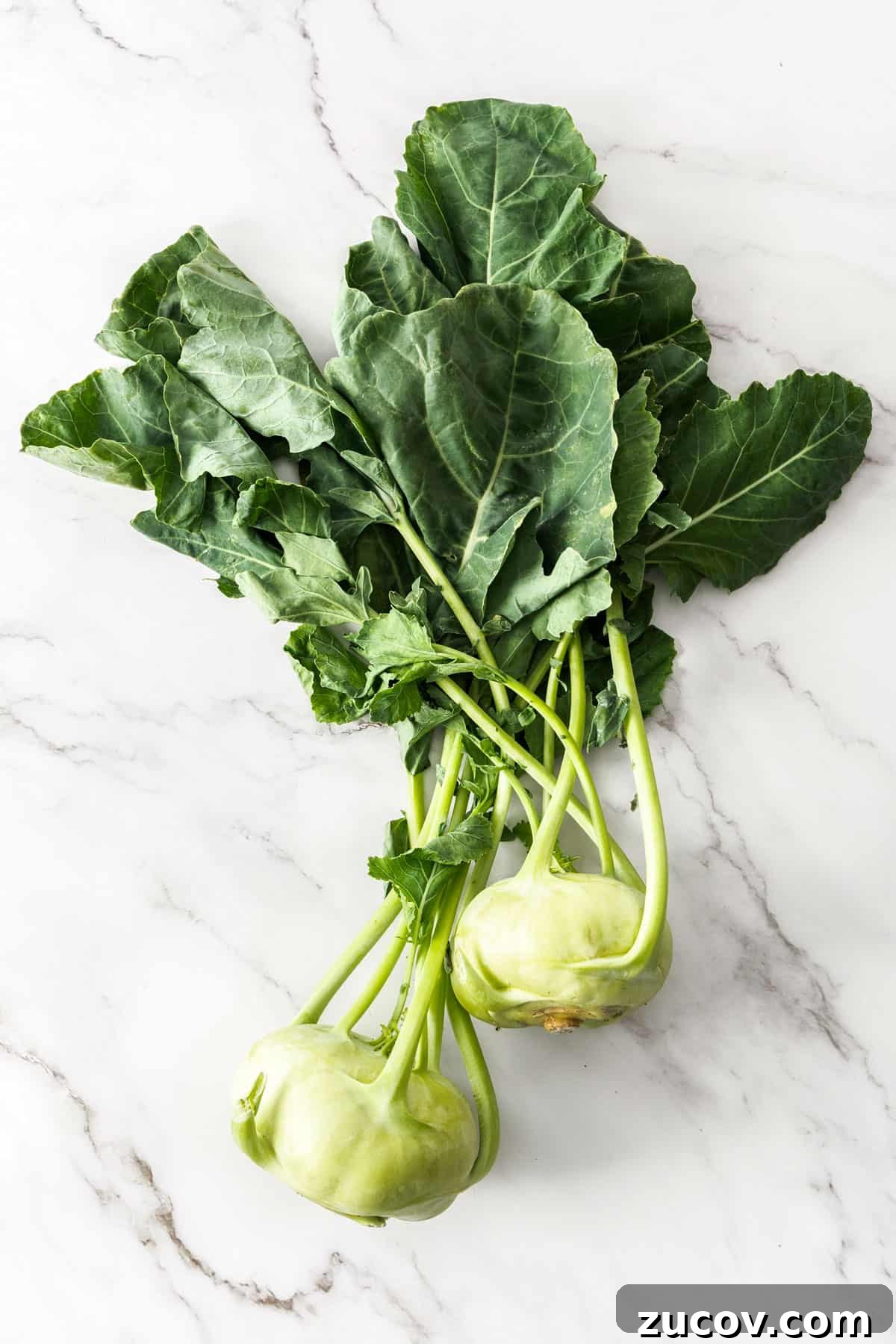
Kohlrabi, sometimes called German turnip or cabbage turnip, is a member of the brassica family along with broccoli and kale. Common varieties in stores are green and purple kohlrabi, both of which have creamy white flesh.
Choose small to medium bulbs for the best texture — larger bulbs can be woody. The bulb should be firm and free from blemishes; fresh leaves, if attached, should look bright and perky. The leaves are edible and can be used like other greens, but store them separately and use within a few days.
Ingredients in this recipe:
Please see the recipe card further along in the post for exact quantities and the full method.
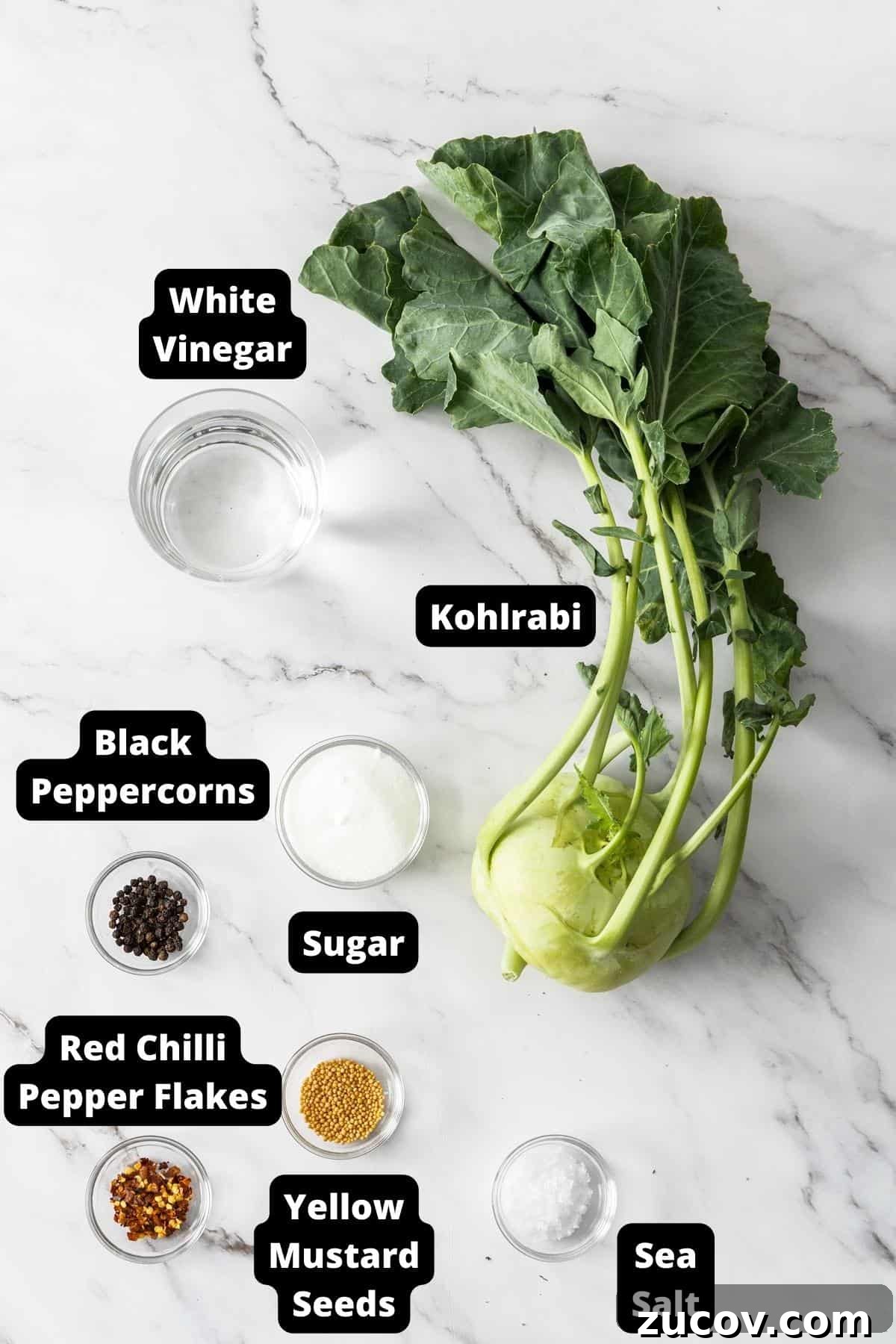
Kohlrabi – choose small to medium bulbs for the best texture; look for firm, unblemished bulbs.
White vinegar – this recipe uses white vinegar (5% acidity). White wine vinegar or apple cider vinegar can be substituted.
Water – a small amount of water mellows the brine. Use filtered water if possible to avoid off-flavours from chlorine.
Salt – use sea salt or coarse cooking salt rather than iodised table salt with anti-caking agents.
Sugar – regular granulated sugar balances the vinegar and helps preserve the pickles; caster (superfine) sugar also works.
Black peppercorns – add a warm, spicy note.
Mustard seeds – yellow mustard seeds add crunch and gentle flavour; brown seeds are spicier if you prefer.
Red chilli pepper flakes – optional for a touch of heat; increase to taste.
How To Make Pickled Kohlrabi:
Please see the recipe card further along in the post for exact quantities and the full method.
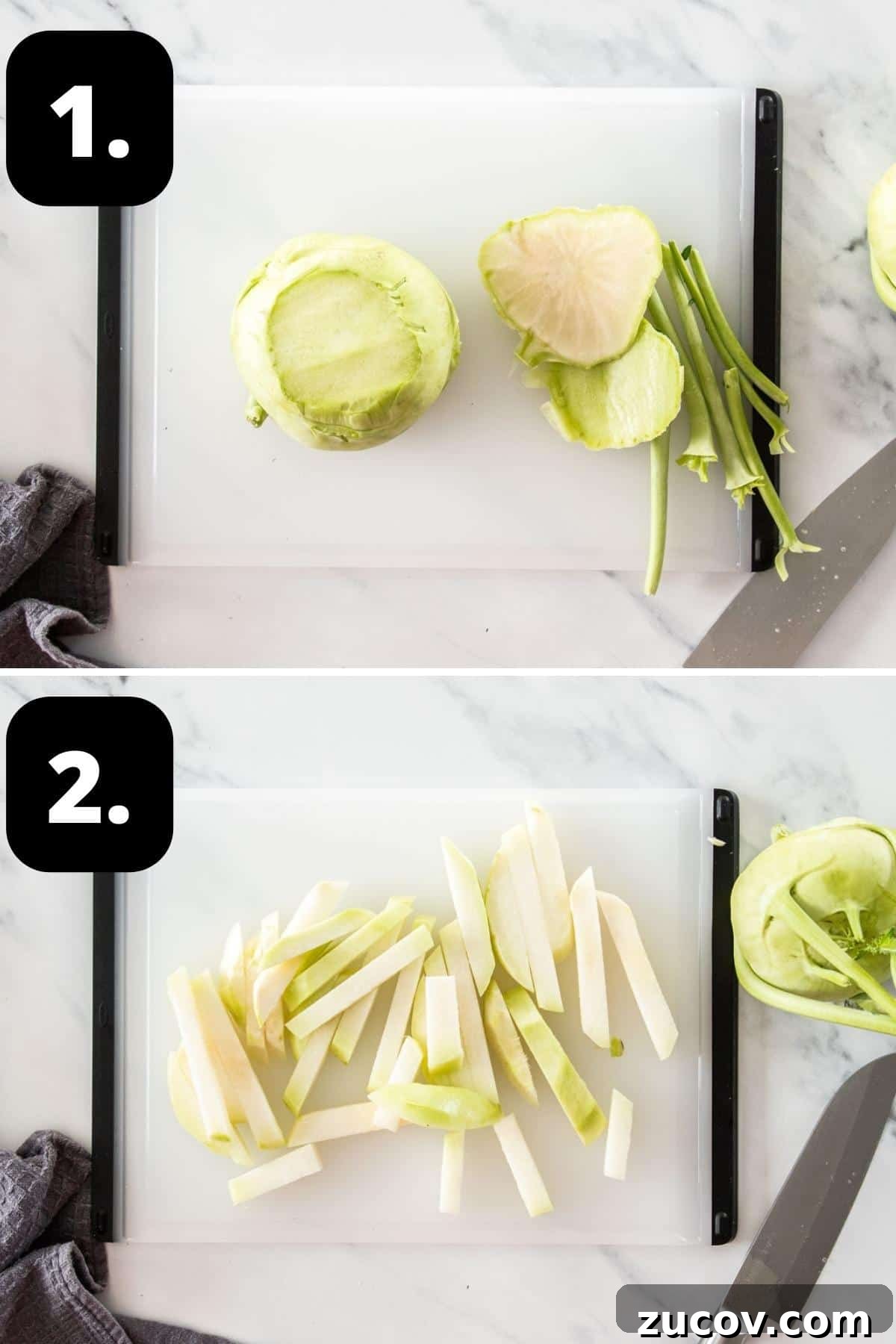
1 – Prepare the kohlrabi:
Trim the top and base, discard them, then peel the bulb.
2 – Cut the kohlrabi:
Halve the bulb, slice into roughly 1 cm slices, then cut those into 1 cm batons. Place the strips in acidulated water (water with a little lemon) as you work to prevent browning.
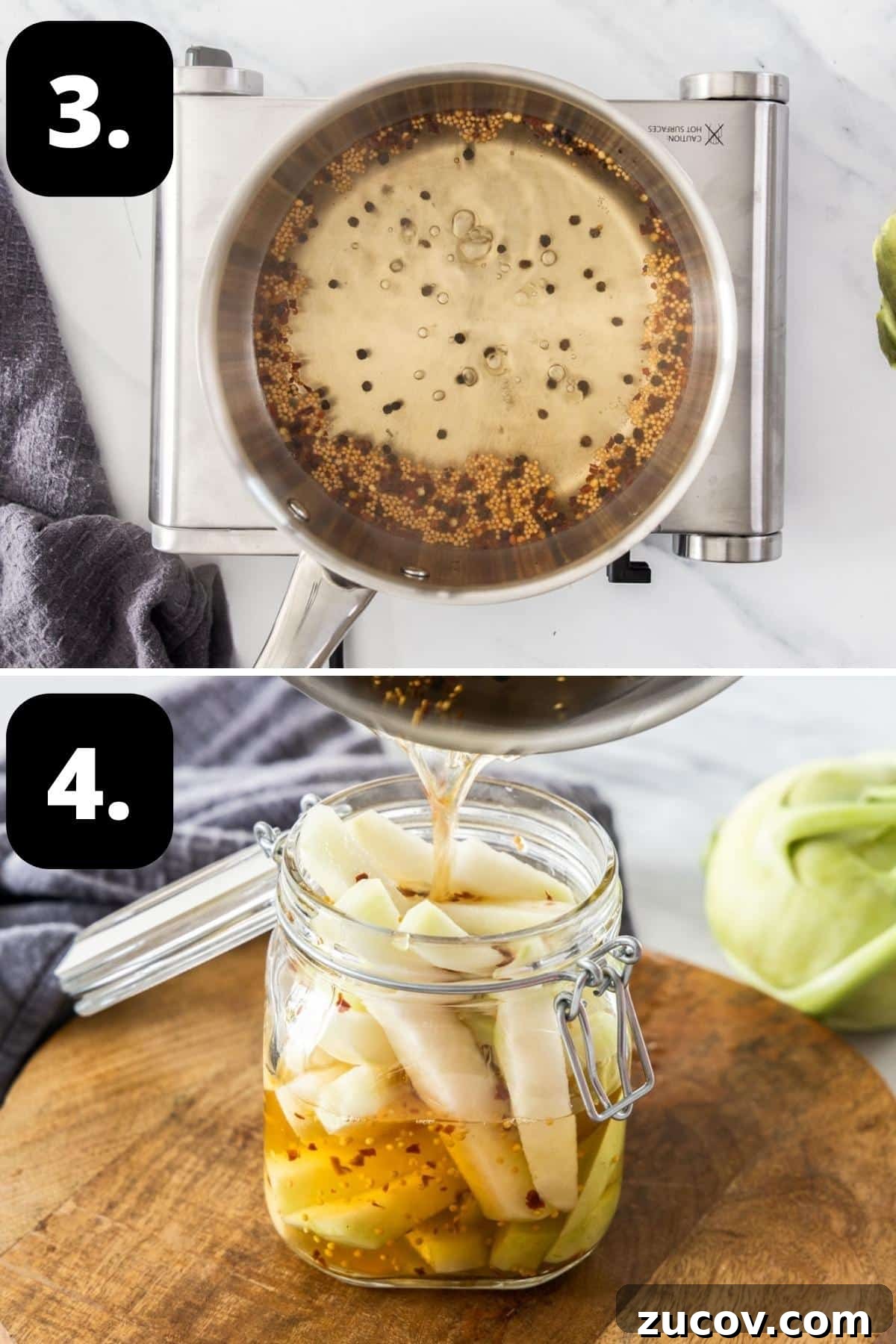
3 – Make the pickling liquid:
Combine the vinegar, water, sugar, salt and spices in a small non-reactive saucepan. Stir over medium heat to dissolve the sugar, bring to a boil, then remove from the heat.
4 – Pack and seal:
Add the kohlrabi to a sterilised jar, pour over the hot pickling liquid, and seal immediately. Allow the jar to cool to room temperature before refrigerating. For best flavour, wait at least 12 hours; 24 hours is better.
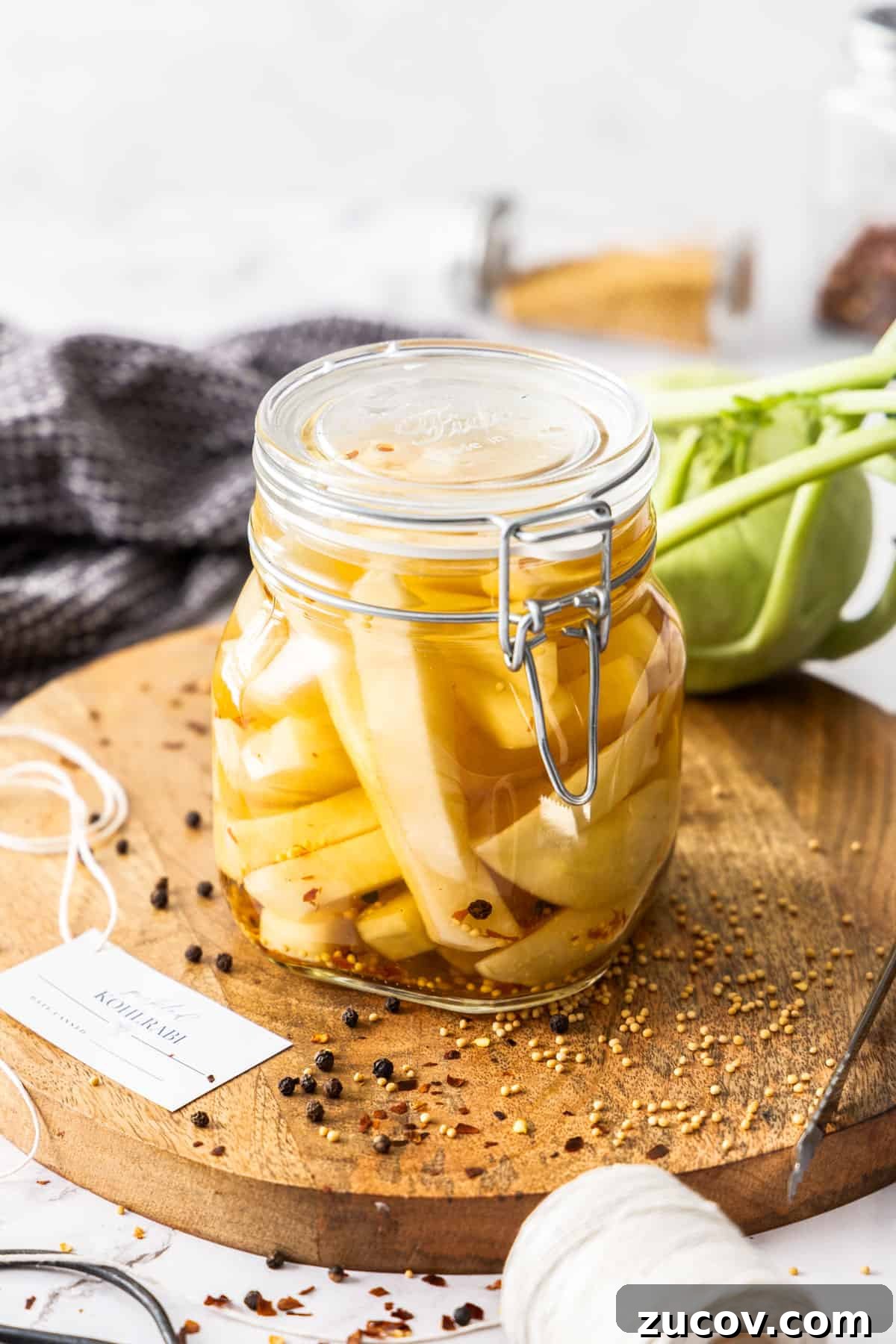
Tips for success and FAQs:
Use the freshest kohlrabi you can find for the best crunch and flavour. Sterilise jars thoroughly and use glass jars with airtight metal lids for easy filling; if lids have rubber inserts, let them air dry rather than put them in the oven.
Stored in the refrigerator, these quick pickles will keep for up to three weeks. They will gradually soften over time.
They are safe to eat once cooled, but waiting 12–24 hours allows the flavours to develop and the vinegar to mellow.
They have a mild, slightly radish-like flavour and a crunchy texture similar to broccoli stem.
Yes. The recipe scales well — just adjust quantities to fit the number and size of jars you’re using.
Variations and substitutions:
Vinegar: white wine vinegar or apple cider vinegar both work if they are 5% acidity.
Mustard seeds: yellow seeds are milder; swap for brown seeds if you prefer more heat.
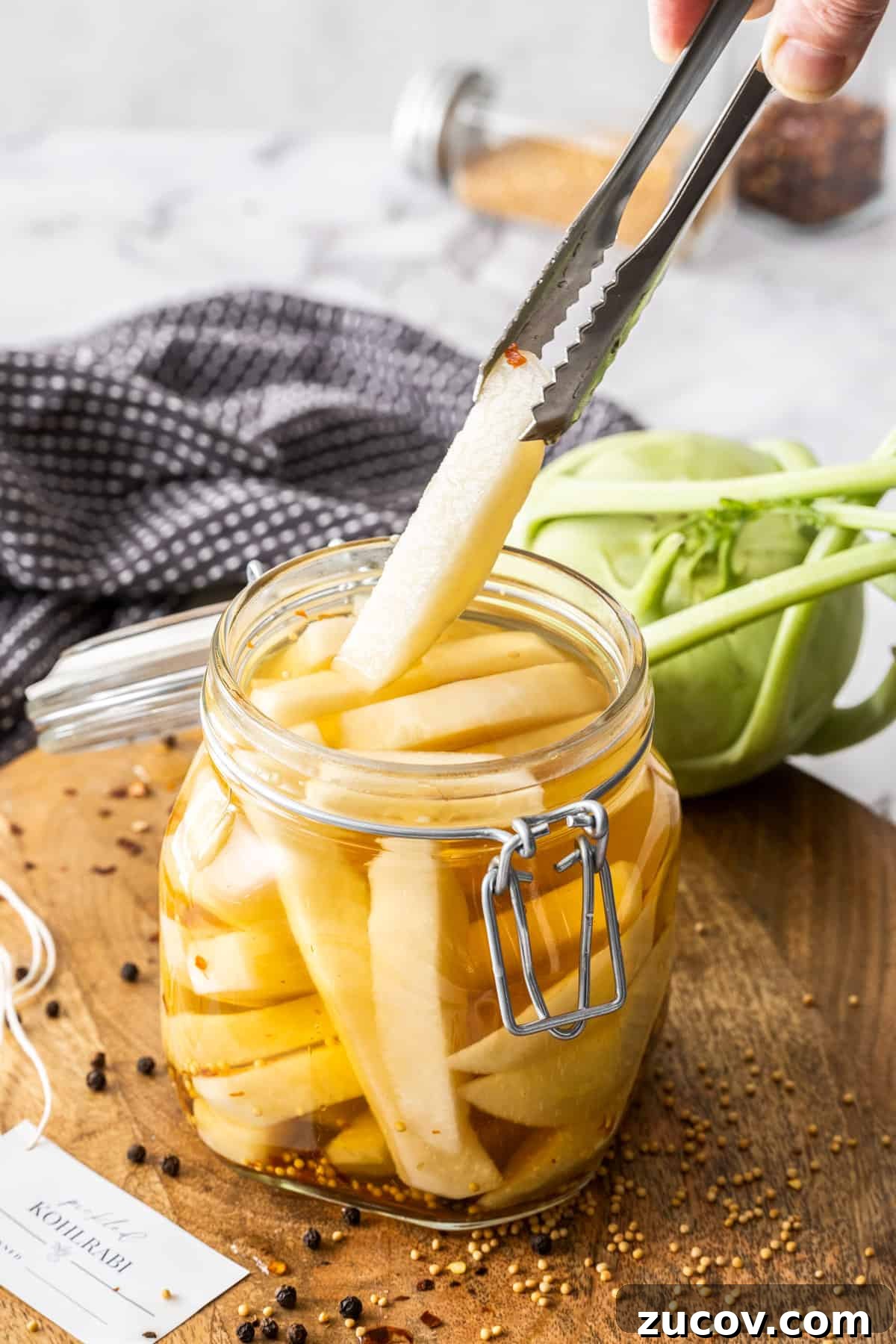
Serving suggestions:
These pickles are versatile. Try them:
- On a grazing platter.
- As a crisp topping for hot dogs or burgers.
- With a cheese board.
- Tossed into green salads for a crunchy contrast.
- Alongside roast meats or poultry.
- Packaged in a jar as a thoughtful homemade gift.
I hope you enjoy this simple, tasty Pickled Kohlrabi. Let me know how you go in the comments below.
Alex xx
More delicious recipes for you to try:
-
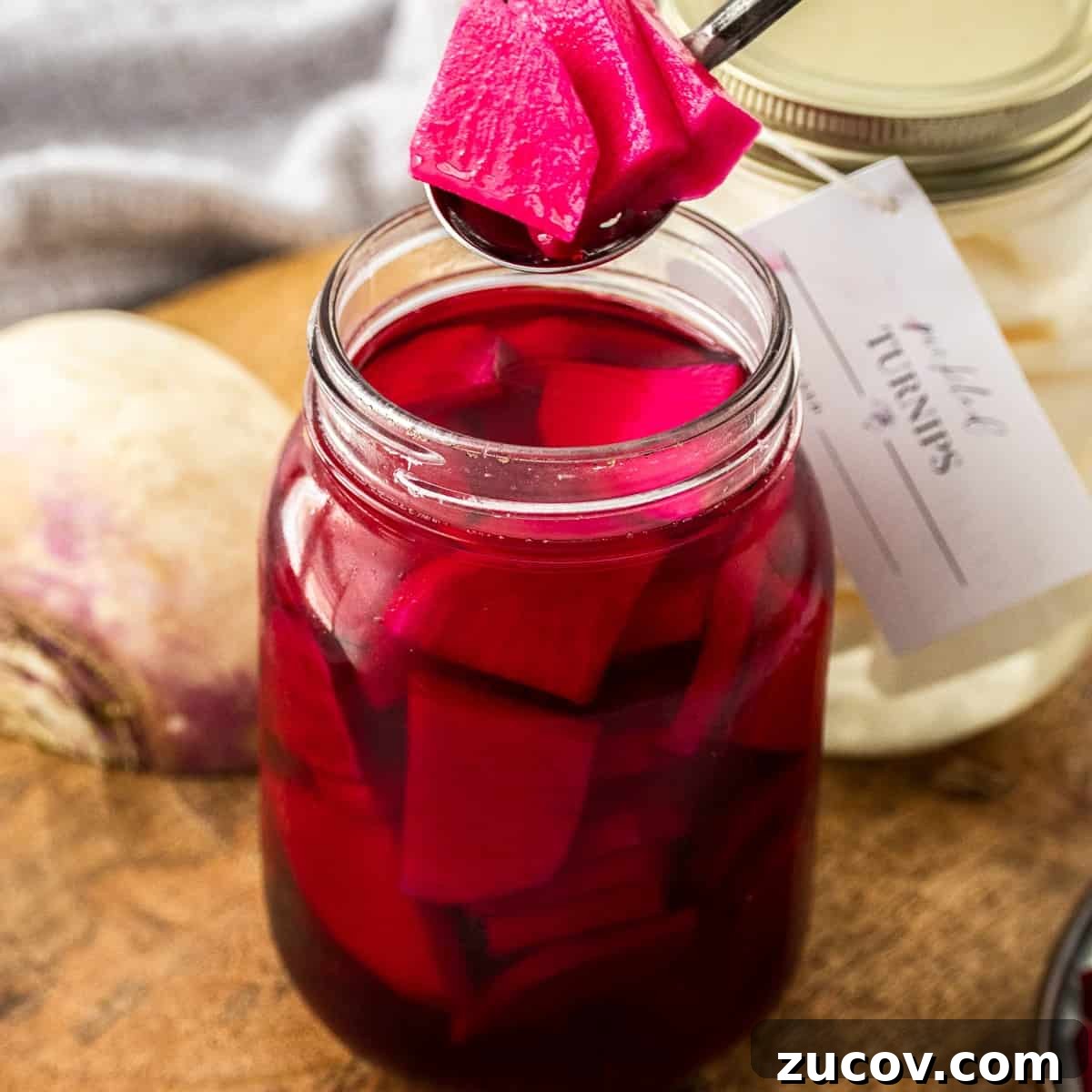
Pickled Turnips
-
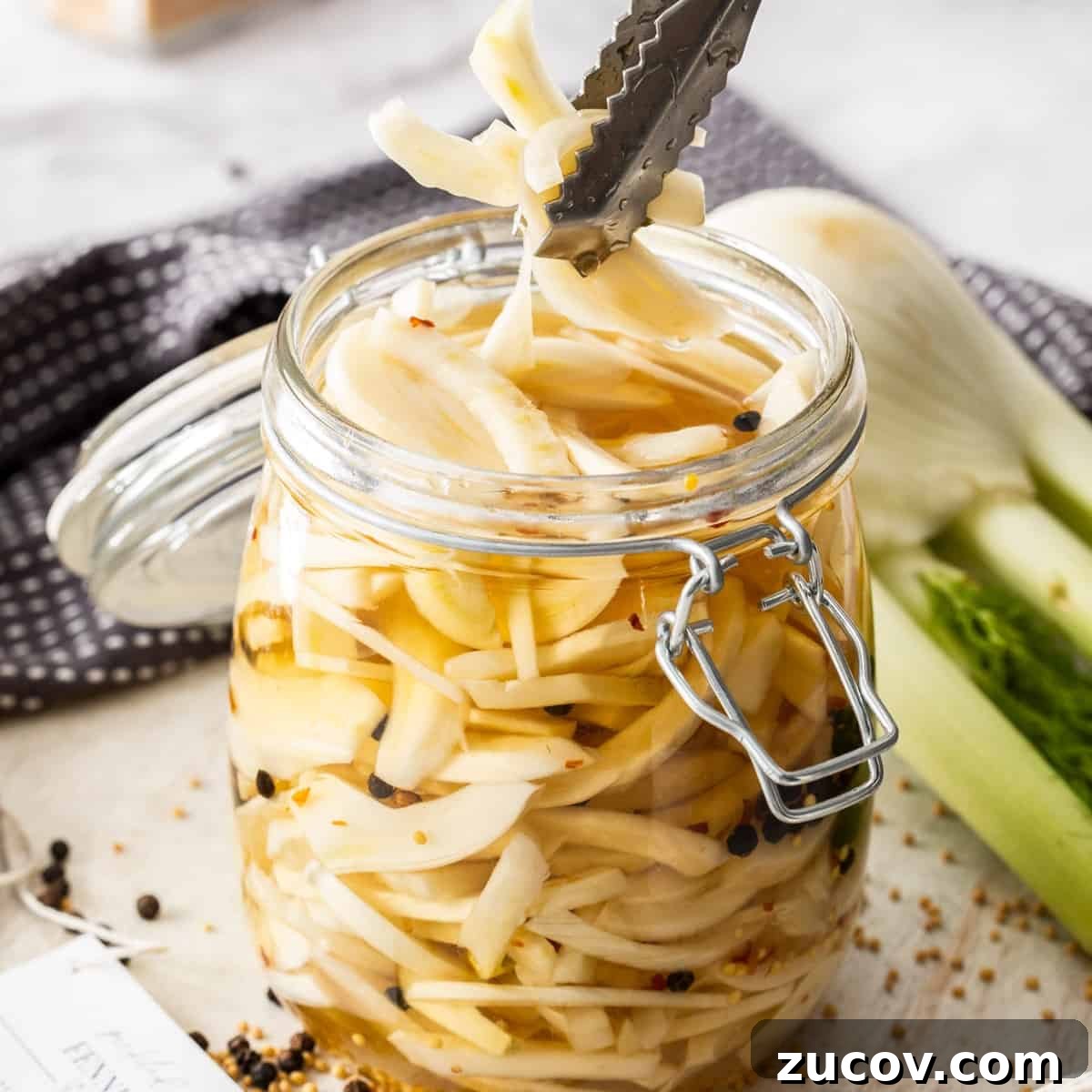
Pickled Fennel
-
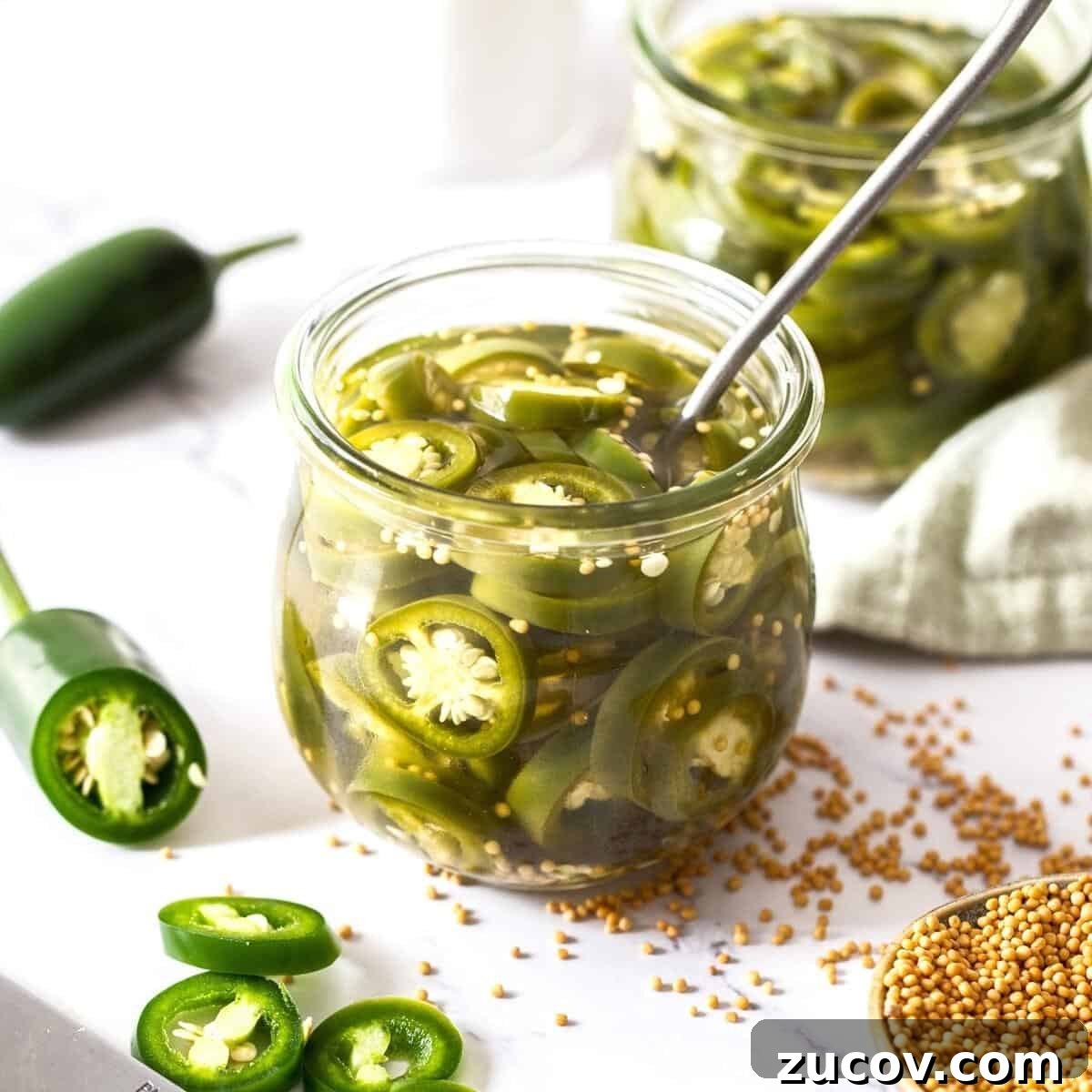
Homemade Pickled Jalapeños
-
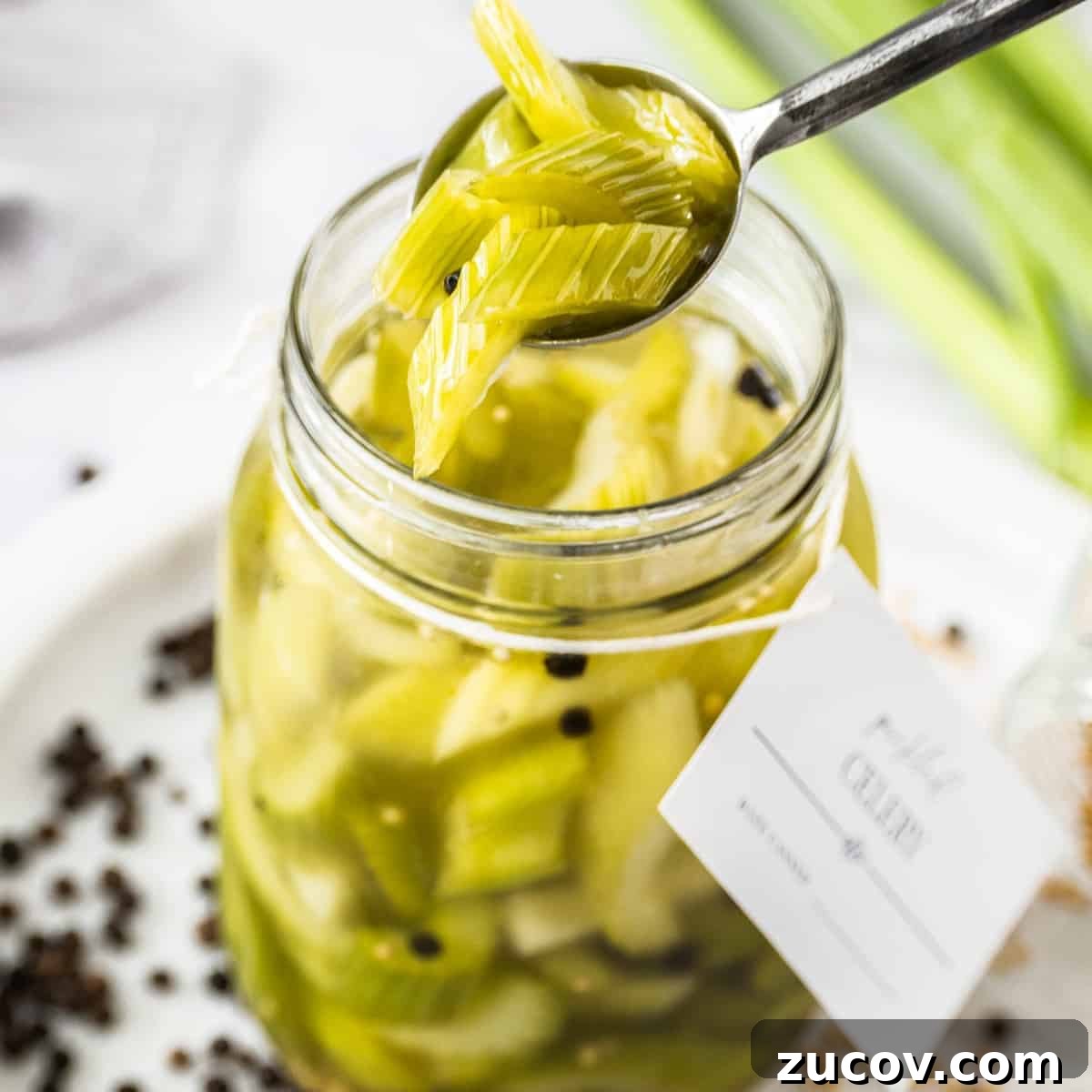
Pickled Celery
Stay in touch!
Follow on social channels and subscribe to the newsletter for more recipes.
Pickled Kohlrabi
Print
Pin
Review
Remove Ads
Equipment
-
1 x 800ml (27 fluid oz) Jar
Please note:
For accuracy when weights are provided, weigh your ingredients. This will give the best result.
Ingredients
- 400 g (14 oz) kohlrabi – prepared weight, approx. 1 large or 2 small.
- 2 teaspoon sea salt
- 1 cup (250 ml) white vinegar
- ¾ cup (180 ml) water
- 2 ½ tablespoon sugar
- 1 teaspoon whole yellow mustard seeds
- 1 teaspoon whole black peppercorns
- ¼ teaspoon red chilli pepper flakes
- a bowl of water with lemon – optional (to prevent browning)
Instructions
To Sterilise the Jars:
-
Sterilise the jars you’ll use. Wash in hot soapy water and rinse well. If lids have rubber inserts, allow them to air dry rather than placing them in the oven. Preheat the oven to 130°C (270°F) and warm the jars for 15–20 minutes; keep them warm until ready to fill.
For the Pickled Kohlrabi:
-
Trim and discard the top and base of the kohlrabi. Reserve the leaves for another use and peel the bulbs.
-
Cut the kohlrabi in half, slice into 1 cm pieces and then cut into 1 cm strips. Place the strips in acidulated water (water with lemon) to prevent browning.
-
In a small non-reactive saucepan, combine the water, vinegar, sugar, salt, mustard seeds, peppercorns and chilli flakes. Stir over medium heat to dissolve the sugar, bring to a boil, then remove from heat.
-
Pack the kohlrabi into the warm sterilised jar, pour over the hot pickling liquid to cover, and seal the jar immediately.
-
Allow the jar to cool on the bench, then refrigerate. While safe to eat once cool, the pickles benefit from 12–24 hours in the fridge to develop flavour.
Notes
- Kohlrabi: choose fresh, crisp bulbs for the best result.
- Salt: use coarse sea salt or cooking salt rather than fine table salt.
- Vinegar: use a vinegar with 5% acidity; apple cider or white wine vinegar are alternatives.
- Water: filtered water prevents chlorine tastes in the brine.
- Tablespoon: a standard Australian tablespoon equals 20 ml (4 teaspoons).
- Acidulated water: add a halved lemon to a bowl of water to stop cut kohlrabi from browning.
- Non-reactive pans: use stainless steel, enamel, glass or ceramic — avoid reactive copper, iron or aluminium for acidic liquids.
- Storage: this is a quick pickle meant for refrigeration, not long-term canning. Keep in the fridge up to three weeks.
- Nutrition: nutritional values are estimates for the entire jar, including the pickling liquid.
Leave a comment and rating
Nutrition Estimate:
Nutritional Disclaimer:
The nutritional information provided is an estimate derived from online calculators. For precise values, calculate based on the exact ingredients and brands you use.