What is Smørrebrød?
Smørrebrød is Denmark’s beloved national dish. The word literally means “butter bread,” which is fitting since the typical first step when building smørrebrød is to butter the bread. More accurately, smørrebrød are Danish open-faced sandwiches, a daily staple for many Danes—not only the elaborate versions served in Copenhagen restaurants but also simple, everyday combinations eaten at home. They are traditionally built on sturdy rugbrød (rye bread), which provides a dense, flavorful base for a wide range of toppings. The modern, refined presentations draw on restaurant influence, but the roots of smørrebrød lie in a practical tradition: working people topping hearty bread with leftovers and inexpensive ingredients to create a nourishing meal.
Our Ultimate Guide: Nine Variations on Smørrebrød
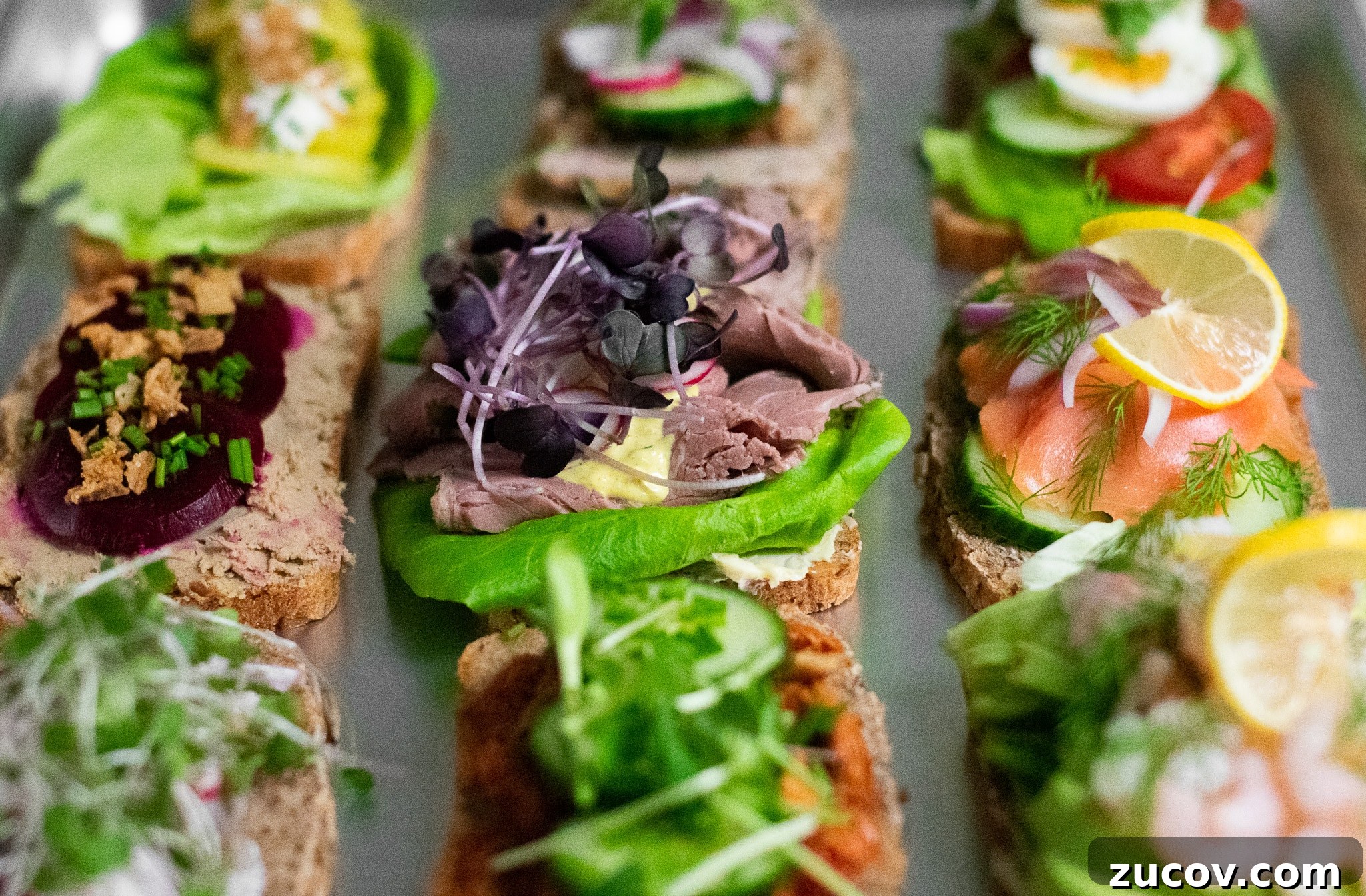
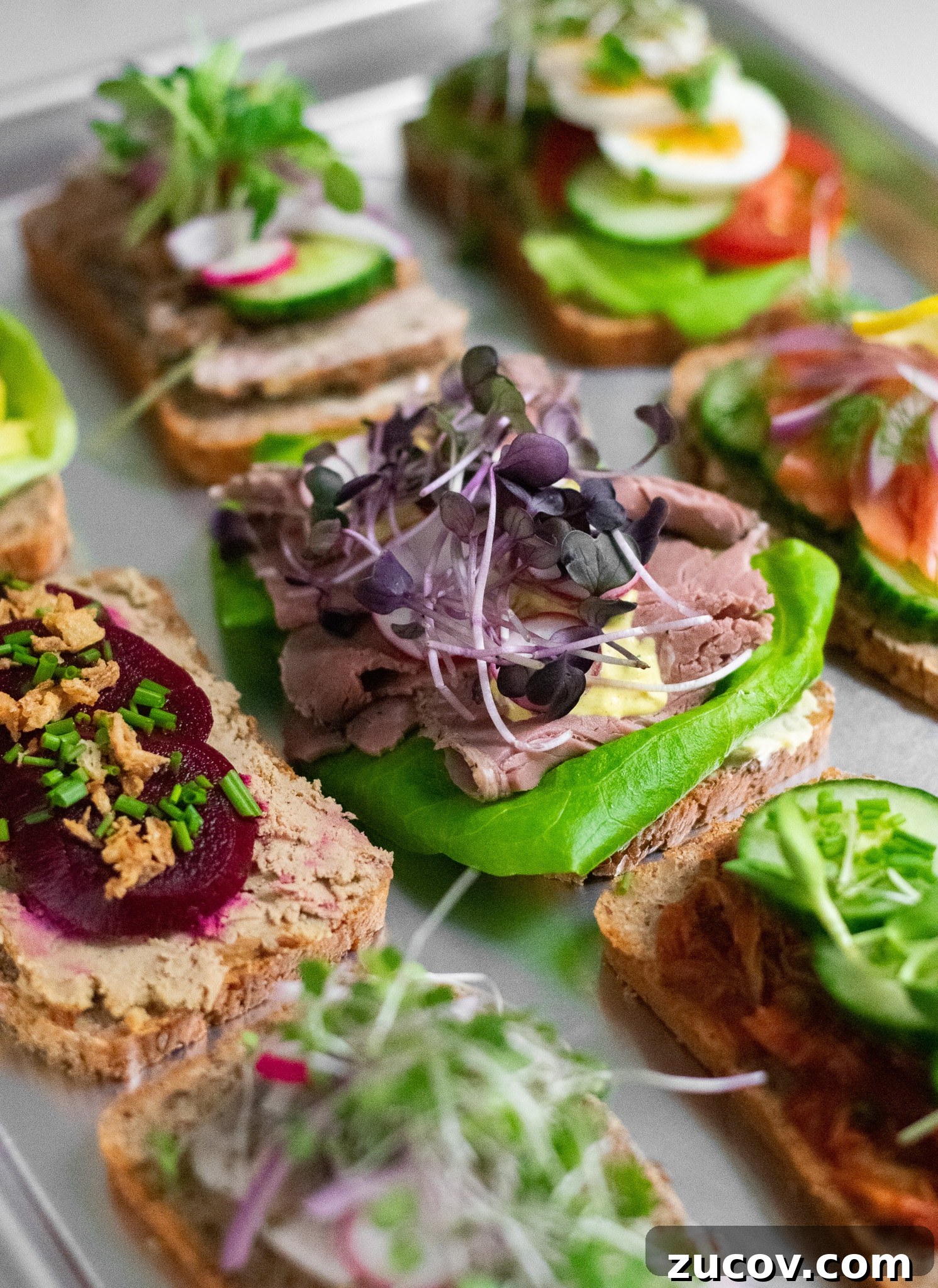
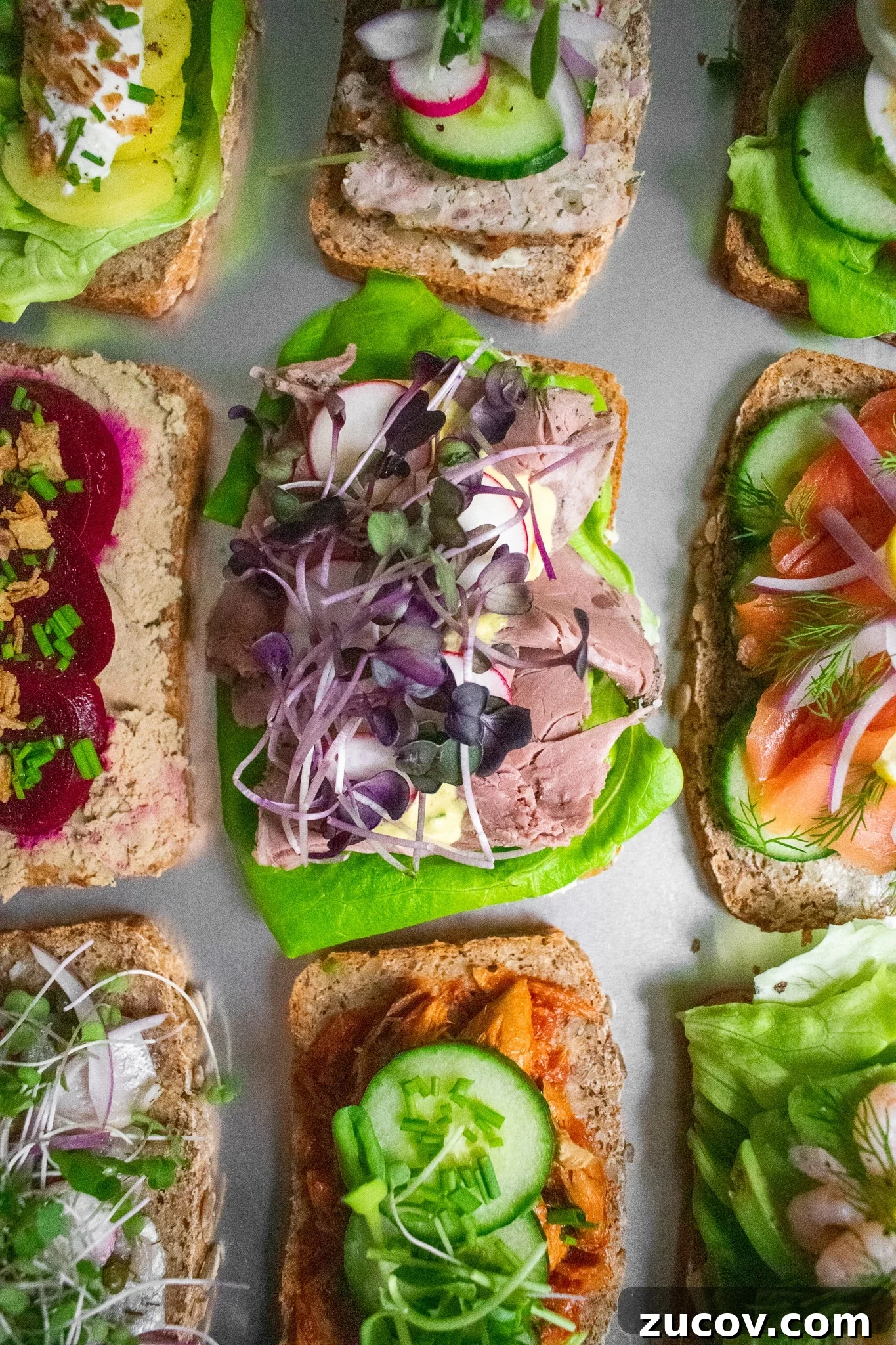
Below are nine favorite smørrebrød, grouped into fish, meat, and vegetarian categories. These serve as well-balanced suggestions for flavor and texture, but feel free to experiment with your own combinations. For ingredient lists and step-by-step assembly instructions, see the recipe post referenced below.
Important note: For all sandwiches, start by buttering your bread (or spreading a thin layer of lard) if you like—this is the traditional Danish approach and it helps protect the bread from becoming soggy while adding flavor.
Fish Sandwiches
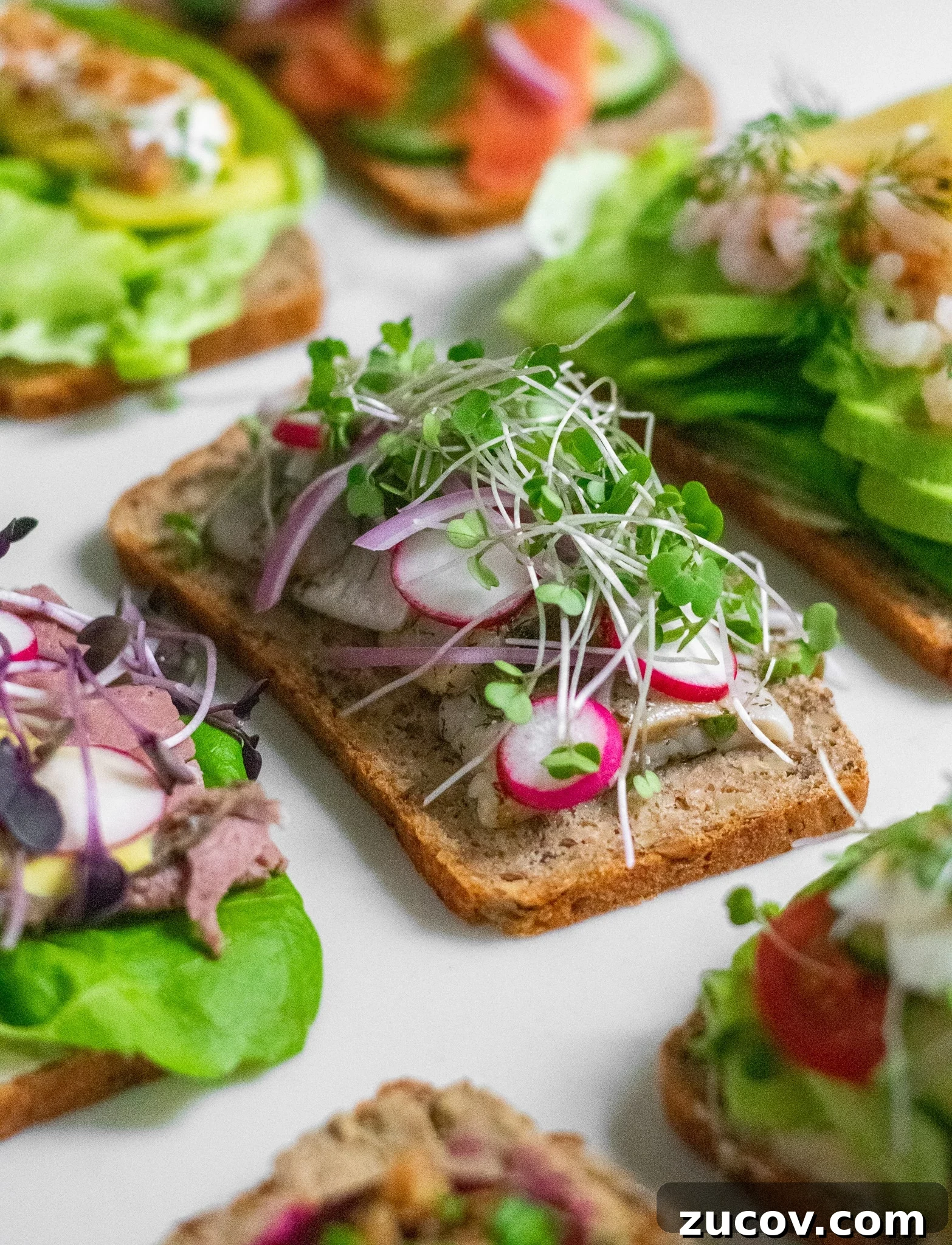
Sild (Herring)
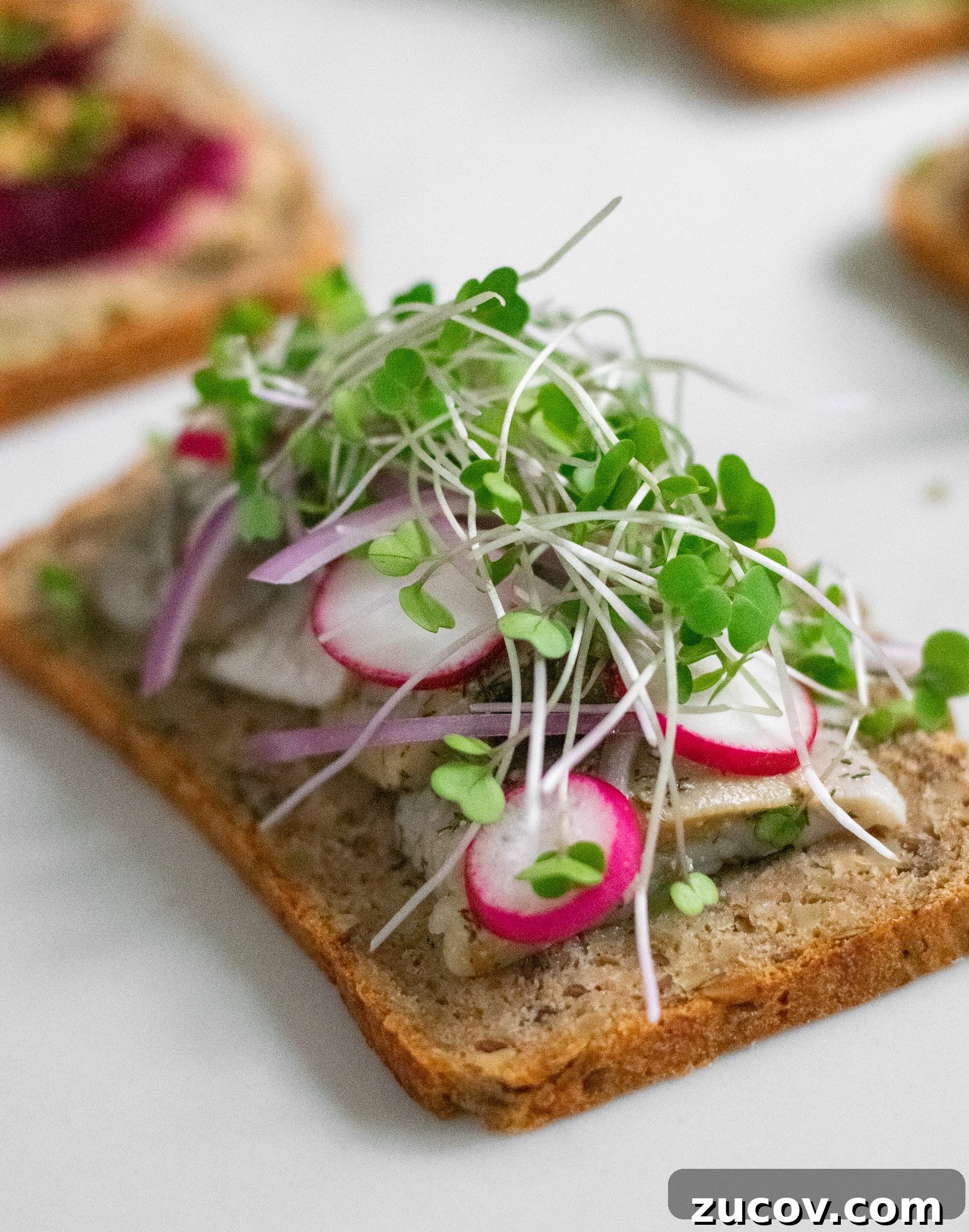
Pickled herring is iconic in Danish cuisine and makes a superb smørrebrød topping. A typical assembly includes a layer of herring, thinly sliced radish for crunch and bite, raw onion for sharpness, and a garnish of microgreens for color. The contrast of tangy, fatty herring with crisp vegetables is classic and satisfying.
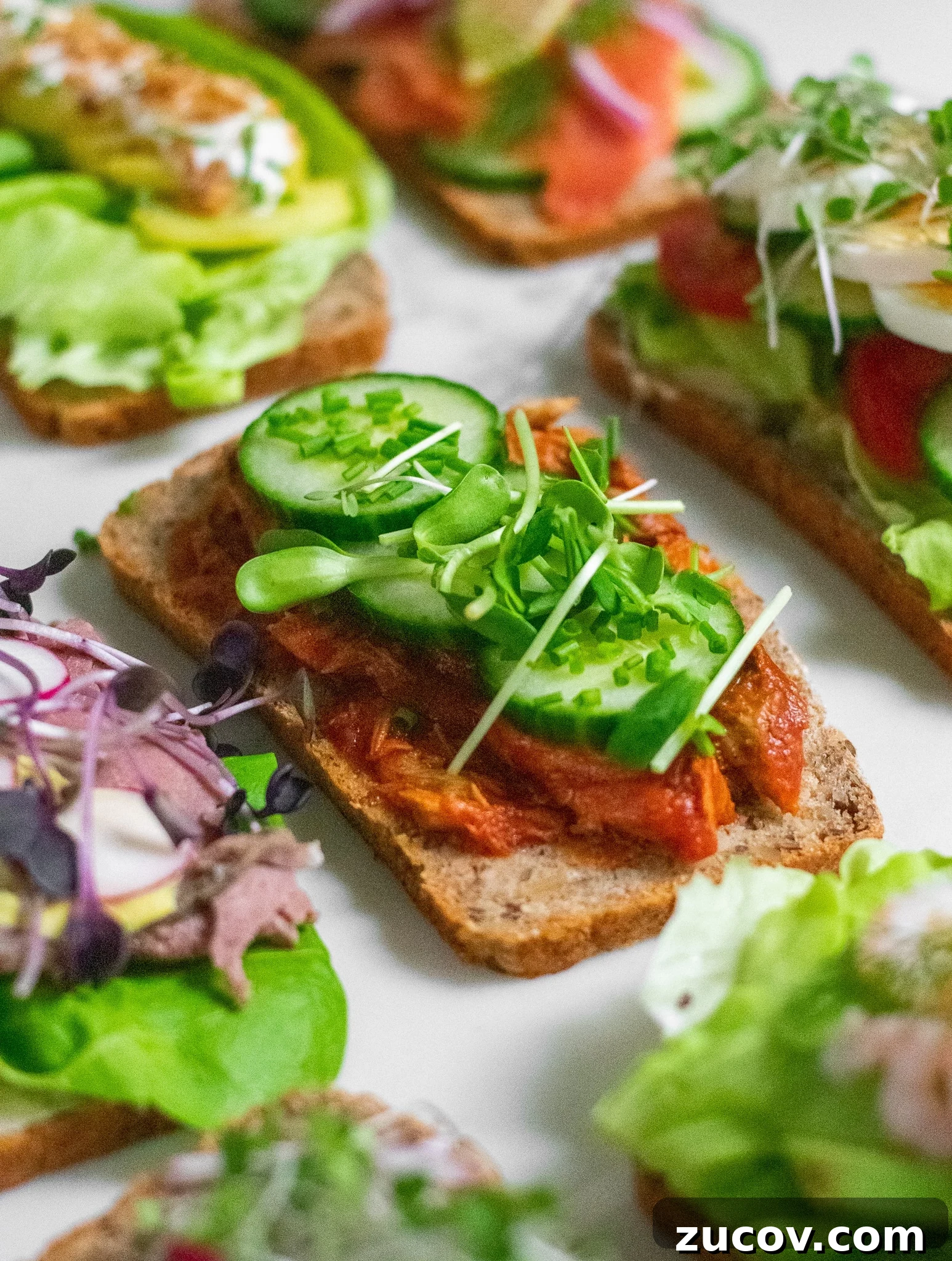
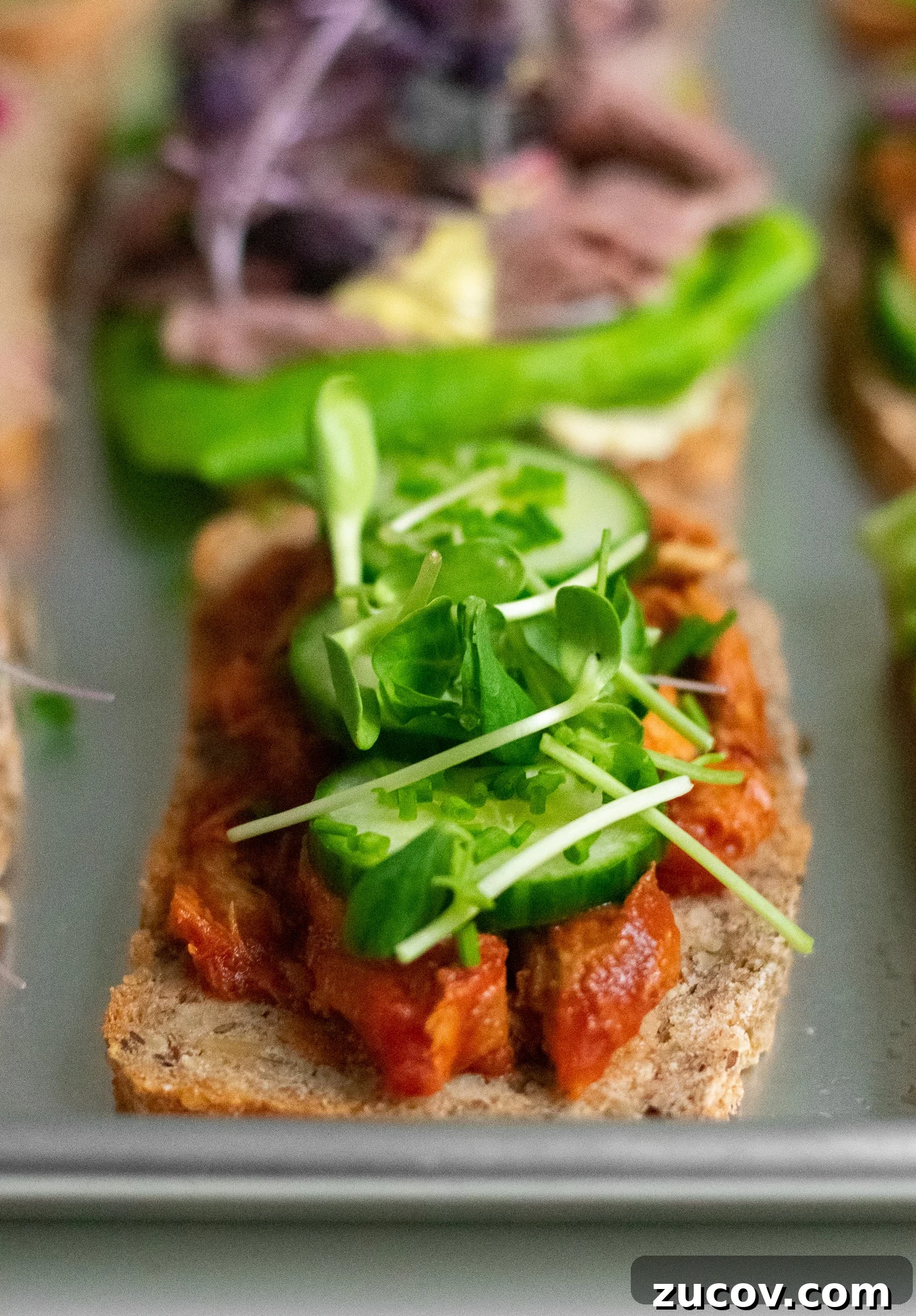
Makrel (Mackerel)
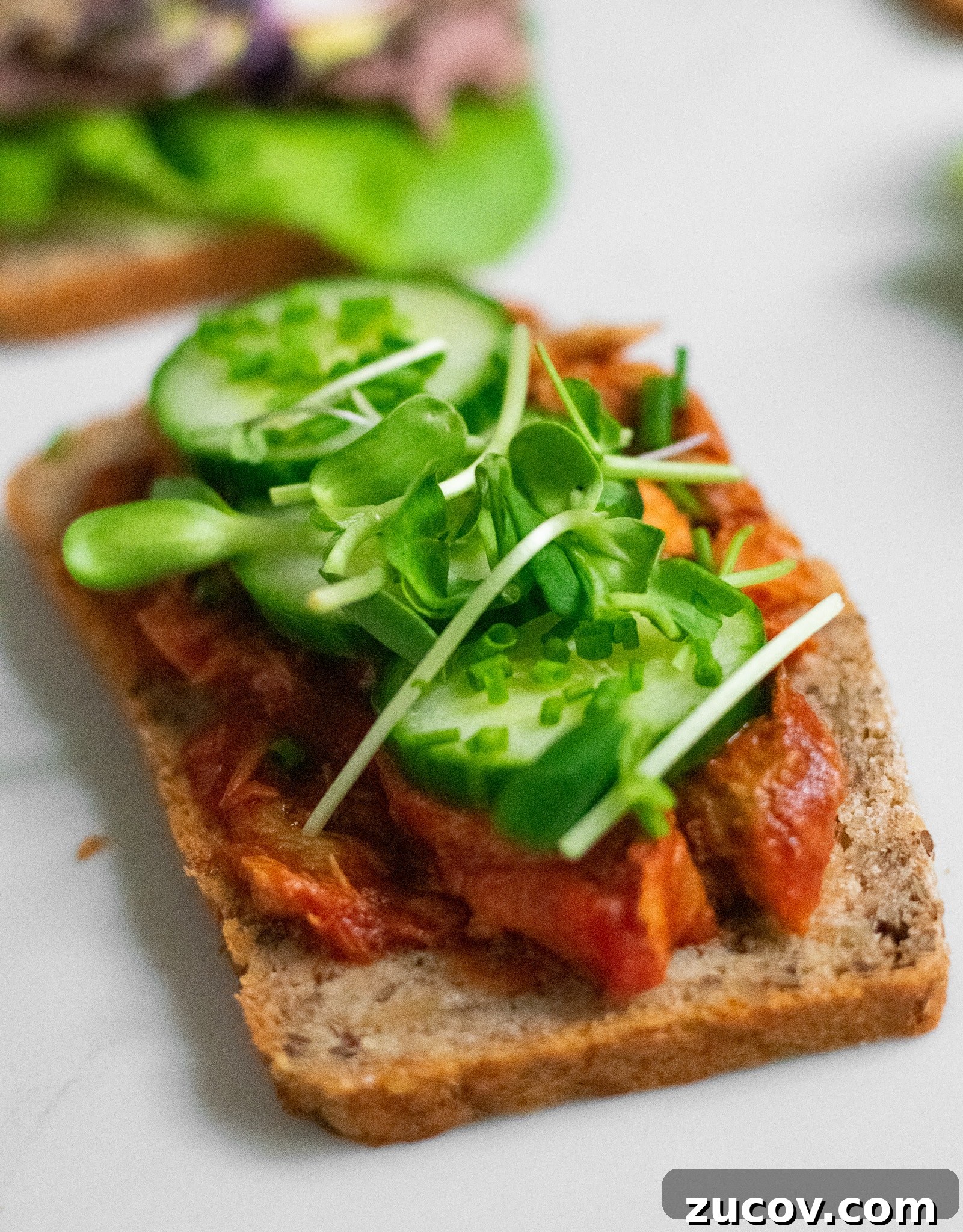
Canned mackerel in tomato sauce is a familiar childhood favorite in Denmark. Its sweet-savory sauce pairs well with fresh cucumber, snipped chives, and microgreens to brighten the rich fish. Some people like a smear of mayonnaise under the mackerel for extra creaminess — a tasty variation to try.
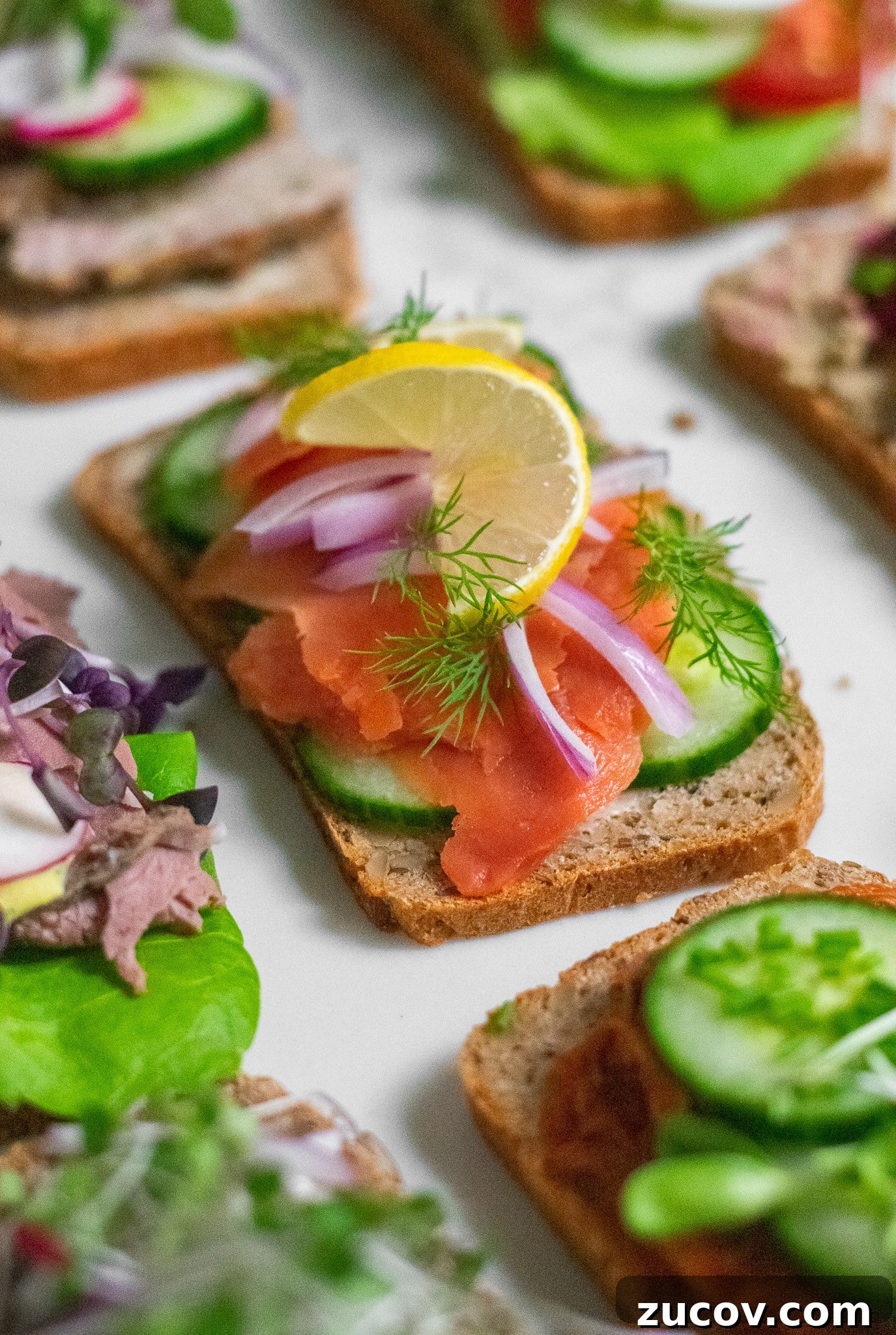
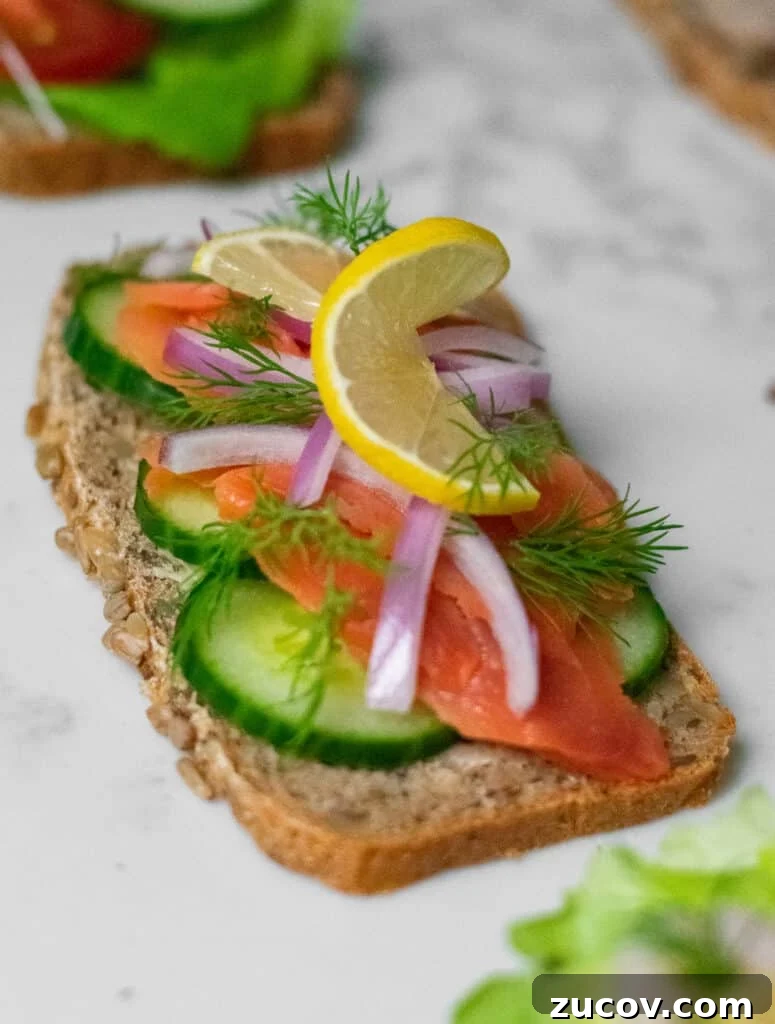
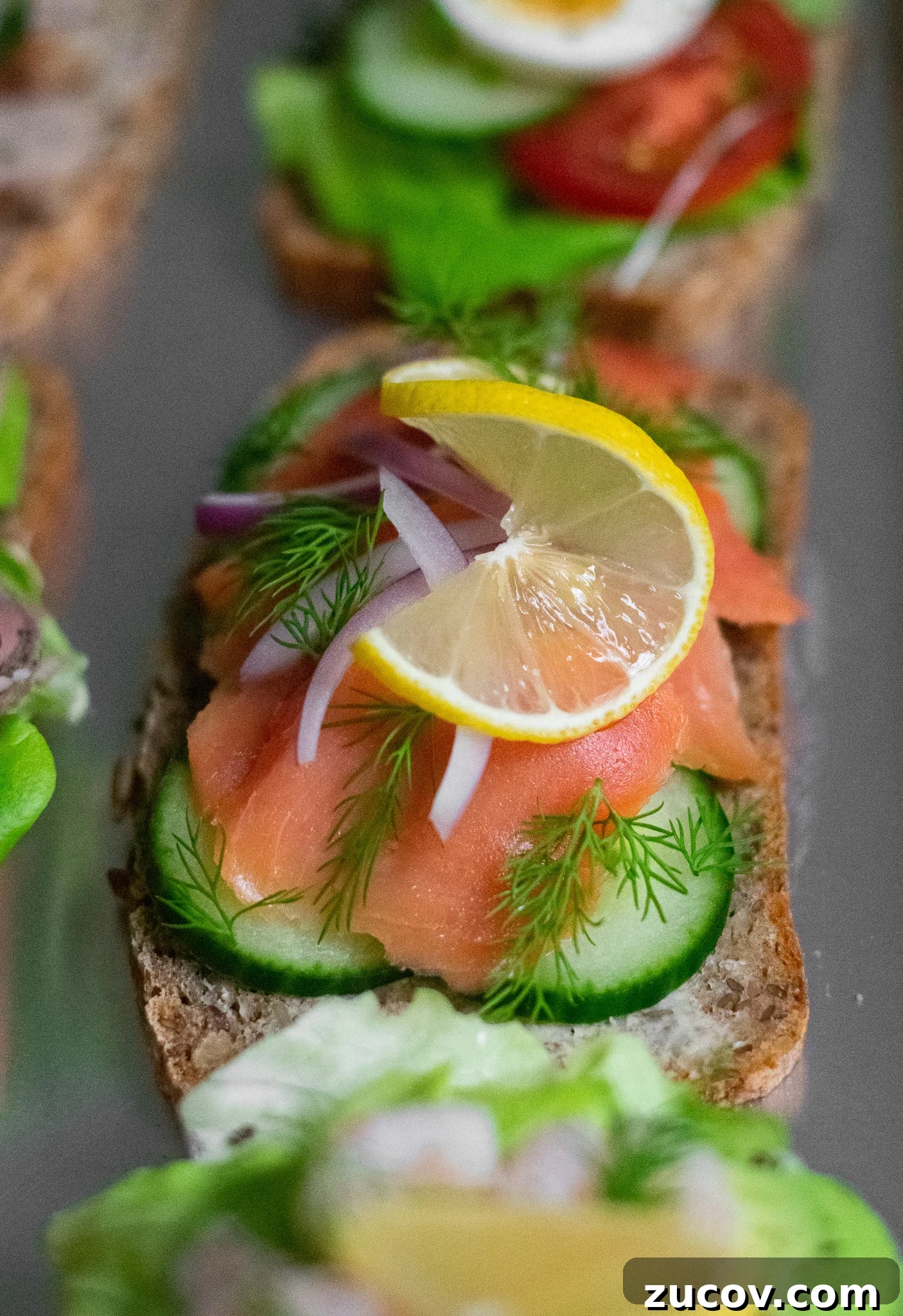
Laks (Smoked Salmon)
Start with buttered rugbrød, then add a thin layer of cucumber to separate the bread from the salmon. Pile on smoked salmon (or gravlax), a few slices of pickled onion, fresh dill, and a wedge of lemon. This bright, elegant combination is a timeless favorite.
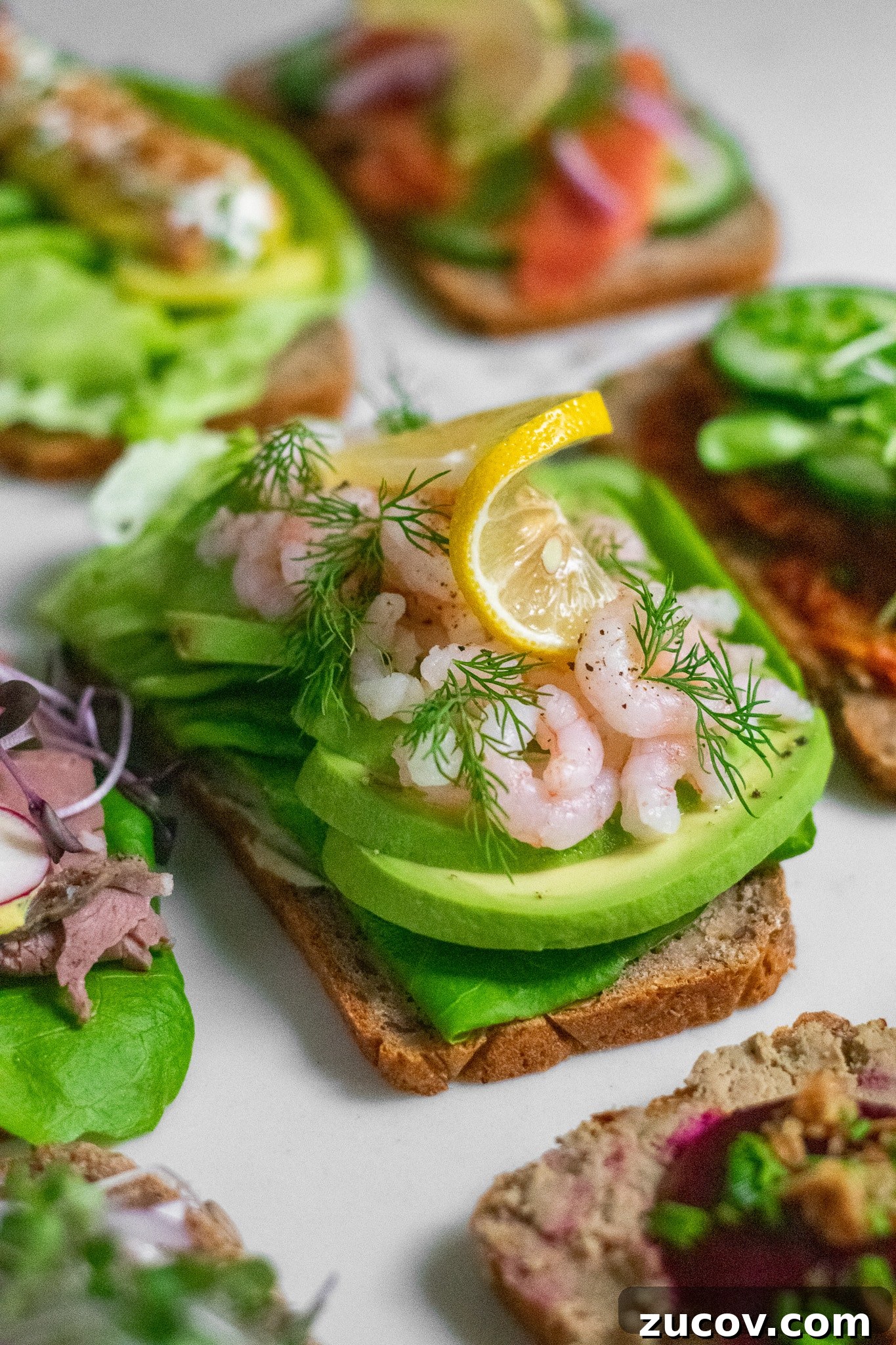
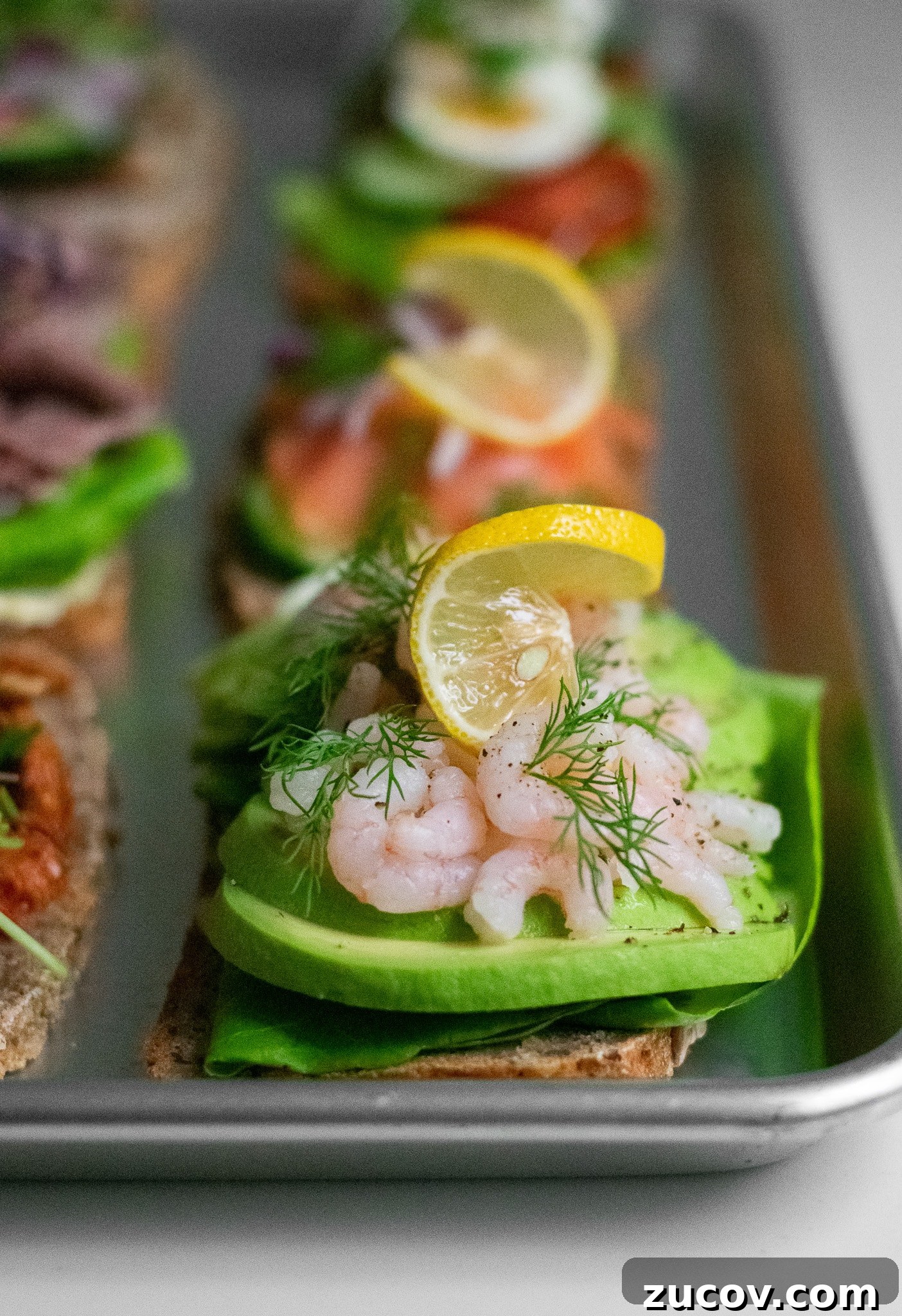
Rejer (Shrimp)
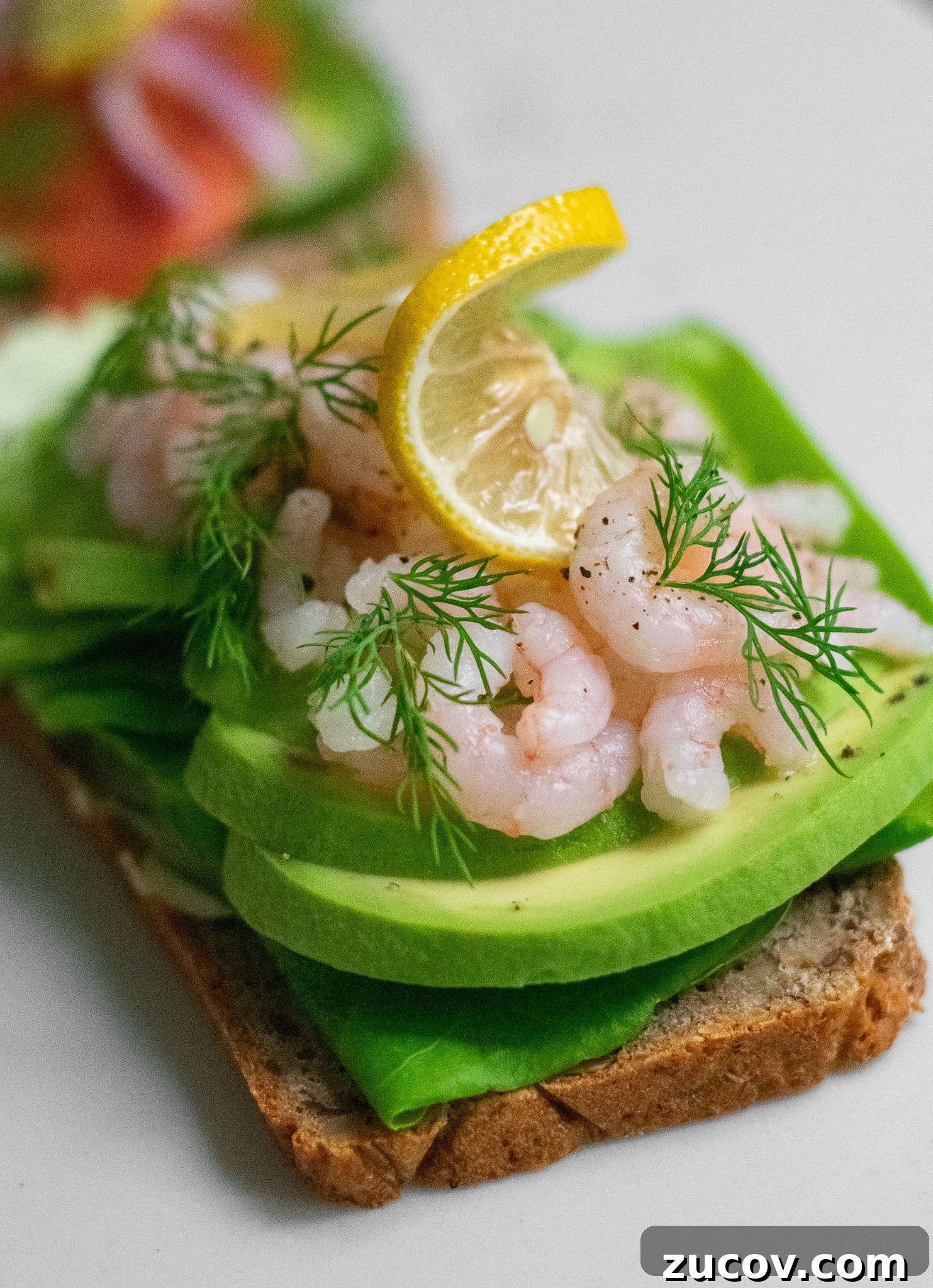
Small cooked shrimp make a celebratory smørrebrød, often seen at holiday tables. Layer butter or mayo, crisp lettuce, sliced avocado, a generous mound of shrimp, dill, and a squeeze of lemon. It’s light, fresh, and festive.
Meat Sandwiches
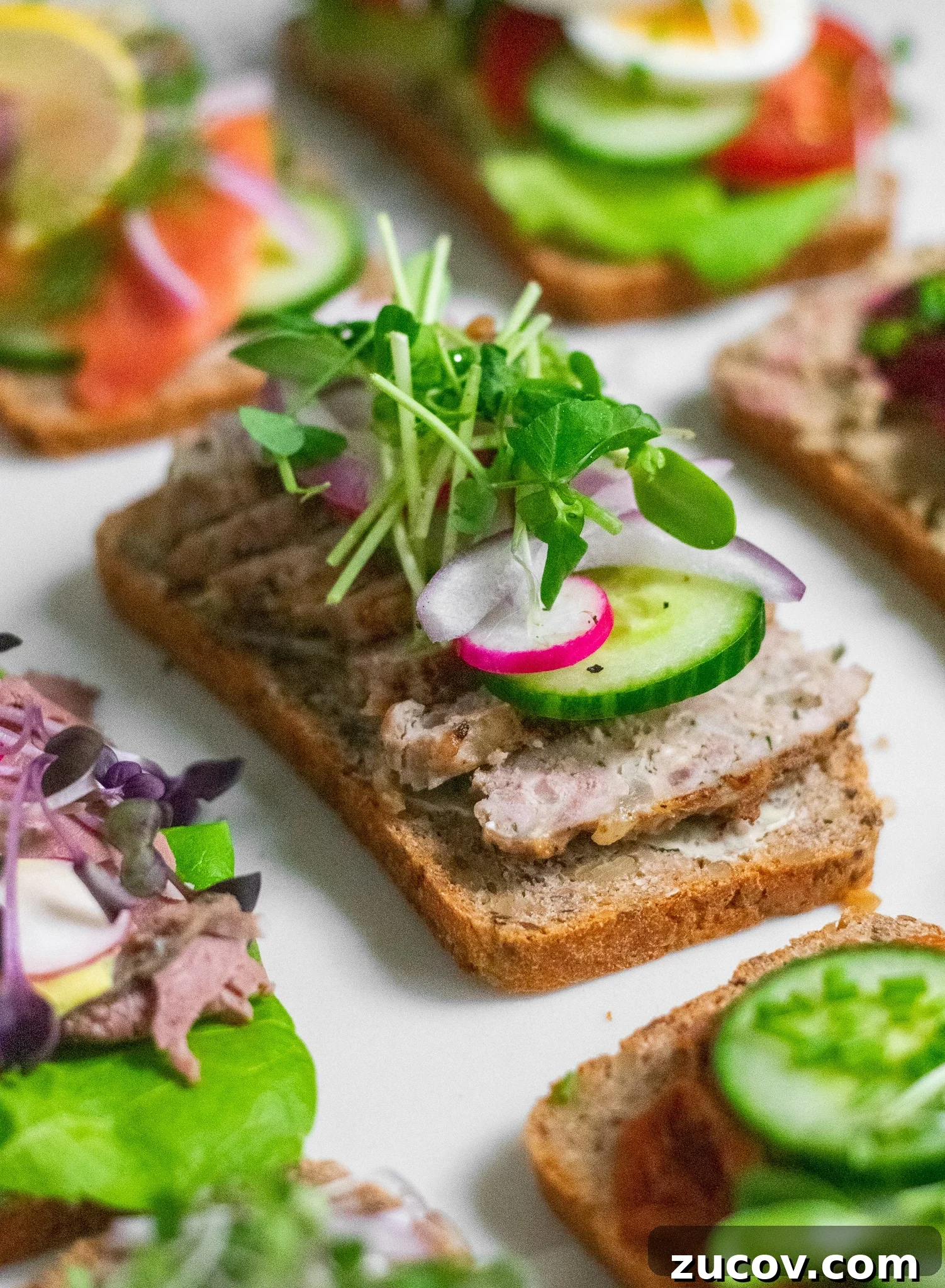
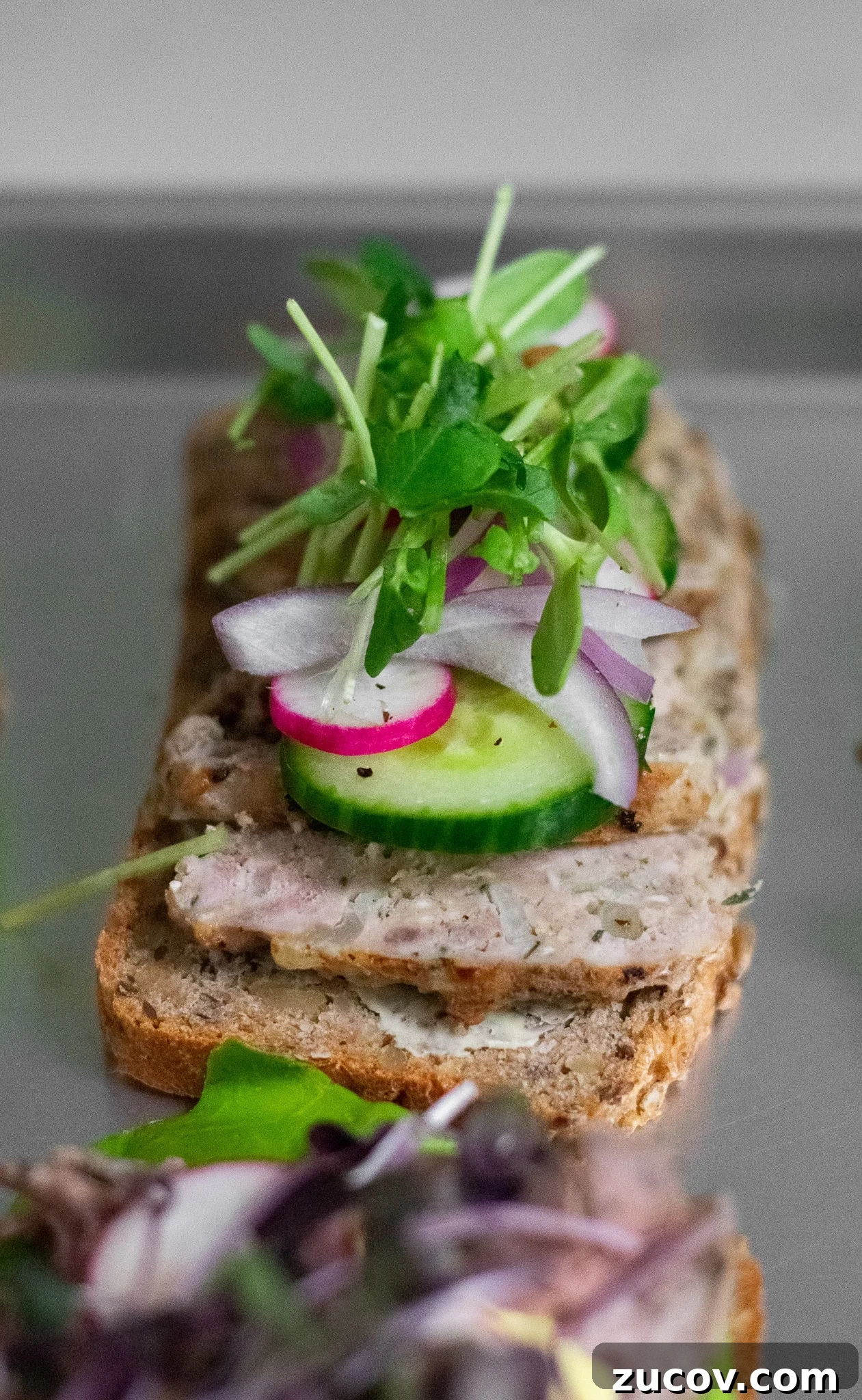
Frikadelle (Meatball)
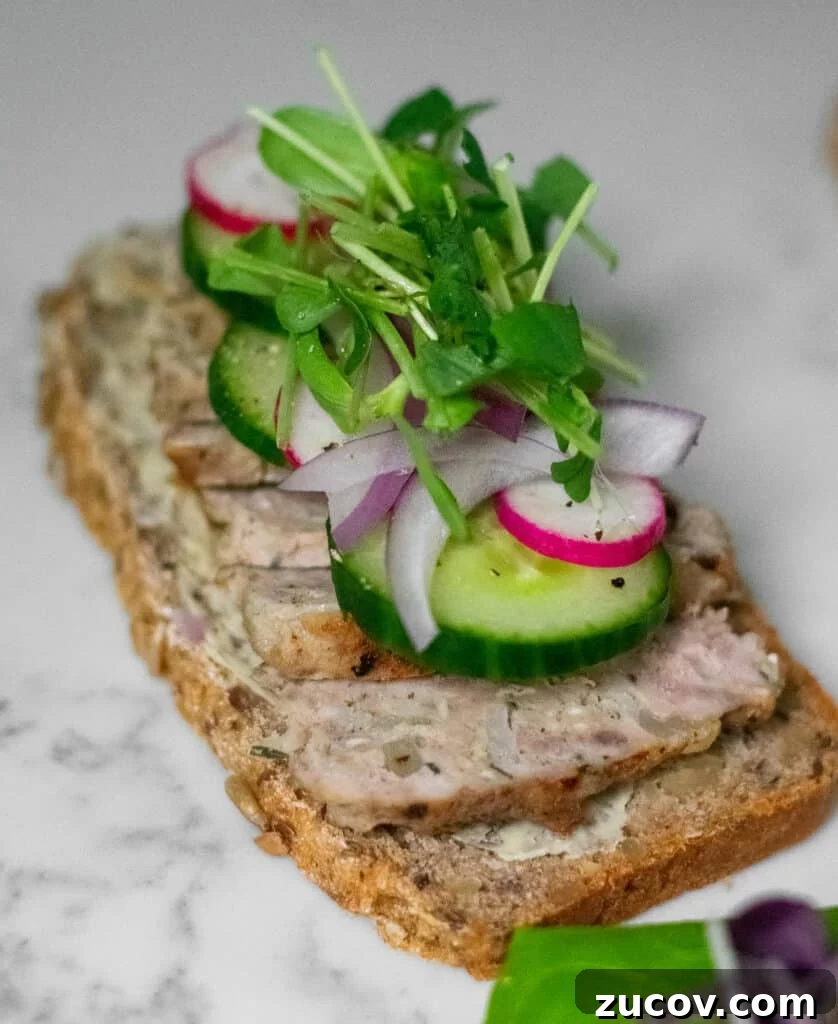
Frikadeller—Danish pork or mixed meat patties—make excellent sandwich toppings. Place a frikadelle on buttered rye bread and add crunchy cucumber, thin radish slices, and raw onion to cut through the richness. A few microgreens finish the plate for color and freshness.
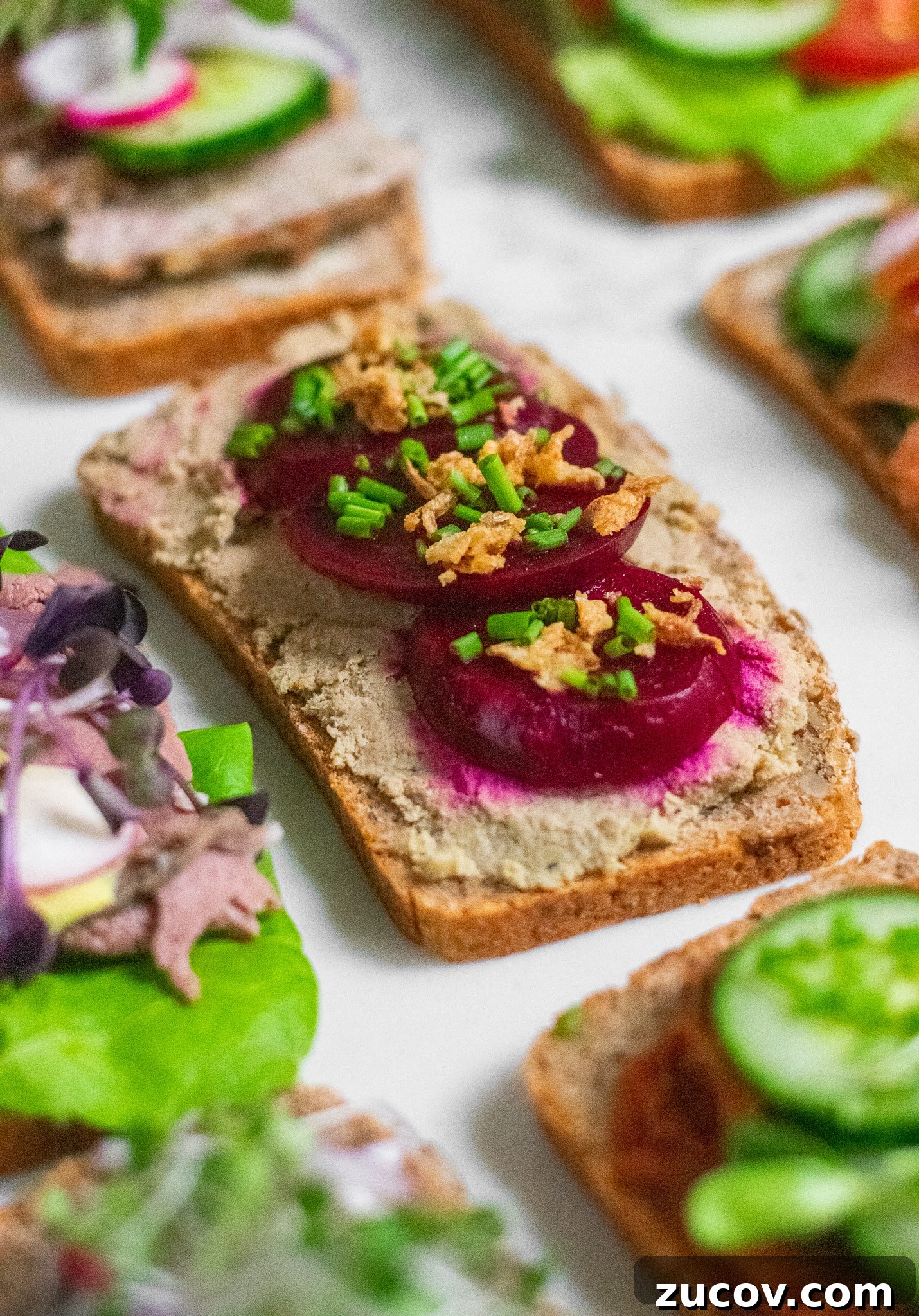
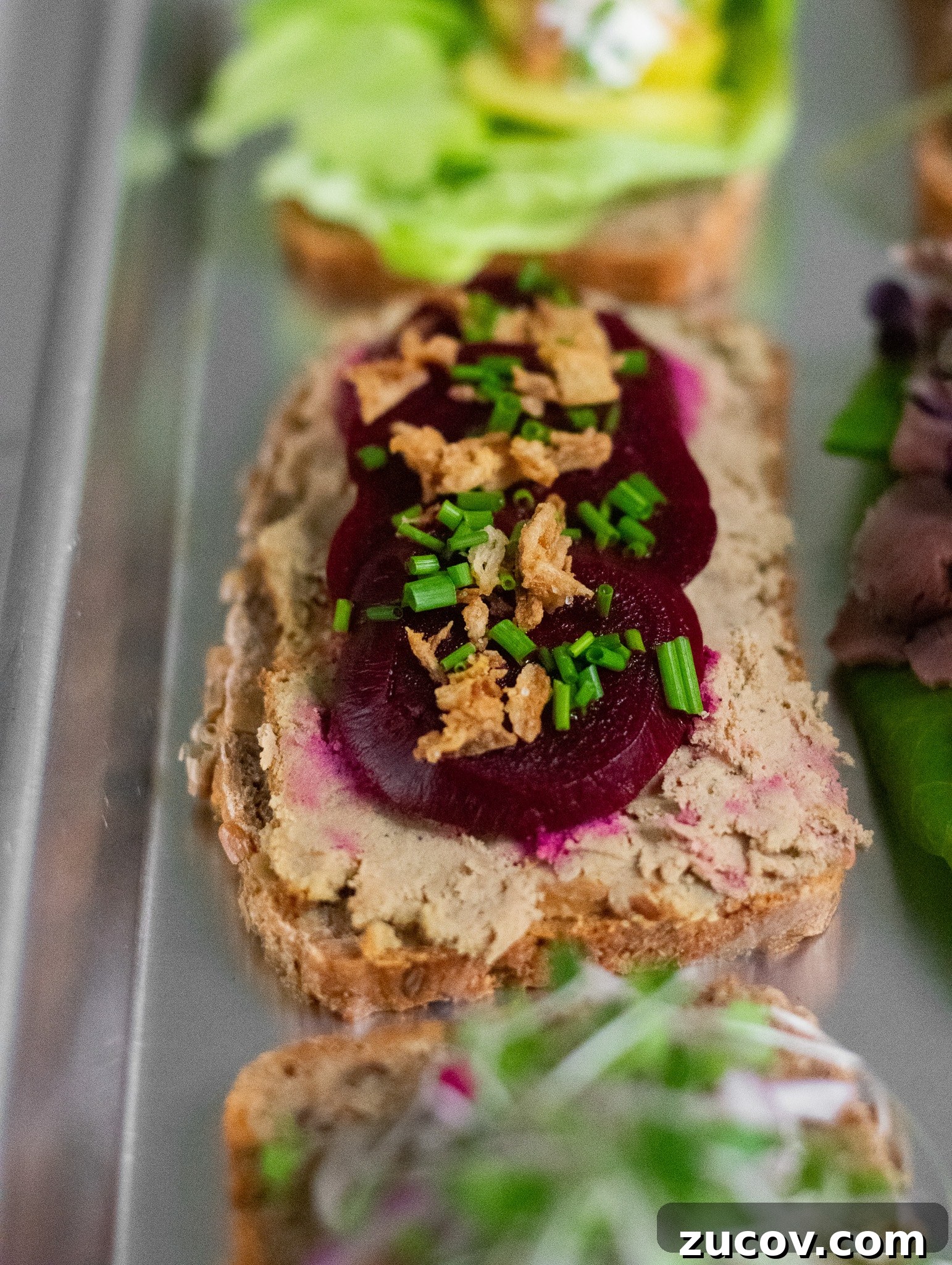
Leverpostej (Liver Pate)
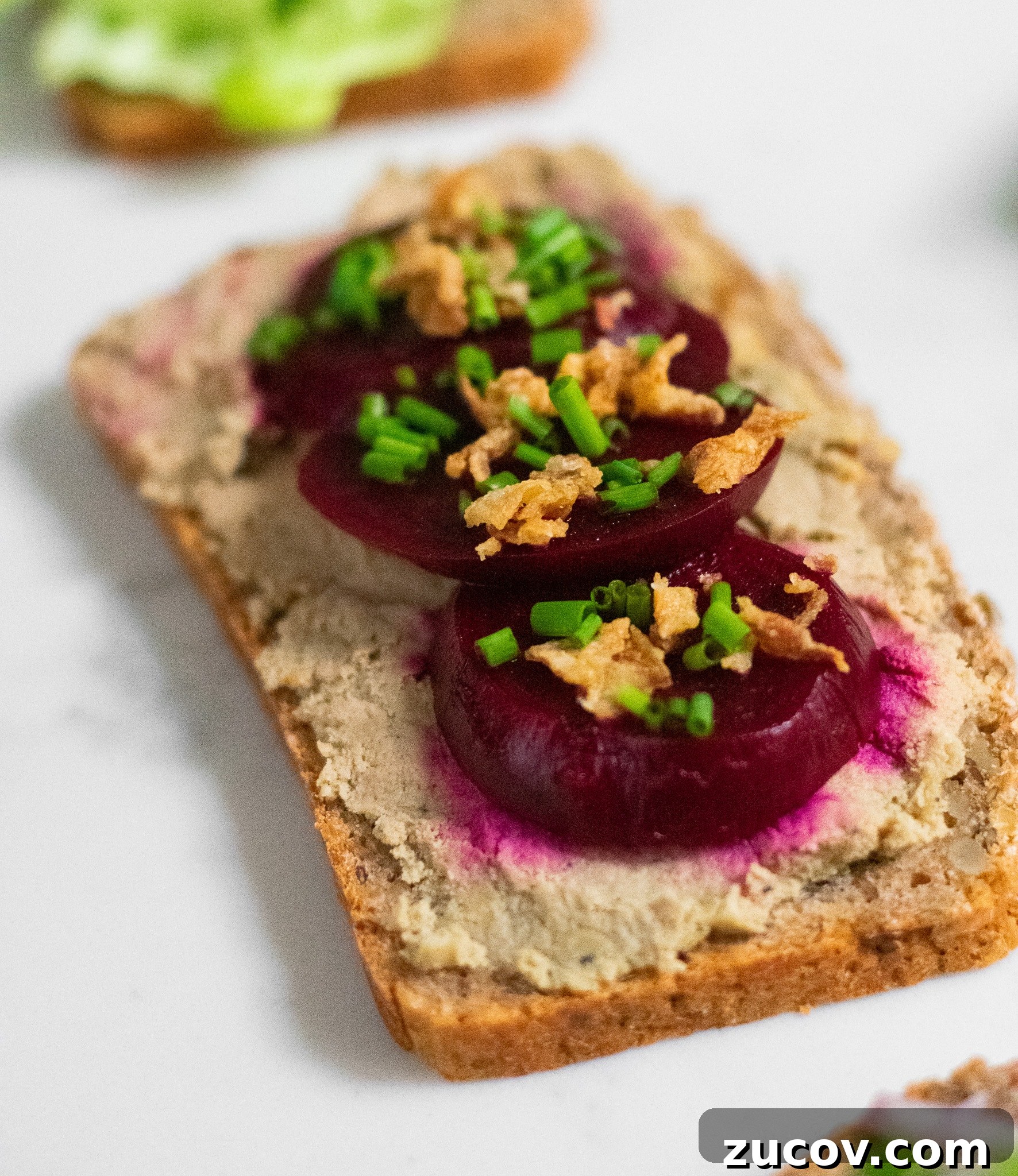
Leverpostej is a classic comfort-food spread in Denmark. Slather it on buttered rye and top with pickled beets, snipped chives, and crispy fried onions for brightness and texture. Cucumber is another popular accompaniment for a lighter contrast to the rich pate.
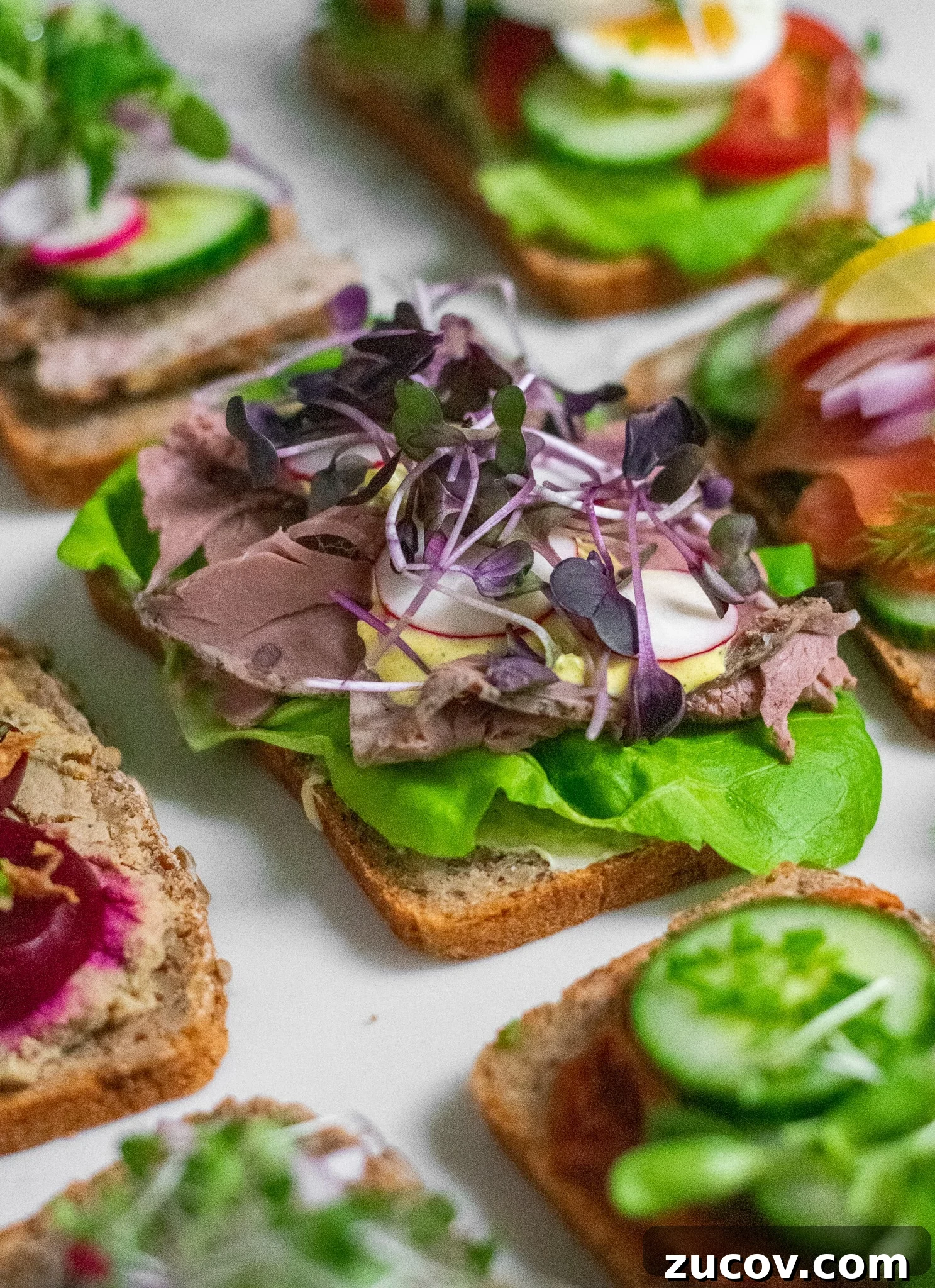
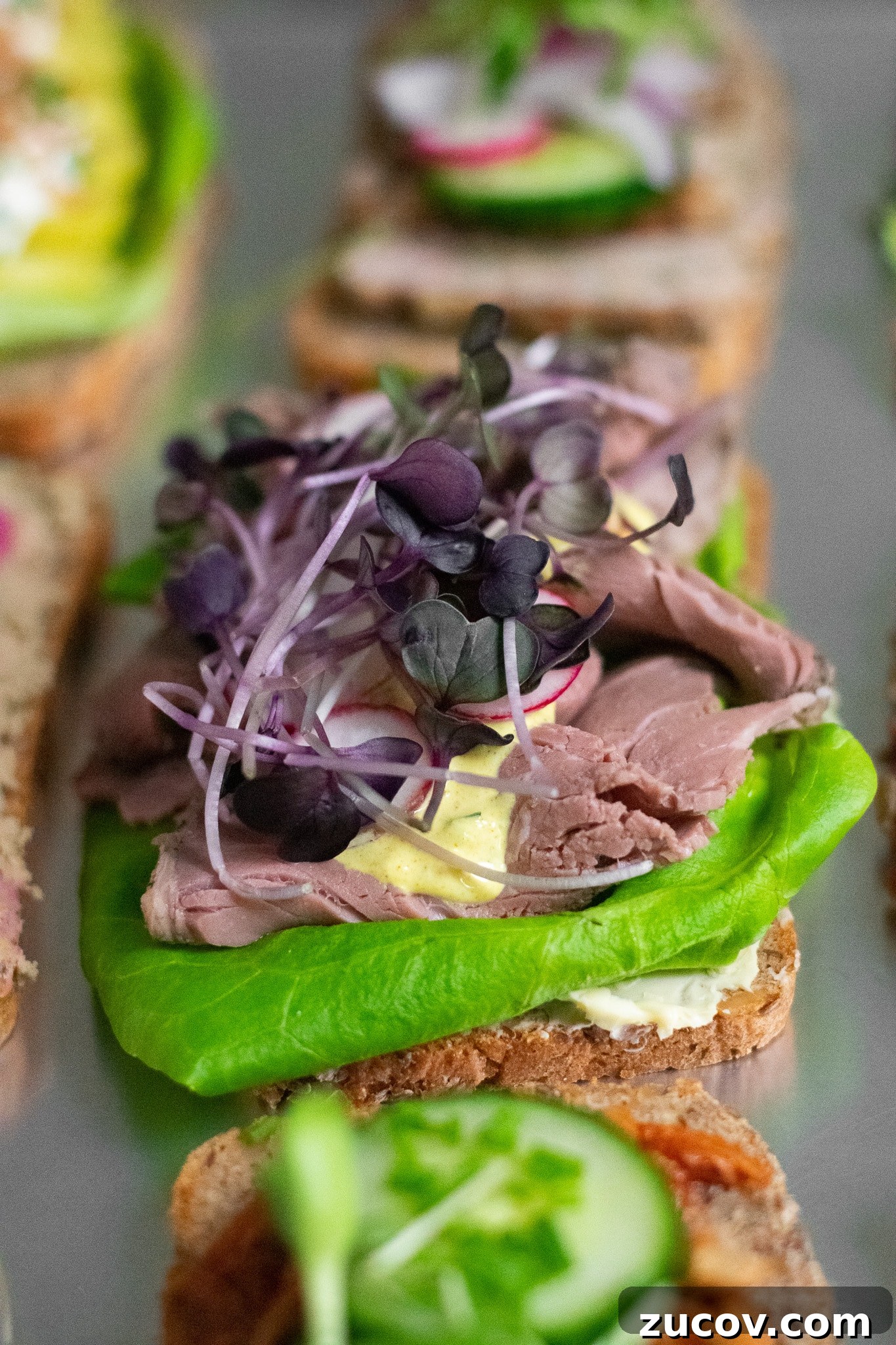
Roast Beef
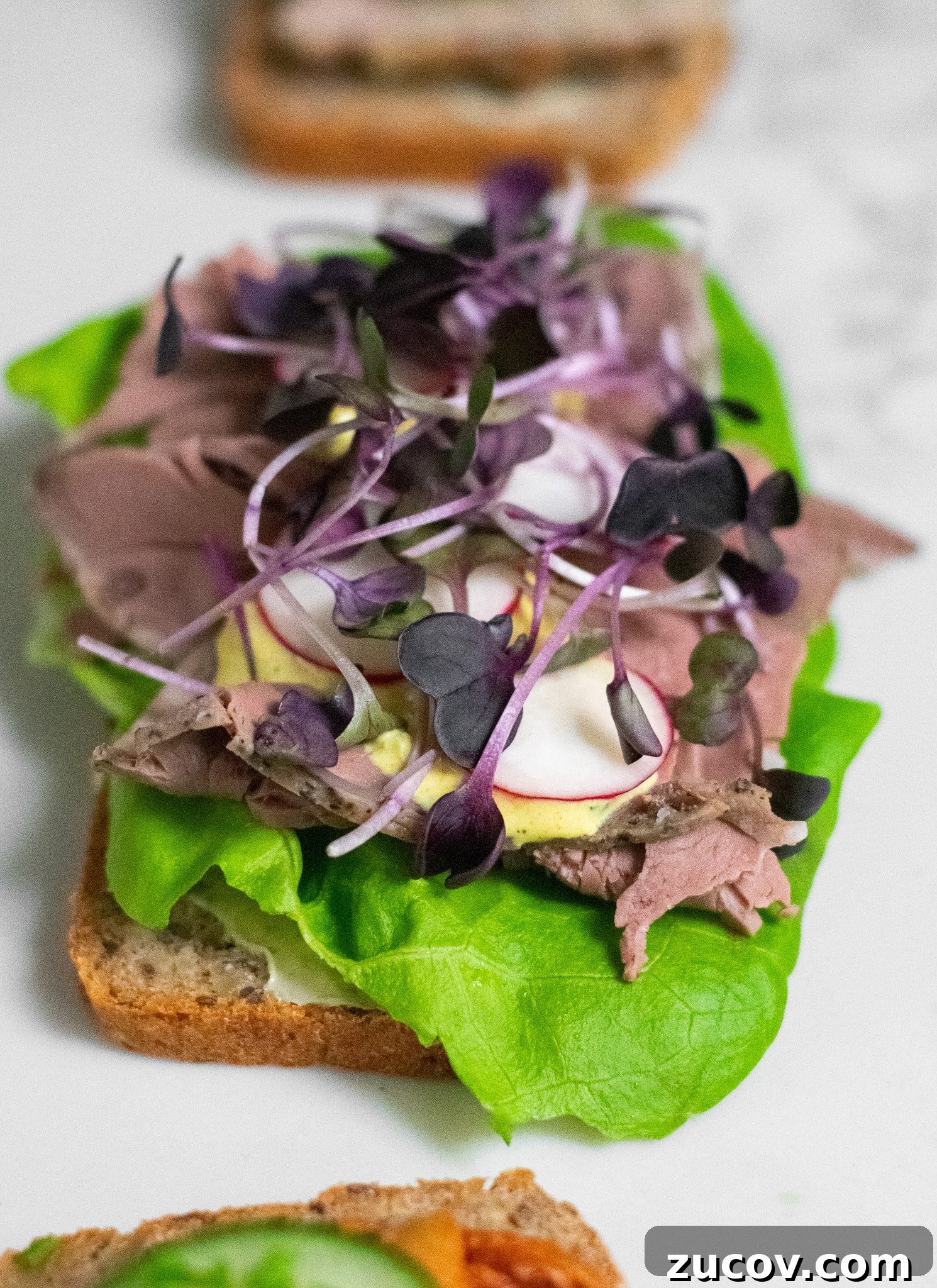
Roast beef smørrebrød combines thin slices of roast beef with crisp lettuce, creamy remoulade, thinly sliced radish, and microgreens. Spread butter on the bread first; the remoulade adds tangy creaminess that complements the beef.
Vegetarian Sandwiches
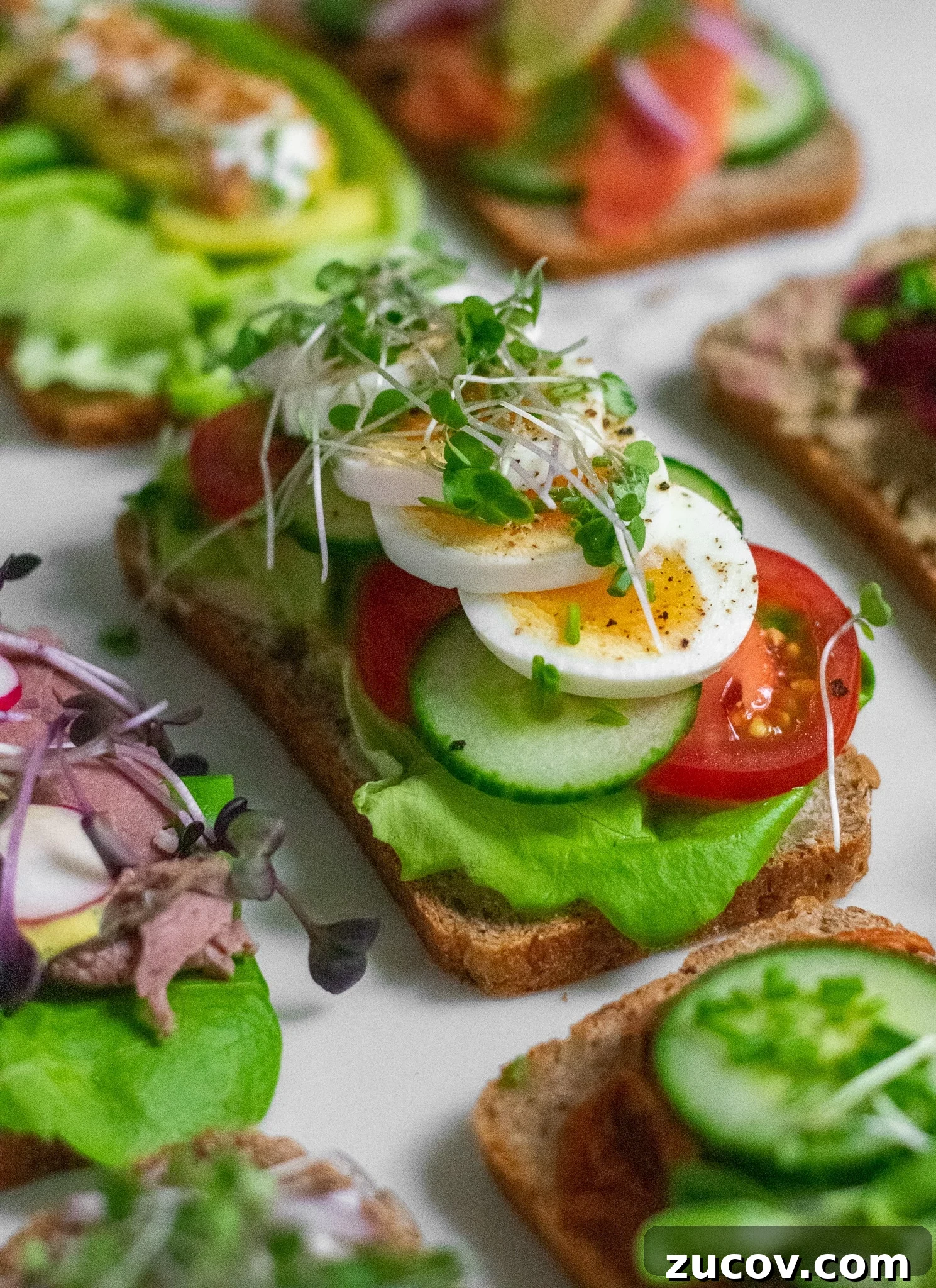
Æg (Egg)
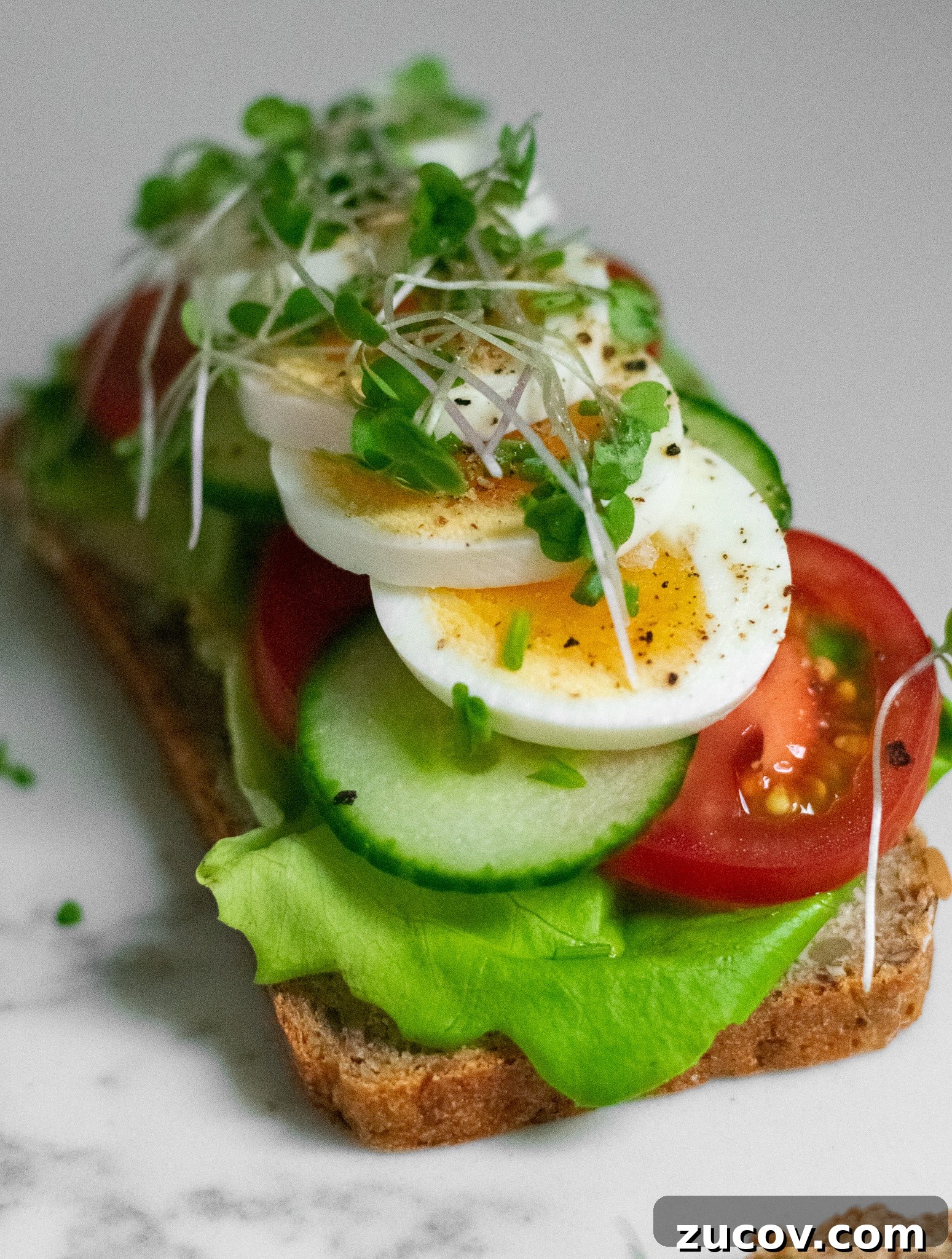
Sliced medium or hard-boiled egg on buttered rye is a simple, satisfying smørrebrød. Add fresh vegetables—cucumber, tomato, and lettuce—and consider avocado for extra richness. Chives bring a delicate onion note; pickled beets or onions add pleasant acidity. Finish with salt and pepper on the egg.
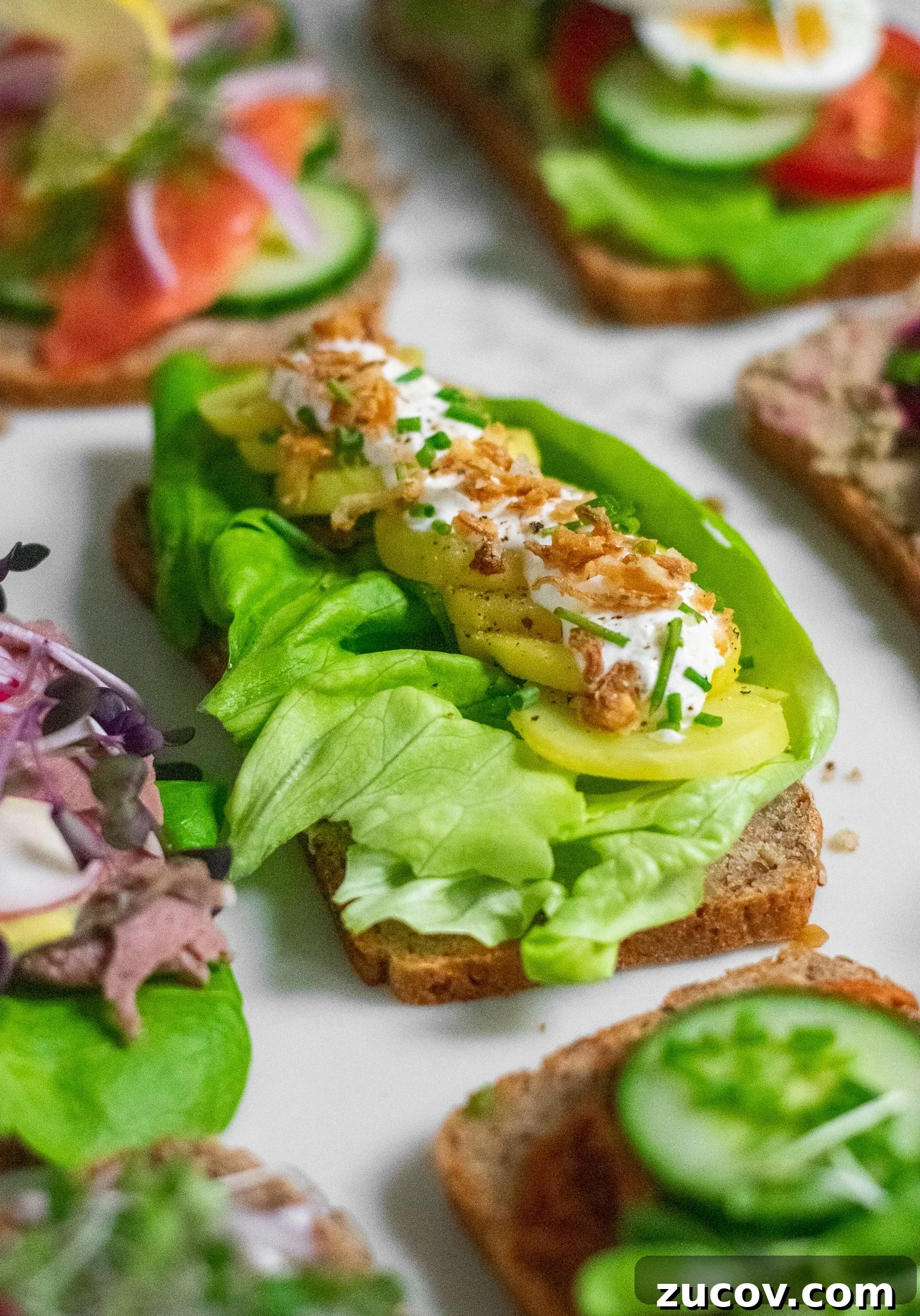
Kartoffel (Potato)
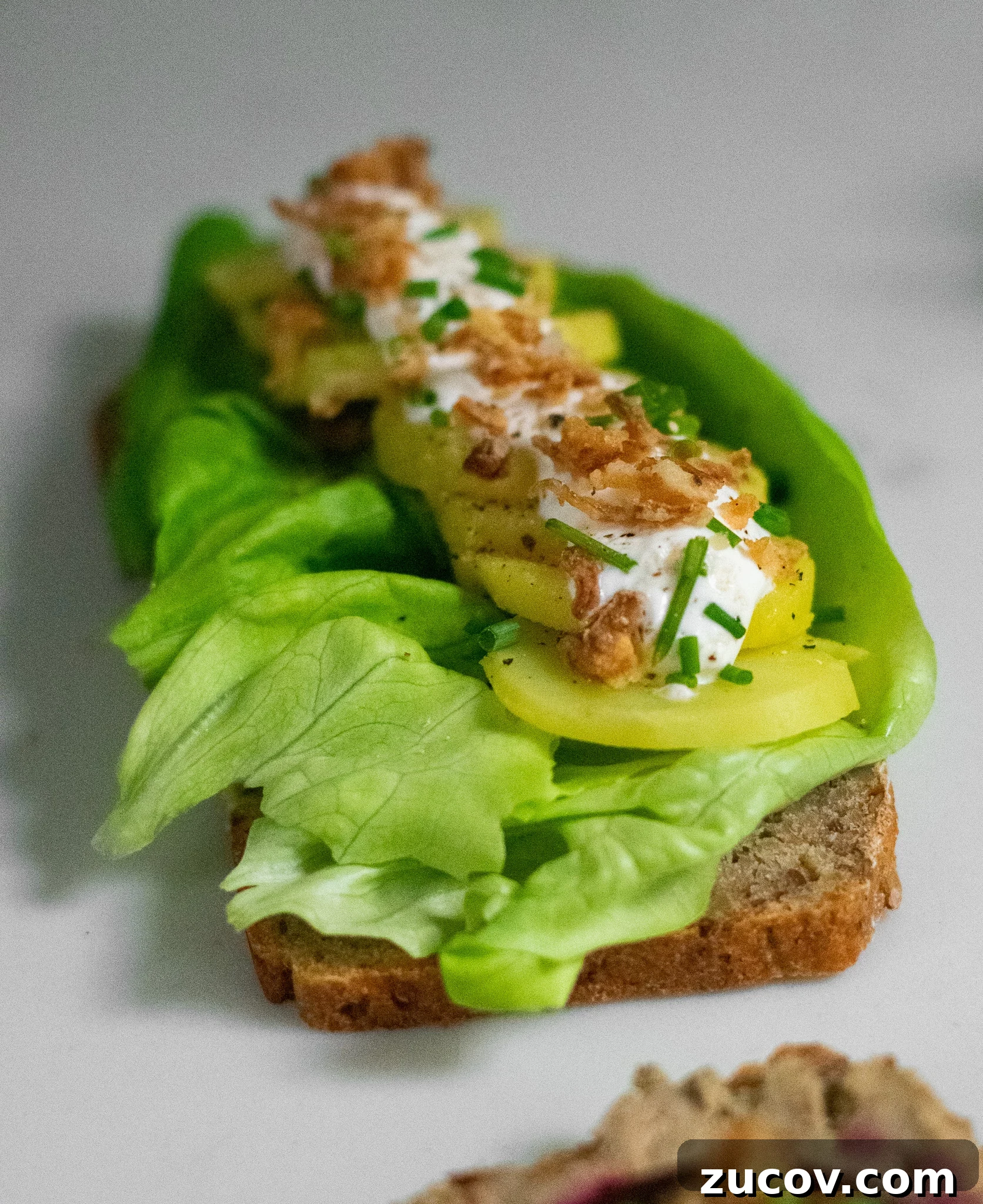
Potato smørrebrød is hearty and comforting. Butter the bread, add a leaf of lettuce, layer sliced boiled potatoes, then spoon on sour cream or mayonnaise. Finish with snipped chives and crispy fried onions for contrast and crunch. It’s simple, flavorful, and very satisfying.
Make Your Next Dinner Party Smørrebrød Themed!
Smørrebrød makes for a convivial, hands-on meal—perfect for gatherings where guests can assemble or sample a variety of small open-faced sandwiches. If you’d like a full ingredient list and step-by-step assembly for each of the recipes above, consult the recipe post linked in the original article. Try mixing fish, meat, and vegetarian options to create a colorful, balanced spread, and enjoy sharing classic Danish flavors with friends and family.