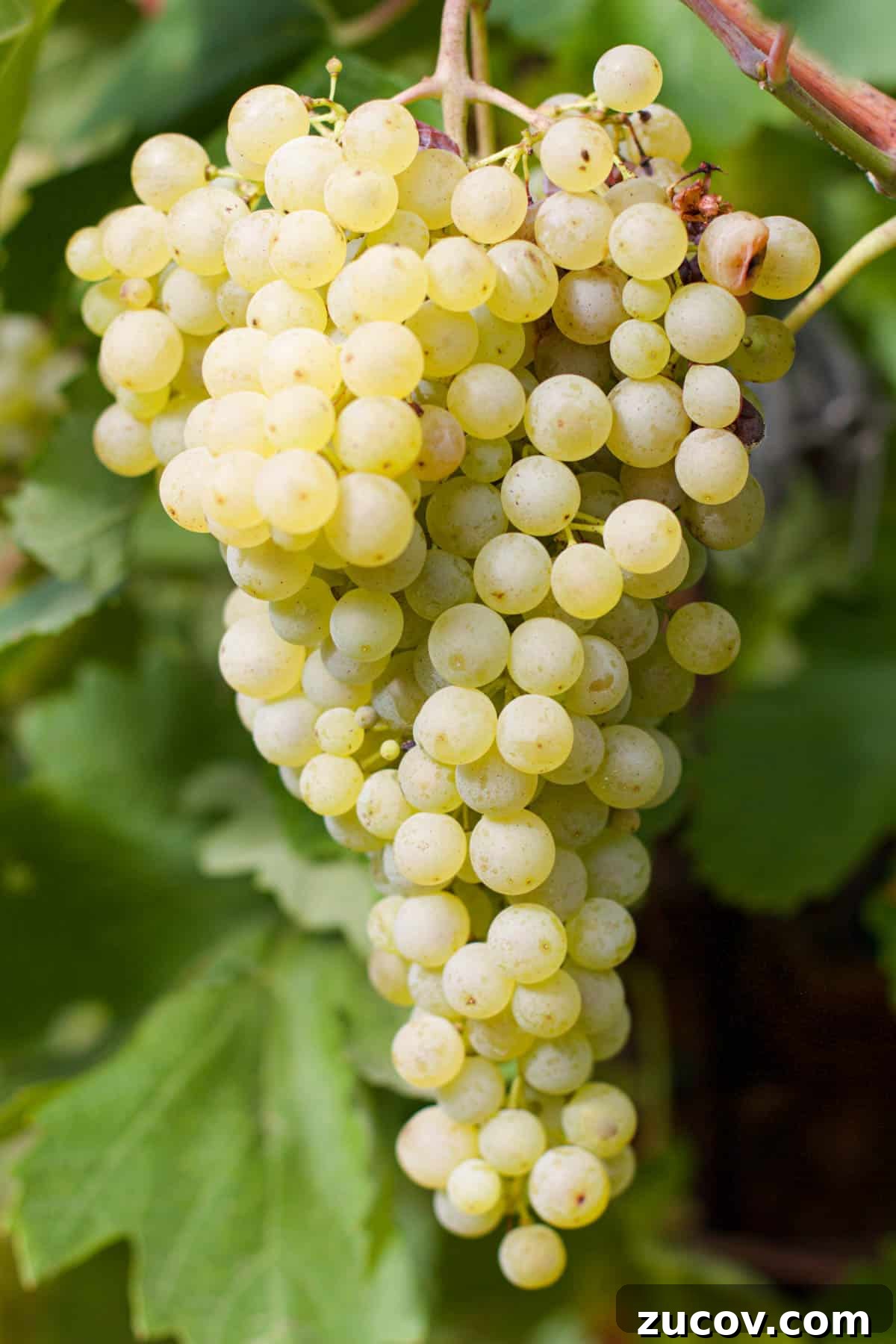
Prosecco is a well-known sparkling wine from northern Italy and is often a more affordable alternative to Champagne.
While it’s commonly described as fresh, fruity, and inexpensive, there’s greater variety and nuance within Prosecco than many people realize. Exploring its different styles and quality levels reveals a range of flavors and production approaches that make this sparkling wine worth discovering.

Table of Contents
- Prosecco Wine Highlights
- What is Prosecco?
- Grapes Permitted
- Method of Production
- What does Prosecco Taste Like?
- What’s the Difference between Prosecco and Champagne
- Prosecco Superiore DOCG
- Recipes to Pair with Prosecco
Prosecco Wine Highlights
- Prosecco expresses a range of styles, from light and floral to more concentrated and structured.
- There are distinct quality designations to know that reflect origin and production standards.
- It pairs well with many foods, complementing both simple appetizers and richer main dishes.
What is Prosecco?
Prosecco is a sparkling wine primarily produced in the Veneto region of northern Italy, with some production also in parts of Friuli-Venezia Giulia. It is made mainly from the Glera grape and is most commonly released as a sparkling (spumante) wine.
In 2020 the Prosecco producers’ consortium formally approved a Rosé Prosecco category, which incorporates Pinot Noir (alongside Glera) to add color and additional flavor dimensions.
Grapes Permitted
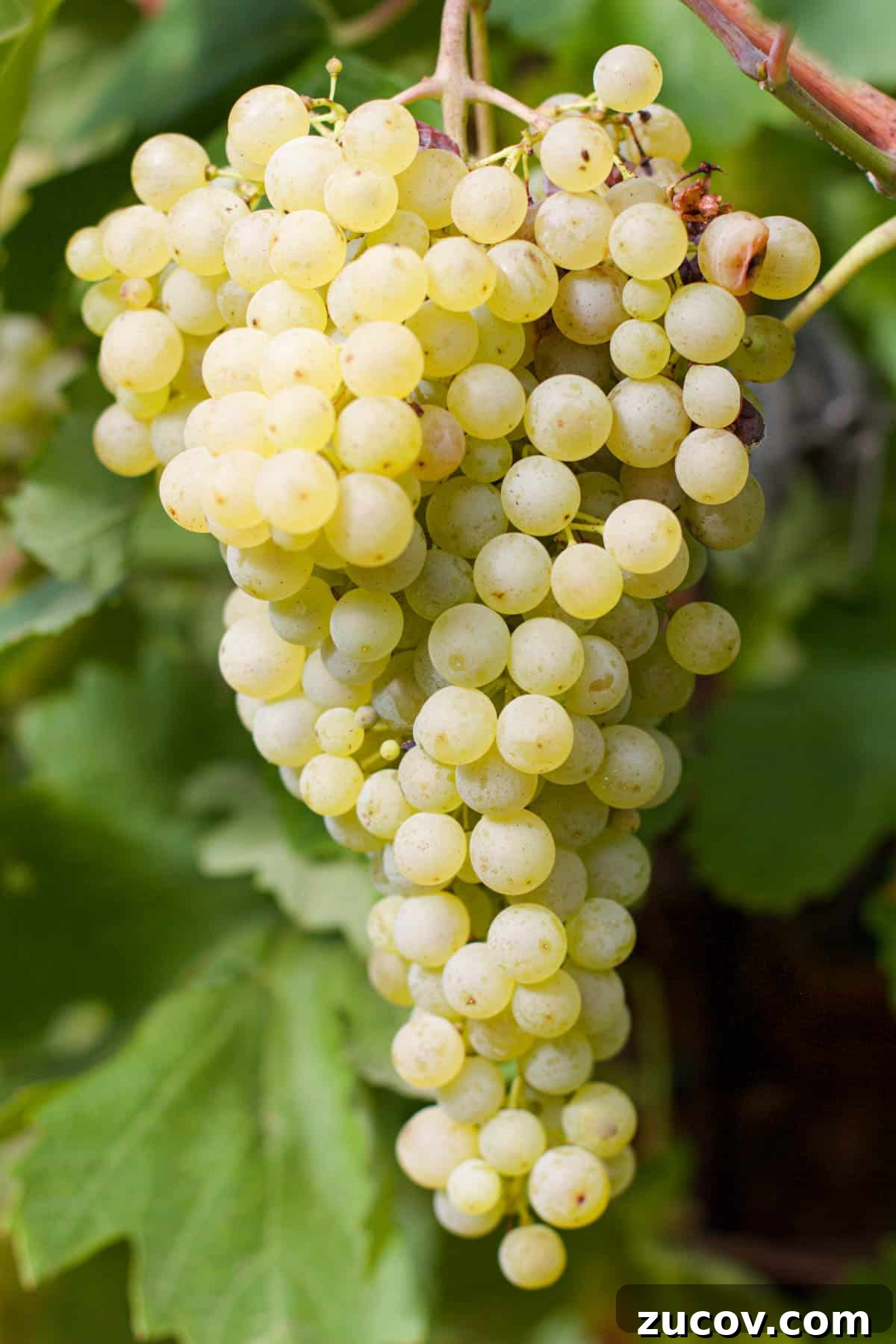
Prosecco must contain at least 85% Glera. The remaining portion can include traditional local varieties such as Bianchetta Trevigiana, Glera Lunga, Verdiso, and Perera, as well as international white varieties like Chardonnay, Pinot Bianco, and Pinot Grigio. This blend flexibility allows producers to shape balance, aromatics, and texture.
Method of Production
Charmat Method (most common)
Most Prosecco is made using the Charmat, or tank, method. After primary fermentation, the base wine undergoes secondary fermentation in large, sealed stainless-steel tanks. The trapped carbon dioxide dissolves in the wine, creating the bubbles. Once fermentation is complete, the wine is filtered, adjusted for sweetness with a dosage if needed, and bottled. These wines are generally intended for early consumption to showcase fresh fruit and floral aromas.
What does Prosecco Taste Like?
Prosecco typically shows bright, fruity flavors—think green apple, pear, white peach—and floral notes like honeysuckle. Its bubbles are usually lighter and more spritzy compared with bottle-fermented sparkling wines. While many Proseccos emphasize immediate freshness and vivacity, there are higher-quality examples and styles that offer greater depth and aging potential.
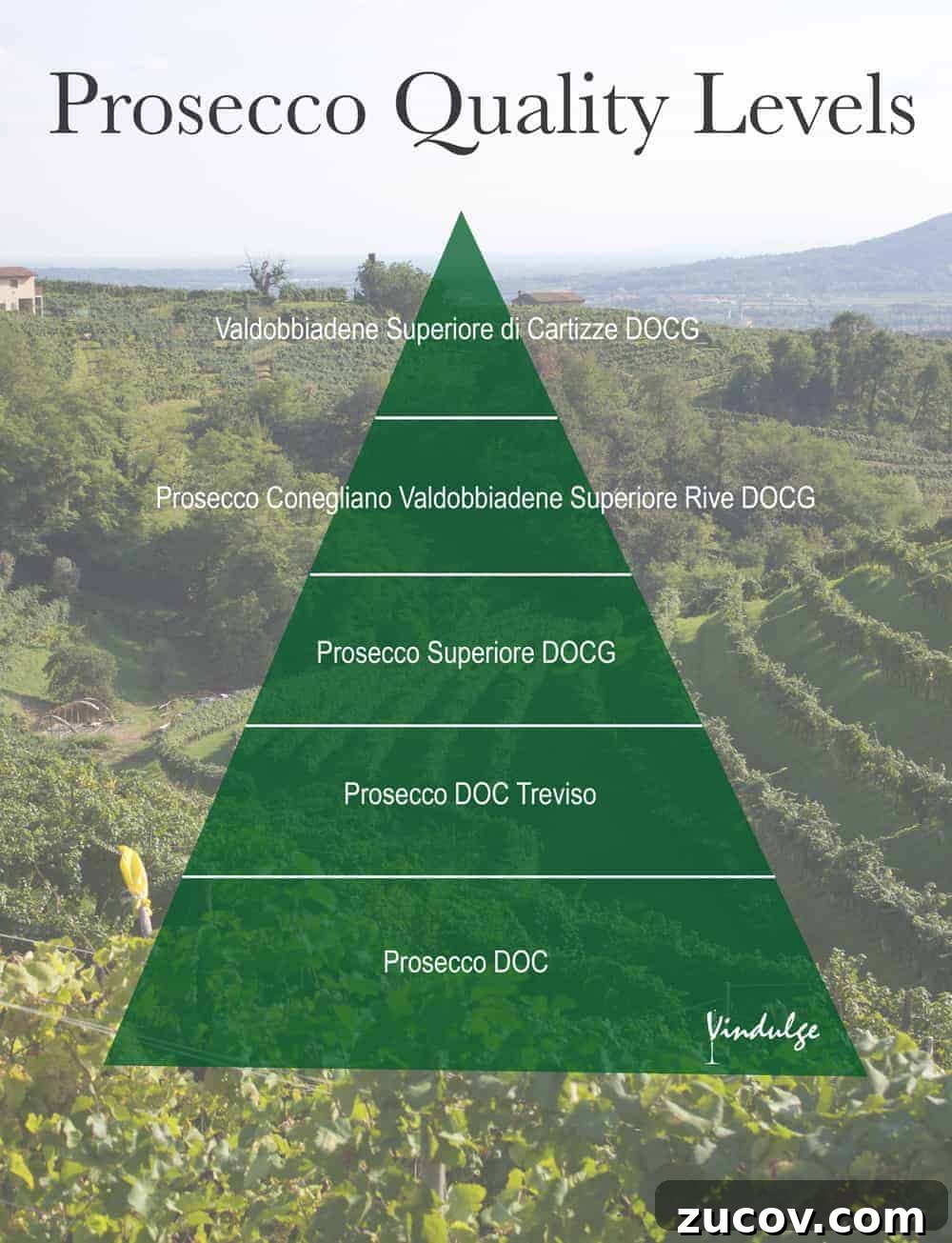
Quality tiers range from the widespread Prosecco DOC to Prosecco Conegliano Valdobbiadene Superiore DOCG and smaller subzones that highlight more focused, terroir-driven expressions.
What’s the Difference between Prosecco and Champagne
The main differences are geographic origin and production method. Champagne is produced in the Champagne region of France and is almost always bottle-fermented (the traditional method), where secondary fermentation takes place in each bottle. Prosecco is produced in specific regions of northeastern Italy and is most often made with the Charmat tank method. Both names are protected by European law and tied to their respective regions.
Prosecco Superiore DOCG
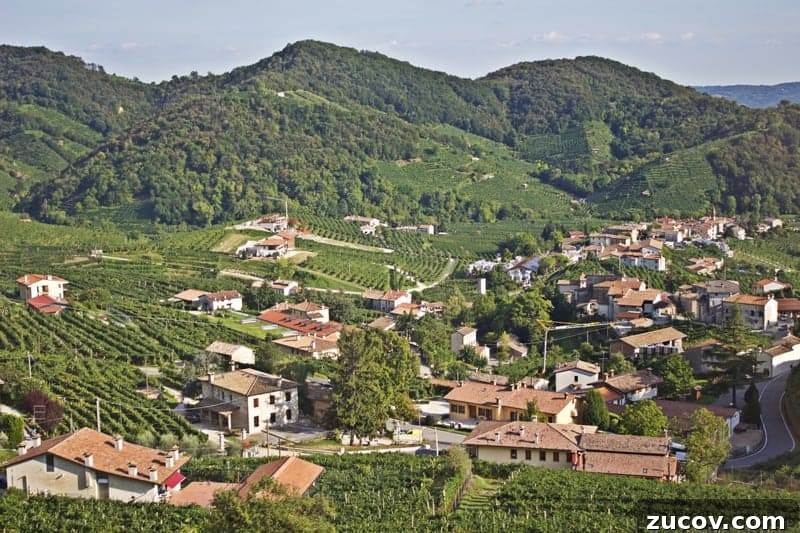
Prosecco Superiore DOCG refers to wines from the hilly area between Conegliano and Valdobbiadene. This region encompasses a cluster of towns where the best-quality Prosecco is grown. The combination of steep slopes, varied soils, and careful vineyard management contributes to wines with more complexity and concentration than many entry-level Proseccos.
Recipes to Pair with Prosecco

Prosecco pairs nicely with a wide range of dishes thanks to its acidity and lively bubbles. Ideal pairings include seafood, light pasta dishes, fried appetizers, fresh salads, and fruit-forward desserts. Some popular recipe ideas that complement Prosecco are:
- Spritz cocktails and fruit-forward aperitifs
- Mimosa or Bellini-style brunch drinks
- Grilled pork or poultry with a bright sauce
- Grilled salmon with citrus glazes
- Spicy grilled shrimp or other shellfish