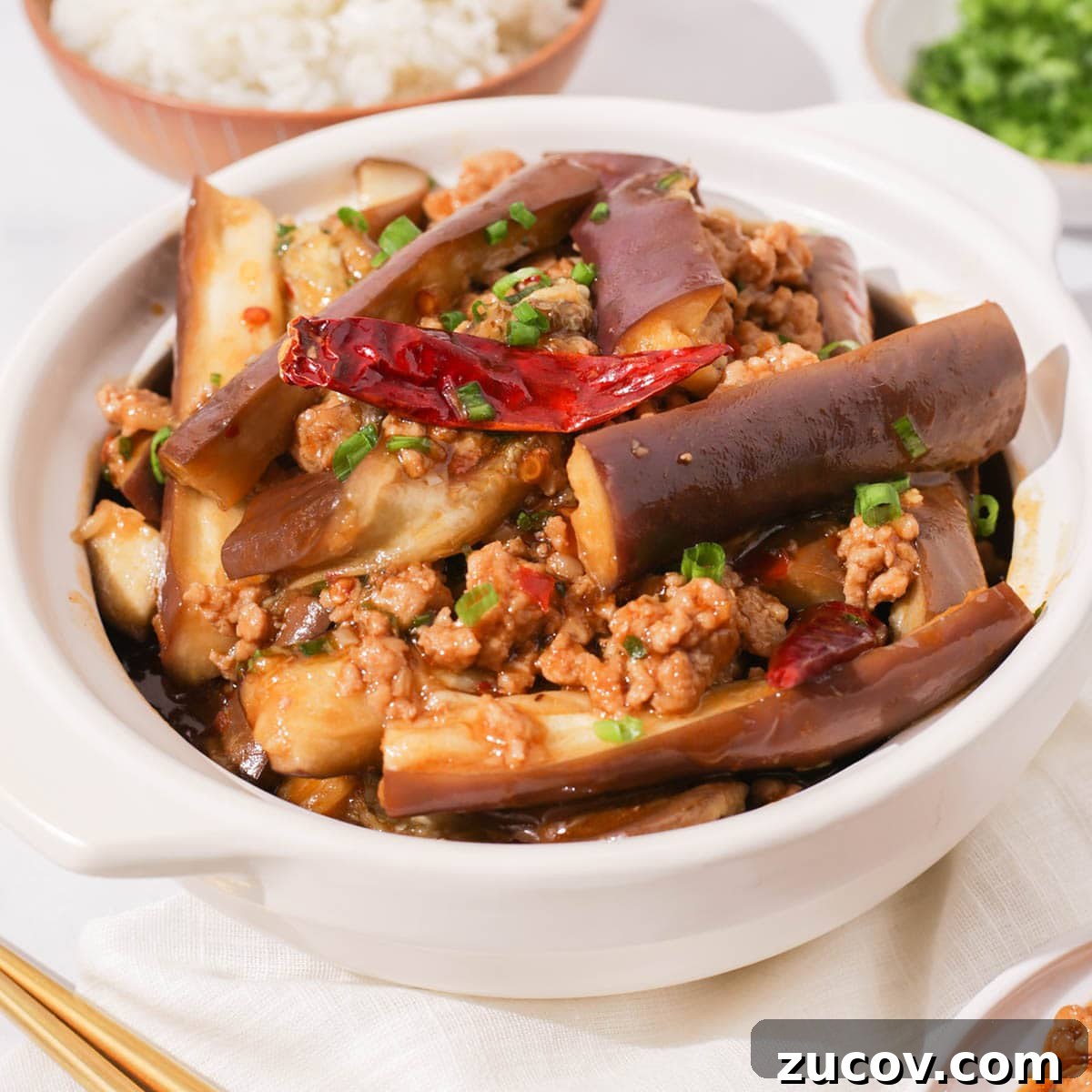
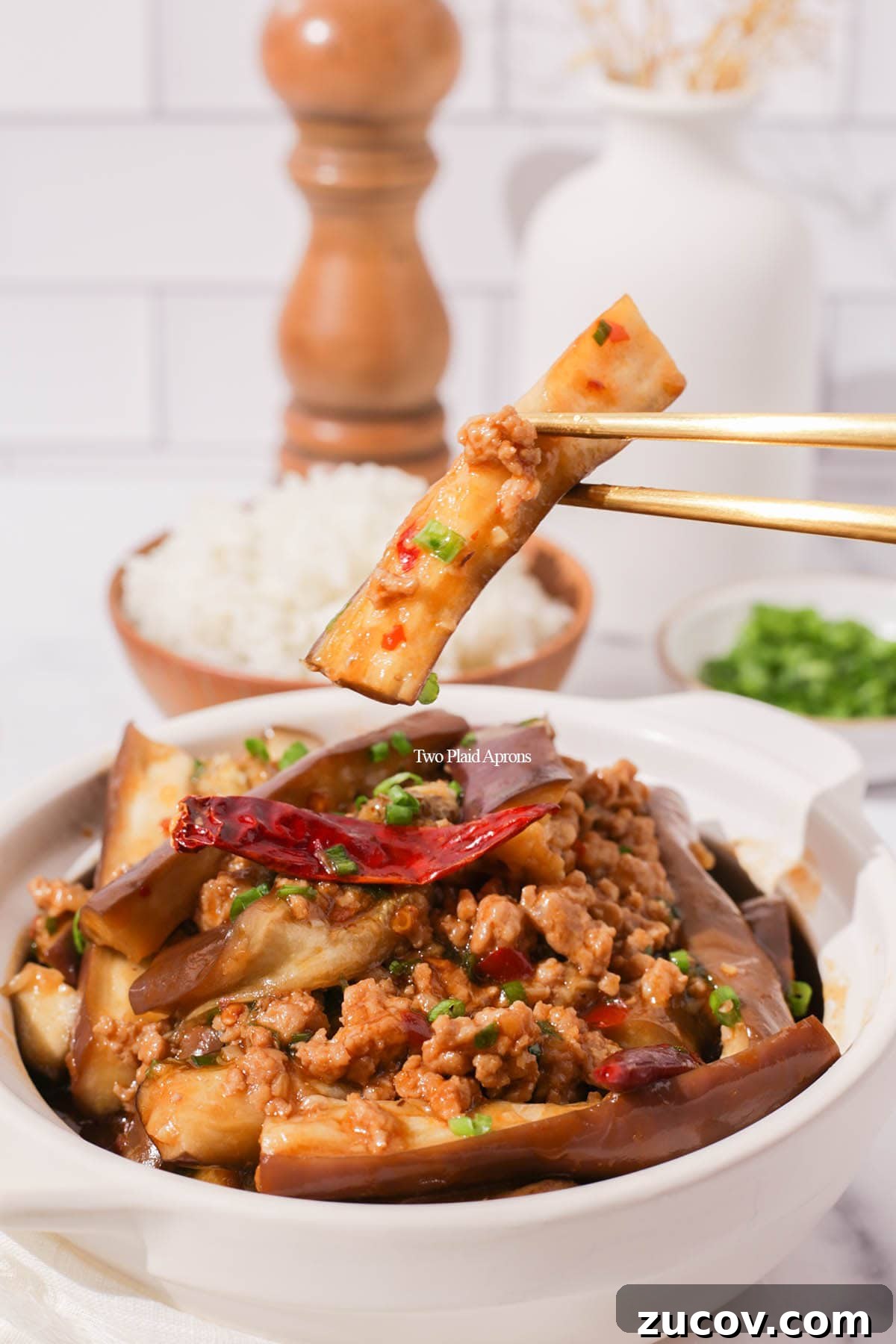
Eggplant with garlic sauce, or yu xiang qie zi (鱼香茄子), is a beloved Sichuan classic combining savory, spicy, sweet, and tangy flavors. This version is a lighter take: the eggplants are steamed instead of deep-fried, producing a less greasy dish that’s still full of flavor.
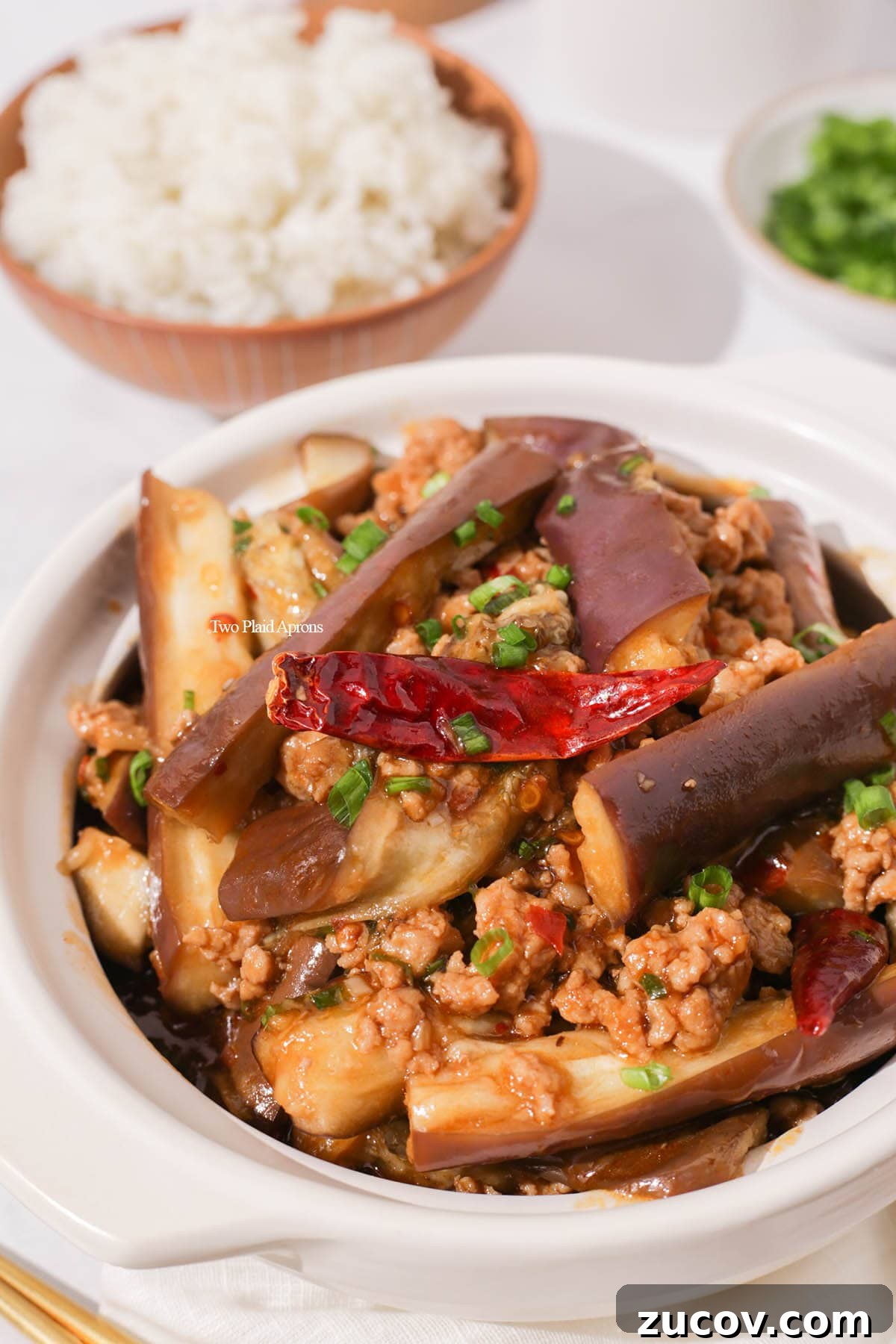
As a child I found eggplants bland, but eggplant with garlic sauce changed my mind. Its bold sauce made it a fast favorite — tied with my sautéed garlic bok choy for top spot. I love the traditional version, but I also wanted a lighter recipe that cuts the grease without sacrificing taste.
This steamed approach preserves the eggplant’s silky texture while reducing oil. If you enjoy this recipe, consider trying other Sichuan favorites like mapo tofu or a milder eggplant dish such as vegan unagi don made with eggplant.
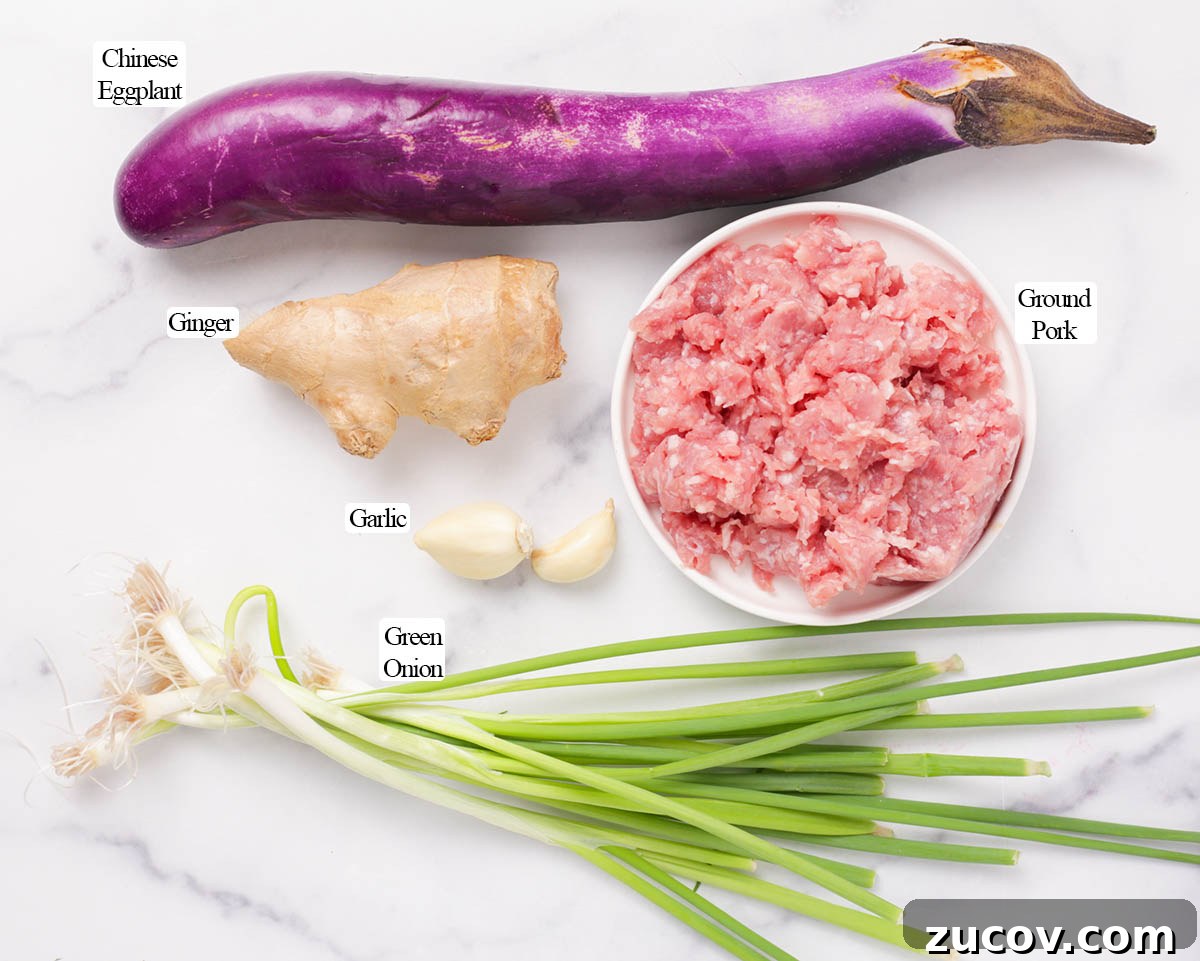
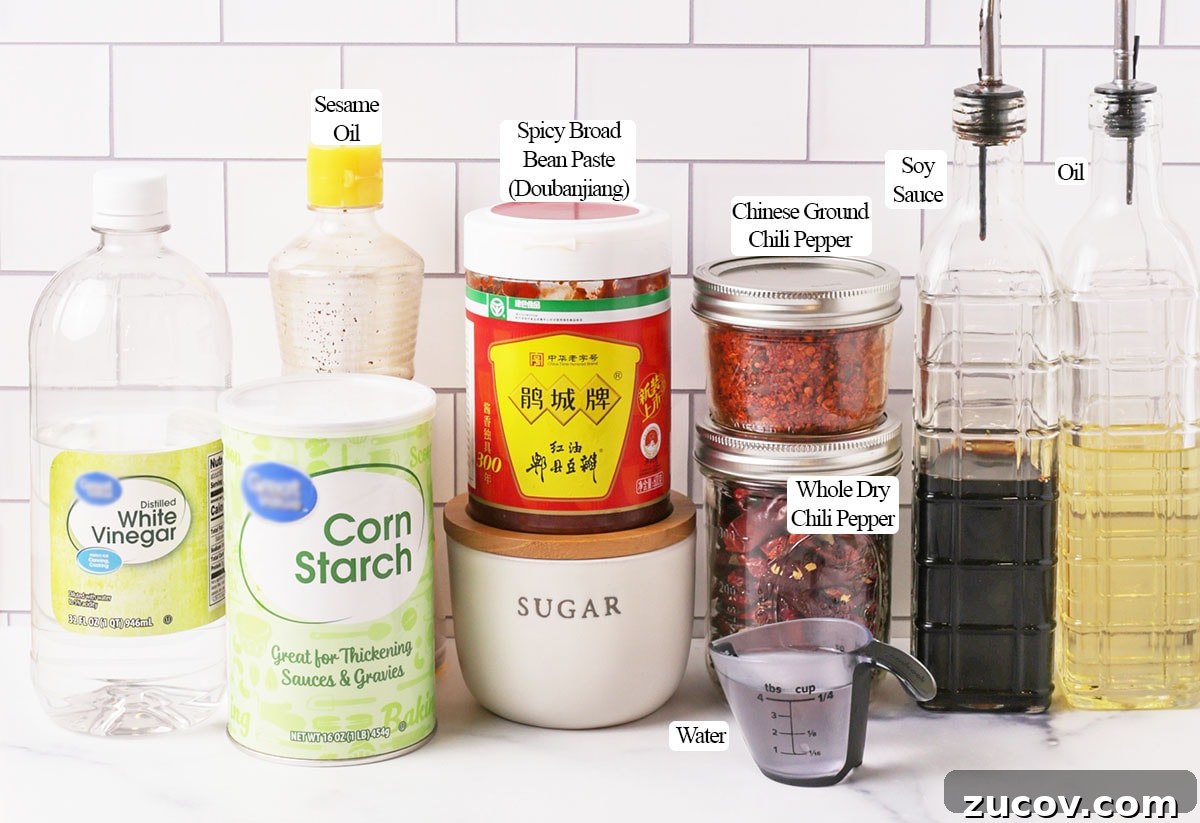
Ingredients
Please scroll down to the recipe card for the ingredient quantities!
For the dish:
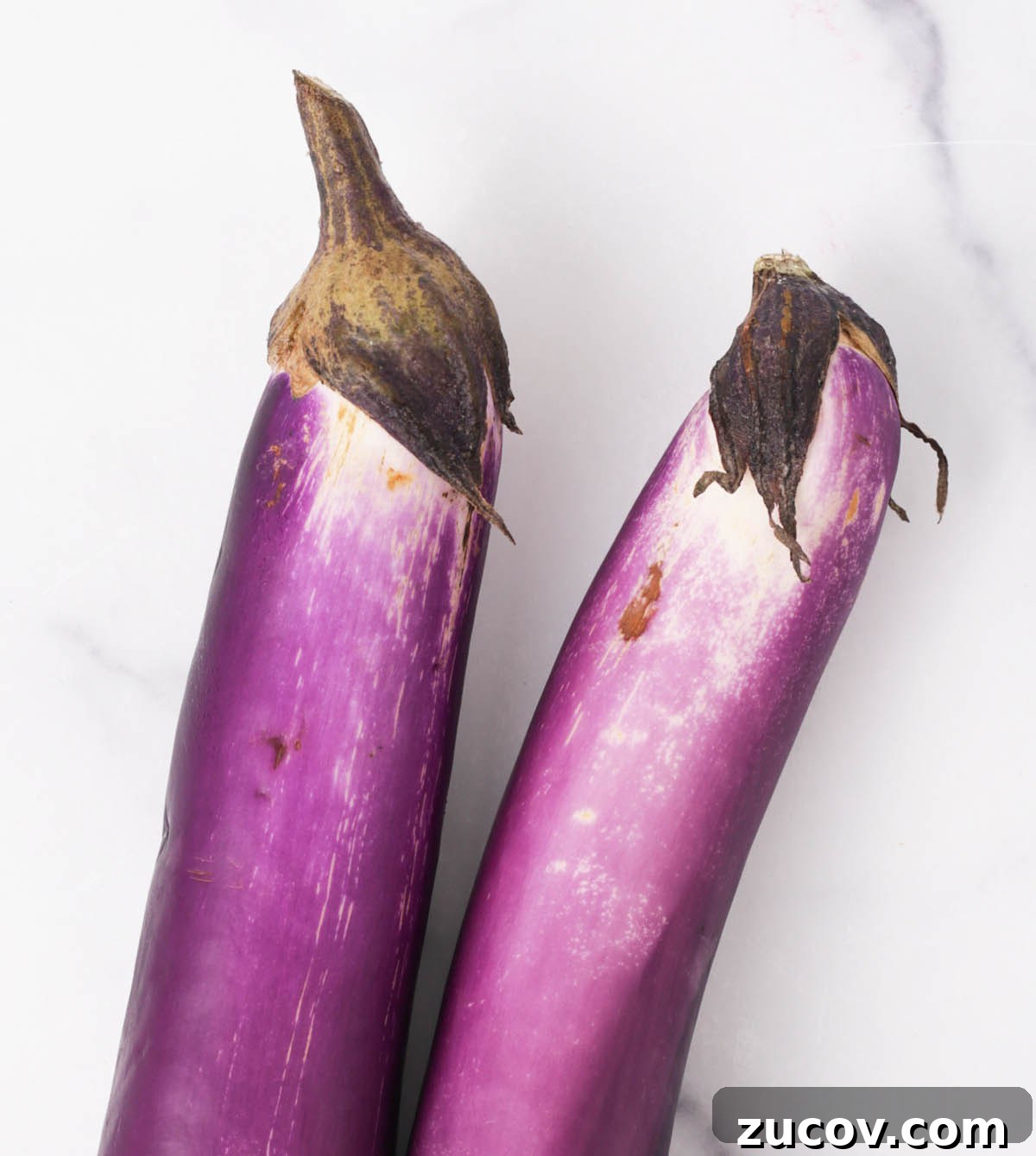
- Chinese eggplants – Choose slender, smooth eggplants with minimal blemishes and a slightly flexible feel; they will be the most tender.
- Ground pork – Adds richness; ground chicken or turkey are acceptable substitutes but will change the flavor slightly.
- Garlic – Fresh garlic gives the dish its signature punch.
- Ginger – Fresh ginger brightens the sauce and helps neutralize any undesirable pork notes.
- Spicy broad bean paste – Also called la doubanjiang. It provides depth, umami funk, and color. If unavailable, Chinese pickled peppers work too.
- Sesame oil – A small amount adds toasted aroma; optional if you prefer to omit.
- Chinese ground chili pepper – For extra heat; adjust to taste.
- Green onion and whole dried chilies – Used as garnish and to add color and aroma.
- Cooking oil – A neutral oil is fine. Even with steaming, some oil helps carry the sauce flavors.
For the sauce:
- Soy sauce – Adds savory depth and darker color; light-sodium soy sauce is recommended.
- Vinegar – White distilled vinegar works, but Chinese black vinegar gives a more authentic tang.
- Water – To dilute and balance the sauce.
- Sugar – Granulated sugar balances the acidity and spice.
- Cornstarch – Thickens the sauce to a glossy finish.
The best eggplant to use
Chinese eggplants are ideal: they have tender skin, fewer and smaller seeds, and a sweeter, milder flavor. Japanese eggplants are the best substitute. If you must use globe (American) eggplants, peel alternating stripes of skin and remove any large seed clusters to improve tenderness and texture.
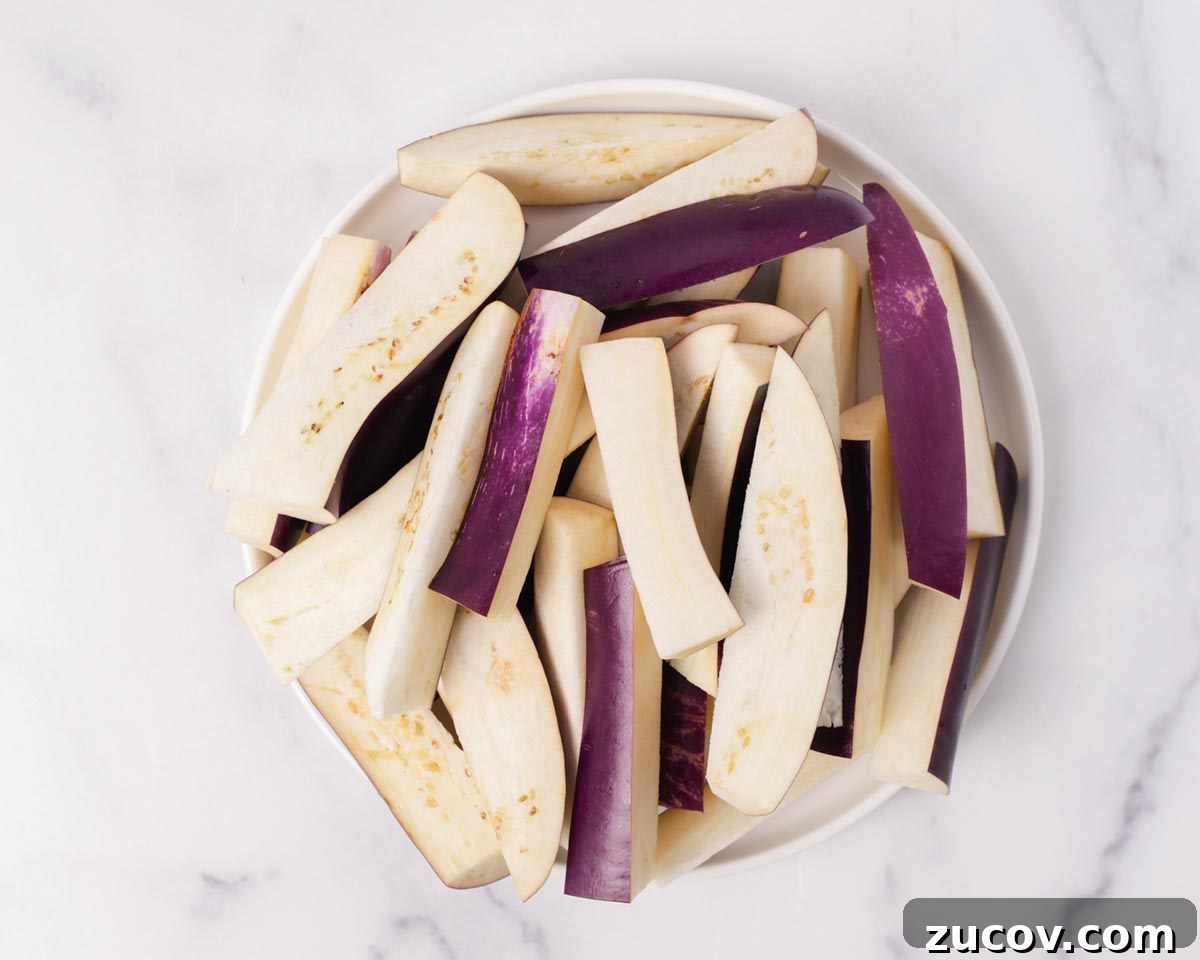
How to make eggplant with garlic sauce
Steam the eggplants:
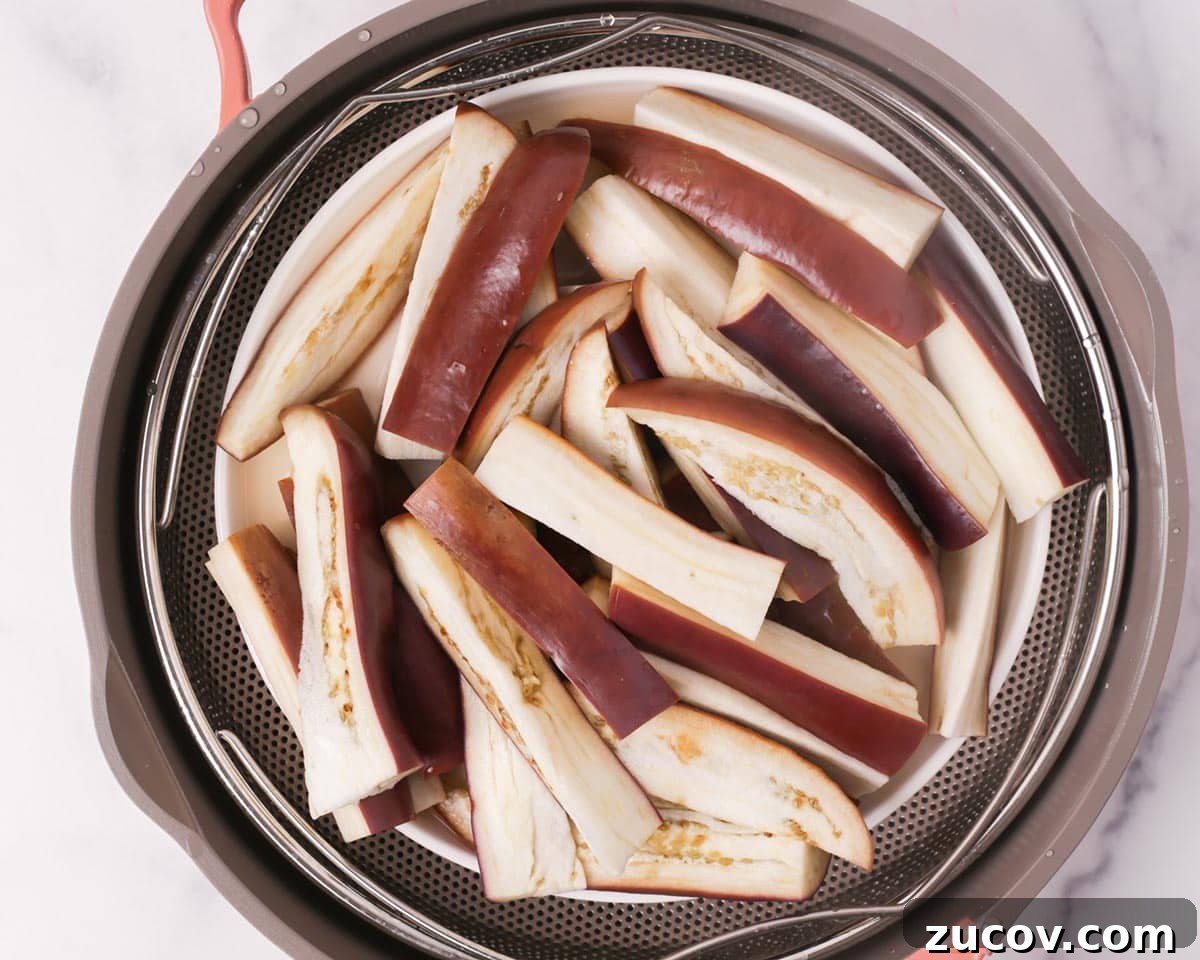
1. Set up a pot, wok with a steaming rack, or a steamer with about 1 inch of water. Bring to a boil, then lower to a steady simmer.
Pro tip: If using a pot or wok with a rack, place eggplant sticks on a heatproof plate or wide shallow bowl; in a steamer, arrange them directly in the basket.
2. Steam the eggplant sticks for 8–10 minutes, until the flesh is easily indented. Remove and set aside to drain.
Prepare the sauce:
While the eggplants steam, whisk together soy sauce, water, vinegar, sugar, and cornstarch until smooth. Set aside.
Stir-fry the dish:
1. Heat a wok or large pan over medium-high heat and add oil. When shimmering, add garlic, ginger, spicy broad bean paste, chili flakes, and whole dried chilies. Stir until fragrant and the oil turns reddish, about 15–30 seconds.
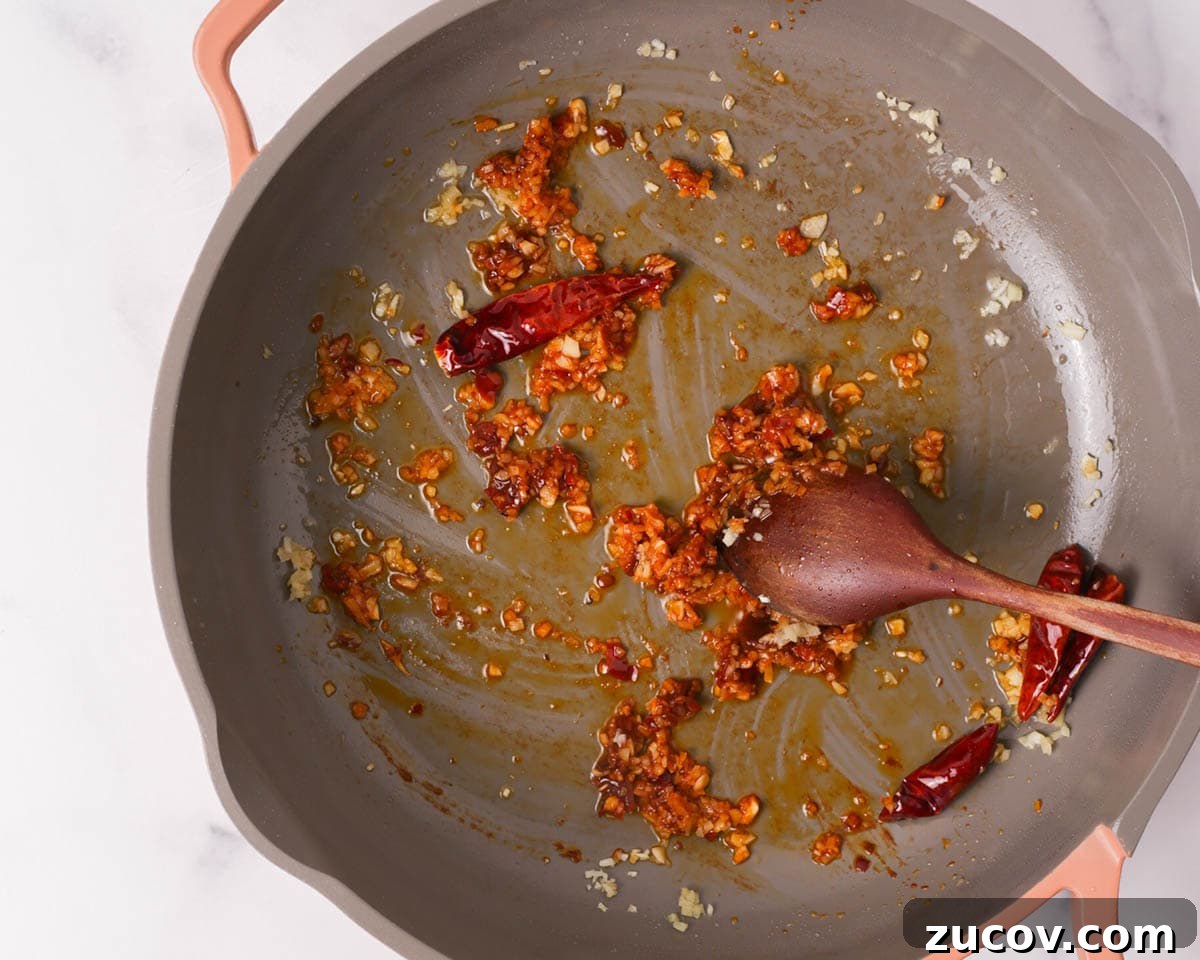
2. Add ground pork and cook until no longer pink, breaking it into small pieces as it cooks.
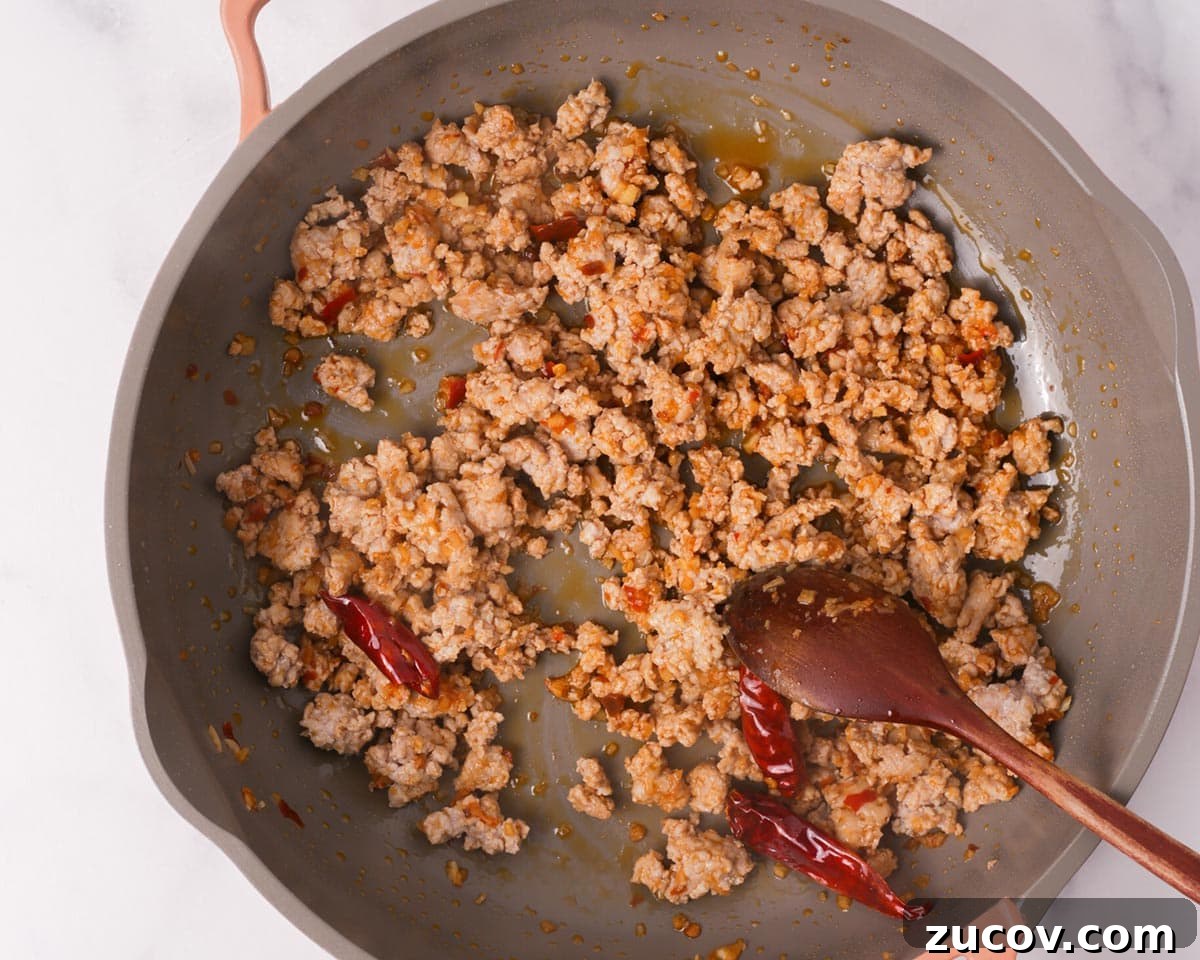
3. Stir the prepared sauce again, pour into the wok, and bring to a simmer. Stir frequently until the sauce thickens and becomes glossy, then reduce heat to medium-low.
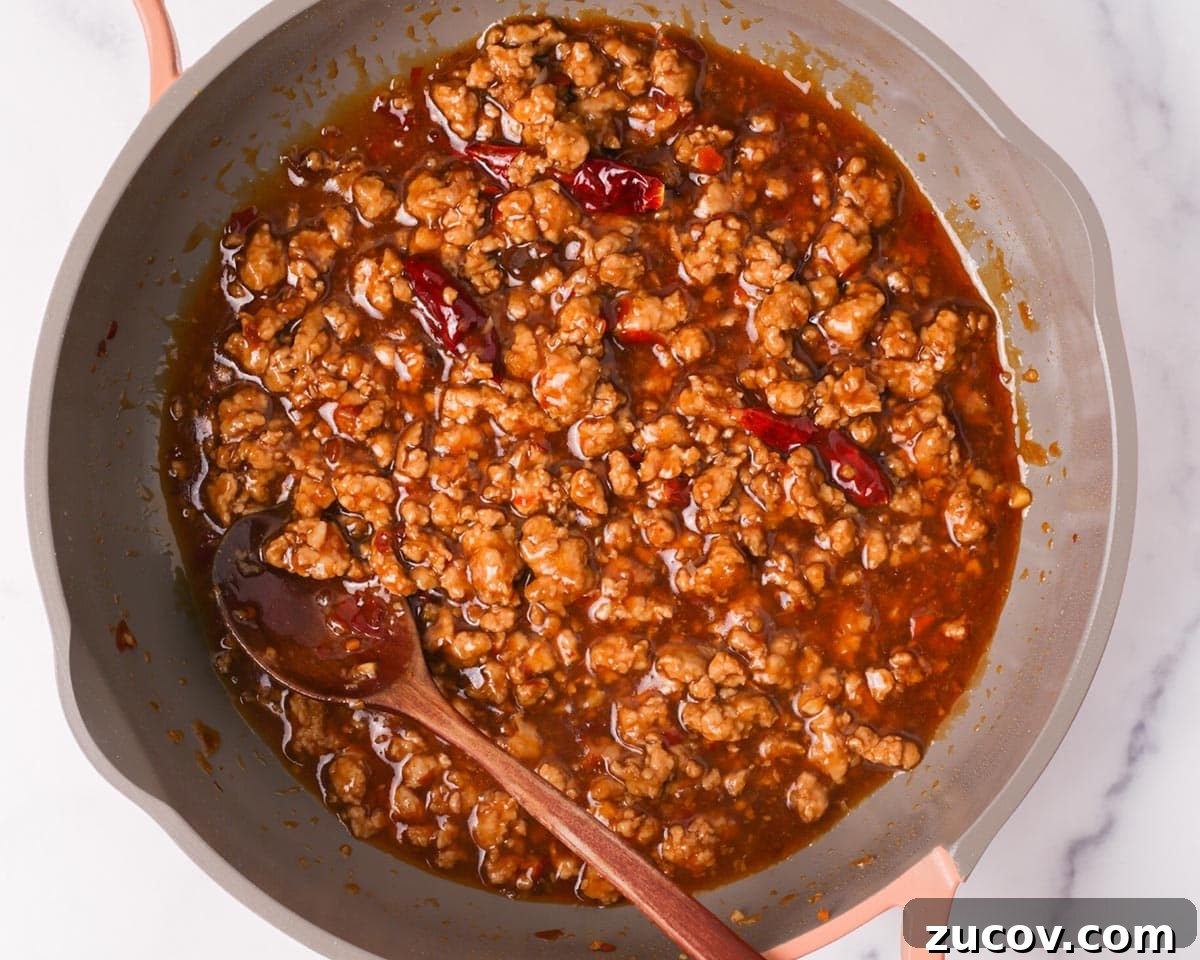
4. Drain excess water from the steamed eggplants and add them to the wok. Gently toss to coat the pieces in sauce without breaking them apart.
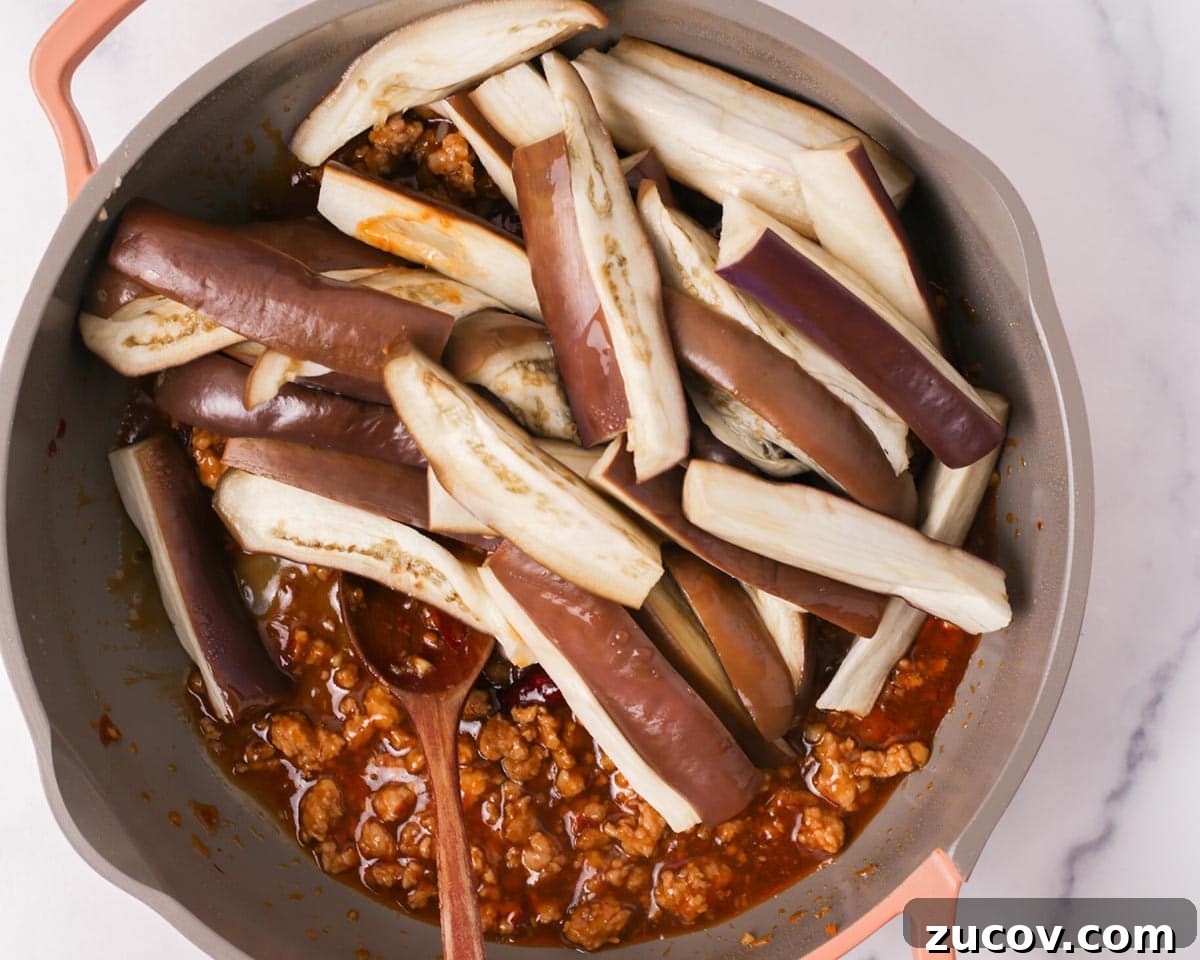
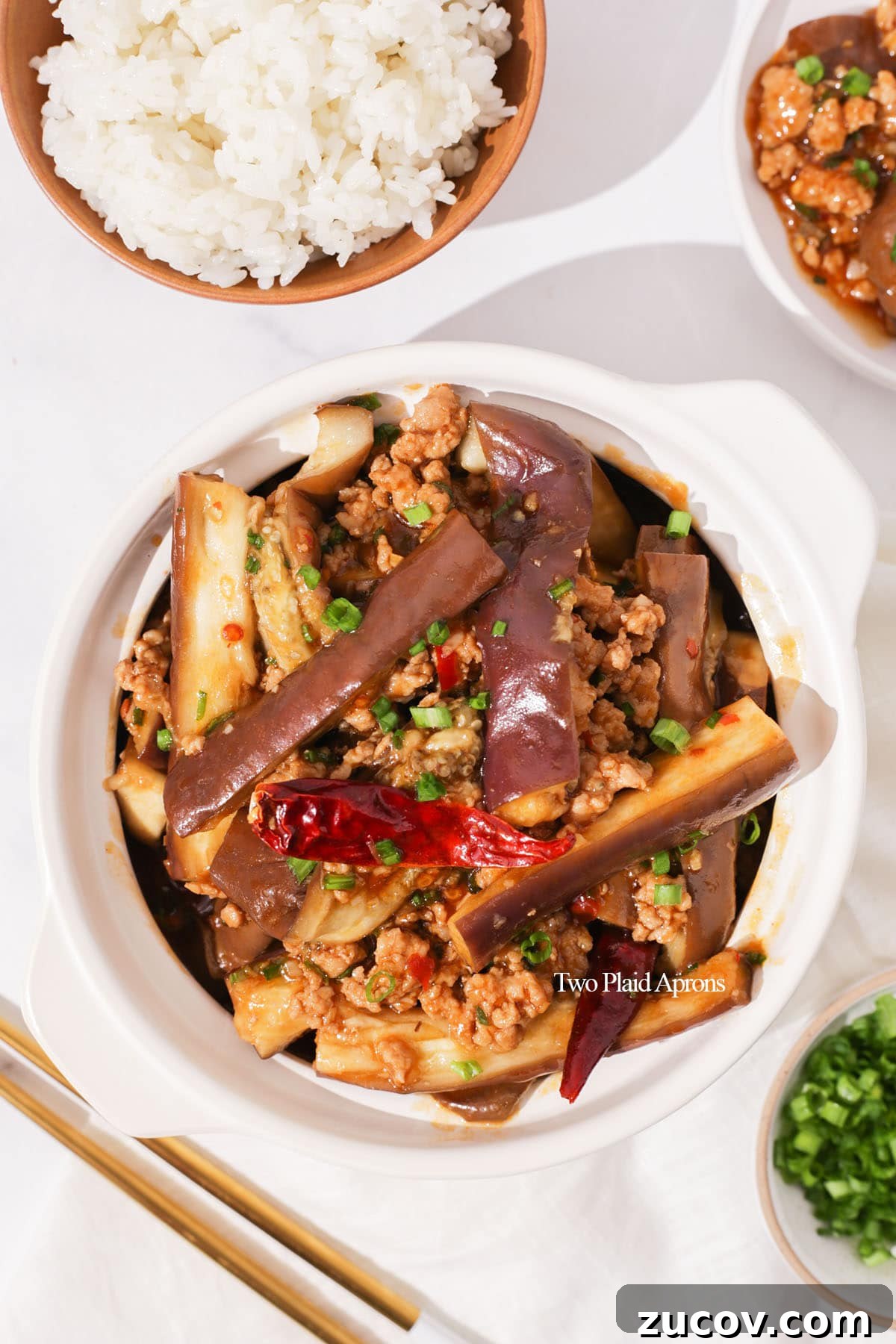
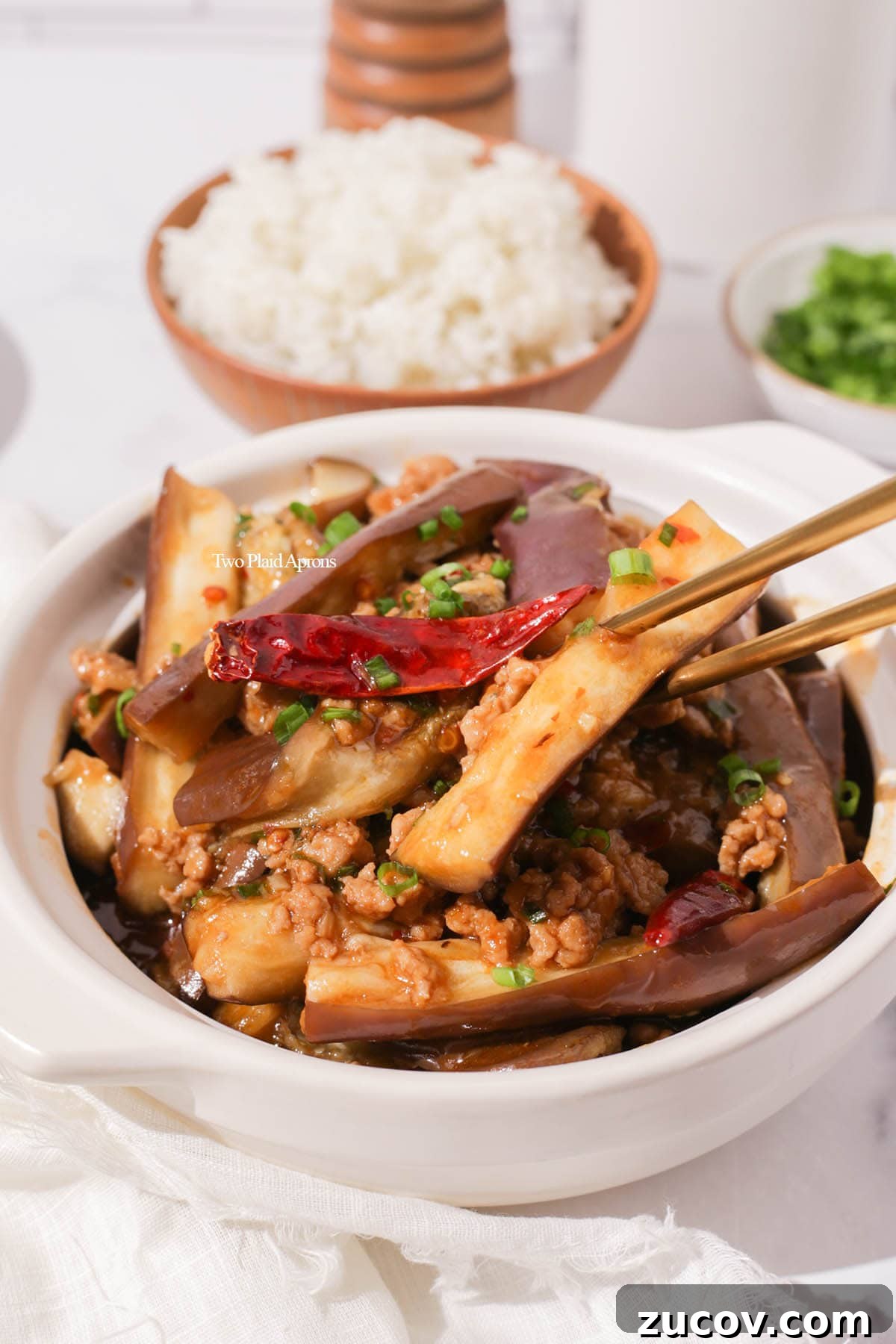
5. Stir in sliced green onions and sesame oil, toss once more, then transfer to a serving bowl. Garnish with additional green onion if desired and serve with rice.
Meatless alternative
This dish converts easily to a vegetarian or vegan meal. Replace ground pork with firm tofu, chopped shiitake mushrooms, or extra vegetables like bell peppers and onions.
Substitution notes:
- Firm or extra-firm tofu – Press or pat dry, tear into bite-sized pieces, then add where the pork would go and lightly sauté before adding the sauce. Freezing and thawing tofu first helps remove moisture.
- Mushrooms – Coarsely chop and sauté until softened, then add the sauce.
- Bell pepper and onion – Cut into large dice and stir-fry briefly until just tender before adding the sauce.
Recipe tips
- Choose young, tender eggplants for the best texture; steaming highlights skin toughness if the eggplant is old.
- Adjust vinegar to suit your taste if you prefer a milder or tangier sauce.
Storage and reheating
Store cooled leftovers in an airtight container in the refrigerator for 3–4 days. Reheat in the microwave or on the stovetop over medium heat. If the sauce becomes thin, mix a little cornstarch with cold water and simmer briefly to thicken.
FAQ
Yes. Globe eggplant can be used if you can’t find Chinese or Japanese varieties. Peel alternating stripes of skin and remove any large seeds to improve texture.
Yú xiāng (鱼香) literally means “fish-fragrant.” It describes a Sichuan-style sauce that is garlicky, spicy, sweet, and sour. The name likely comes from either a sauce originally used with fish or from pickled peppers associated historically with fish.
Potato starch is a suitable substitute and can be used in equal amounts.
Ground turkey or chicken work fine. For vegetarian options, see the meatless alternative section above.
Please tag us on Instagram with #twoplaidaprons if you make this recipe — we’d love to see your photos!
📖 Recipe

Eggplant with Garlic Sauce (鱼香茄子)
2 servings
Ingredients
For the dish:
- 1 pound Chinese eggplant, cut into 2–3 inch sticks
- 4 ounces ground pork (or ground chicken/turkey)
- 3 tablespoons garlic, roughly chopped (about 6 cloves)
- 1 tablespoon ginger, peeled and minced
- 1 tablespoon spicy broad bean paste (la doubanjiang)
- 1 stalk green onion, thinly sliced (plus more for garnish)
- 1 teaspoon toasted sesame oil (optional)
- 1 teaspoon Chinese chili pepper flakes, adjust to taste
- 4 tablespoons oil, or as needed for cooking
- Whole dried chili peppers (optional garnish)
For the sauce:
- 4 tablespoons water
- 2 tablespoons soy sauce (light-sodium recommended)
- 1 tablespoon Chinese black vinegar (or white vinegar)
- 3 tablespoons granulated sugar
- 1 tablespoon cornstarch
Instructions
Steam the eggplants:
- Prepare a pot/wok with a steaming rack or a steamer with about 1 inch of water and bring to a boil. Reduce to a high simmer.
- If using a steaming rack, arrange eggplant on a heatproof plate; in a steamer, place eggplant in the basket.
- Steam 8–10 minutes until the flesh is easily indented. Remove and set aside to drain.
Prepare the sauce:
- Whisk soy sauce, water, vinegar, sugar, and cornstarch until smooth. Set aside.
Stir-fry the dish:
- Heat oil in a wok or pan over medium-high heat. Add garlic, ginger, spicy broad bean paste, chili flakes, and whole dried chilies. Stir until fragrant, 15–30 seconds.
- Add ground pork, breaking it up, and cook until no longer pink.
- Stir the sauce and pour into the wok. Simmer until thick and glossy, then lower heat to medium-low.
- Drain steamed eggplant and add to the wok. Gently toss until evenly coated.
- Stir in sliced green onions and sesame oil, toss once, then transfer to a serving bowl. Serve with rice.
Notes
- Eggplant: Chinese eggplants are preferred. For globe eggplants, peel alternating stripes and remove large seeds.
- Meatless option: Substitute pork with firm tofu, mushrooms, or extra vegetables as described above.
- Spicy broad bean paste: Chinese pickled peppers can replace the paste; finely chop and add when you would add the bean paste. If neither is available, omit and add about ½ teaspoon salt to the sauce.
Equipments Recommended
- Flat-bottom wok (or large skillet)
- Steam rack or steamer
- Measuring spoons