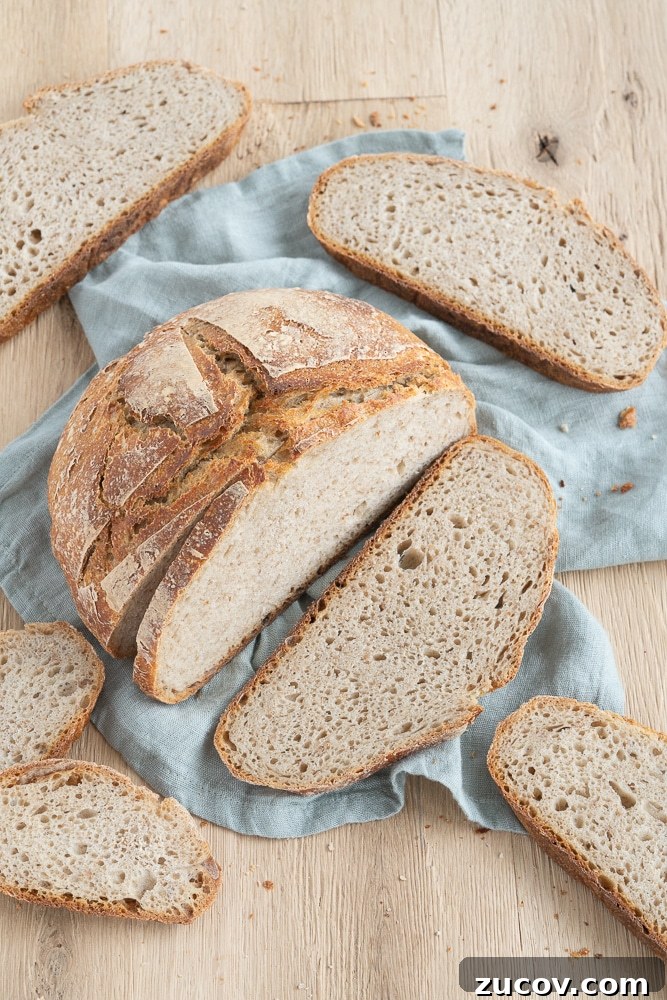
Hello, bread lovers! This rustic sourdough peasant bread is one of the simplest loaves I’ve ever baked without adding commercial yeast. Even beginners will succeed if they follow the tips and timing below.
Taste and Occasion
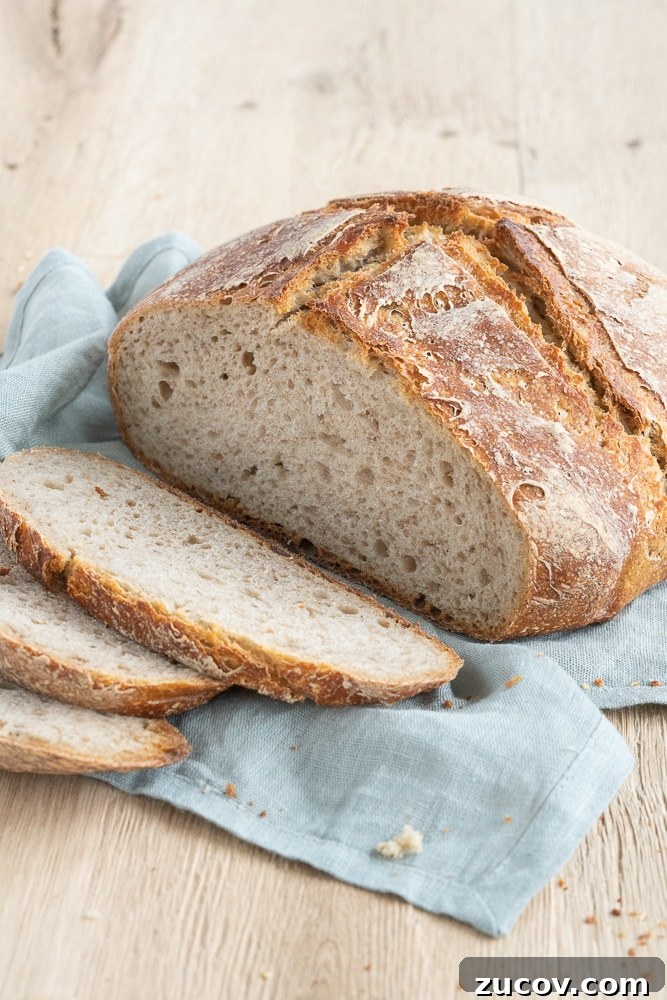
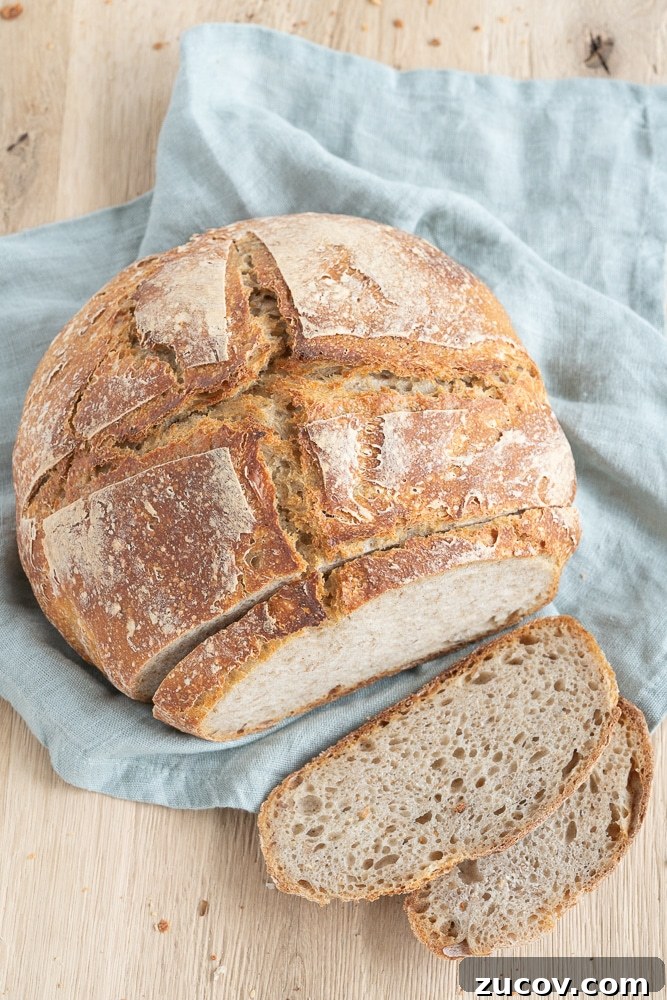
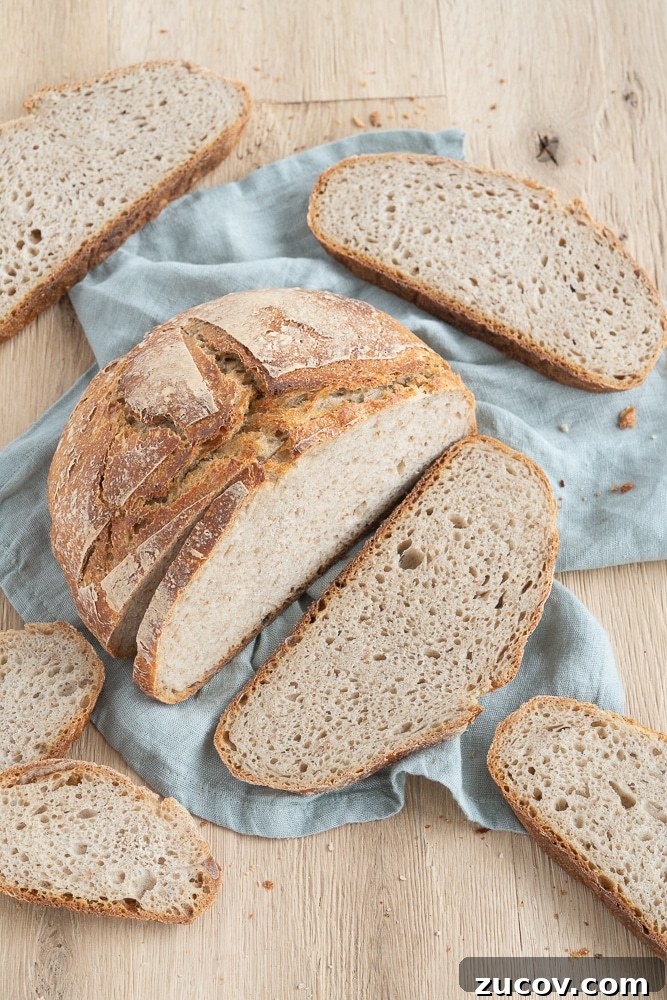
Sourdough can seem complicated, but with clear instructions it doesn’t have to be. This peasant bread uses a ready sourdough starter and needs no additional leavening agents, making it quicker and more reliable than many traditional sourdough methods. The crust becomes crisp while the crumb stays soft and moist—perfect for sandwiches, toasting, or enjoying with butter and soup.
I bake this loaf regularly using a commercial starter that contains only natural rye and water cultures. A heavy lidded pot, like a Dutch oven, gives the best results because it traps steam and promotes a nicely blistered crust.
Ingredients
After testing many variations, I developed this streamlined method that yields a great loaf in about 13 hours total, with only around 15 minutes of active hands-on time. My usual schedule is to mix in the morning and bake in the evening, but you can adapt the rising schedule to suit mornings or evenings.
The recipe calls for 85 g of sourdough starter used soon after opening. For best texture and oven spring, bake in a preheated Dutch oven or another heavy lidded pot.
How to Make the Easy Sourdough Peasant Bread
The method is straightforward. Start by mixing the flours in a large bowl, then add lukewarm water, crumbled sourdough starter, and salt. Knead for 7–10 minutes until the dough is smooth and elastic. Cover the bowl with a clean kitchen towel and let the dough ferment at room temperature for about 5 hours.
After the first rise, turn the dough onto a lightly floured surface or baking mat. Perform a few stretch-and-folds: gently pull the dough outward and fold the edges toward the center. Shape the dough into a tight, smooth ball and place it seam-side-up in a well-floured proofing basket or on parchment.
Cover and let the dough proof for another 5–7 hours, depending on room temperature and desired sourness. When ready to bake, preheat your oven and the Dutch oven (including the lid) to 250°C / 480°F.
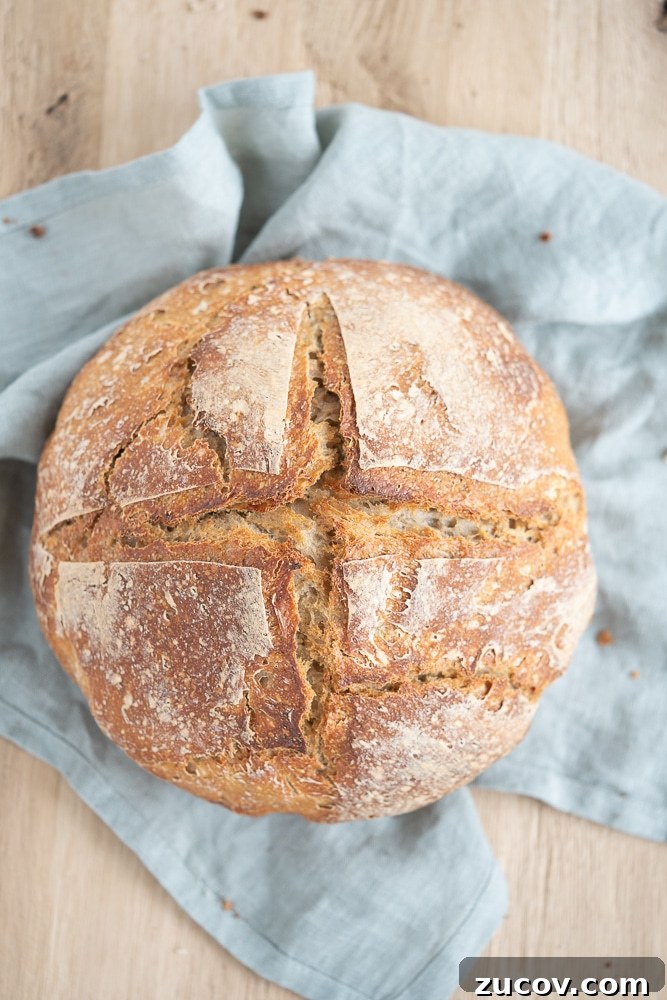
Carefully transfer the dough into the hot Dutch oven—either flip it in seam-side-down on parchment or drop it in depending on your technique. Bake with the lid on for 10 minutes, then reduce the temperature to 210°C / 415°F and bake for another 20 minutes. Remove the lid and bake an additional 15–20 minutes until the crust is golden brown but not burnt and the loaf sounds hollow when tapped.
Let the bread cool on a wire rack before slicing to allow the crumb to set.
Top Tip
The key to success is using a starter with active microorganisms in the right concentration. This recipe works well without maintaining a long-term sourdough culture, though you can certainly use it to build your own starter if you prefer. Consistent timings and a properly preheated Dutch oven make the biggest difference to crust and oven spring.
Recipe Card
Easy Sourdough Peasant Bread
Ingredients
- 400 grams (3 ⅓ cups) all-purpose flour, type 405
- 200 grams (2 cups) rye flour, type 1150
- 85 grams (⅓ cup) sourdough starter, BÖCKER
- 360 milliliters (1 ½ cups) lukewarm water, coarse specification
- 12 grams (¾ tablespoon) salt, 10-15 to taste
Instructions
-
Mix the wheat and rye flours in a large bowl. Add lukewarm water, crumble in the sourdough starter, add salt, and knead for 7–10 minutes until smooth.
-
Cover the bowl with a kitchen towel and let the dough rise at room temperature for about 5 hours.
-
Transfer the dough to a floured surface, perform a few stretch-and-folds, shape into a smooth ball, and place seam-side-up in a well-floured proofing basket or on parchment.
-
Cover and proof for 5–7 hours. Preheat the oven and a lidded pot to 250°C / 480°F. Transfer the dough into the hot pot (either flip it in or lift it in with parchment).
-
Bake 10 minutes with the lid on, reduce to 210°C / 415°F and bake 20 minutes, then remove the lid and bake another 15–20 minutes until golden and hollow-sounding when tapped.
Notes
- Possible schedules: mix at 8 a.m., stretch and fold at 1 p.m., bake at 6–7 p.m.; or mix in the evening, stretch and fold before bed, and bake the next morning.
- To transfer the dough into the Dutch oven: either invert the proofing basket and drop the dough in seam-side-down, or lift it in on parchment seam-side-up depending on your preferred method.
- If you don’t have a Dutch oven, a high-sided baking dish or springform pan works; place a heatproof bowl of water in the oven to increase steam. Expect a slightly different crust.
Ingredient substitutions
Variations
Try this loaf as a base for variations: add seeds to the dough, mix in olives or herbs, or replace some all-purpose flour with spelt for a nuttier flavor. Bread baking is rewarding—whether you try this peasant loaf or other recipes like spelt sourdough, ciabatta, or flatbreads, practicing will quickly improve your results.